

 English
 Español
 italiano
 Deutsch
 0086-13338774804

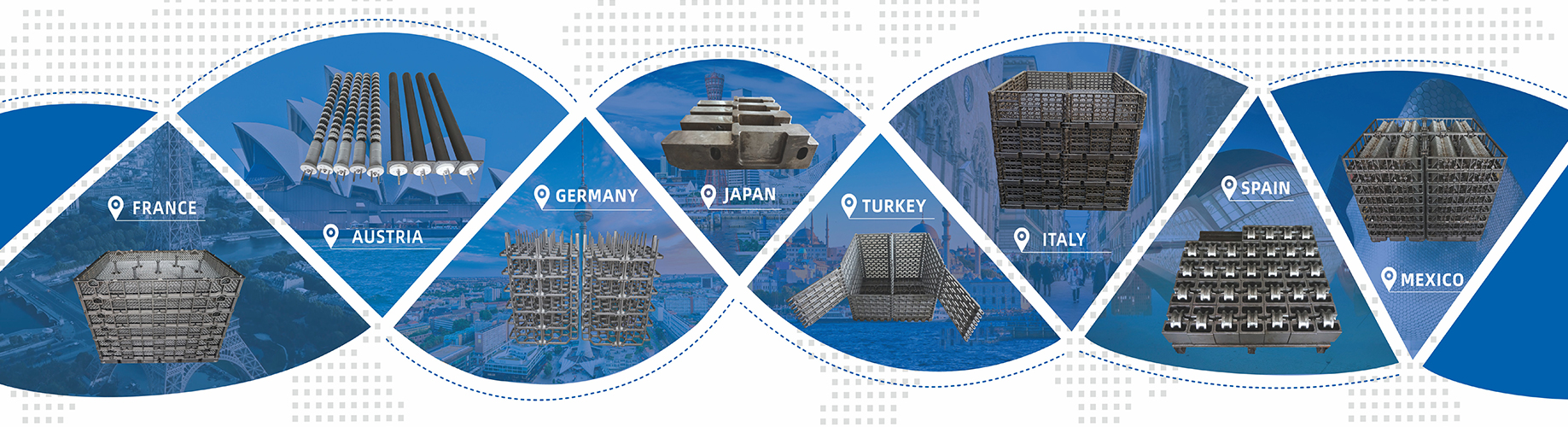
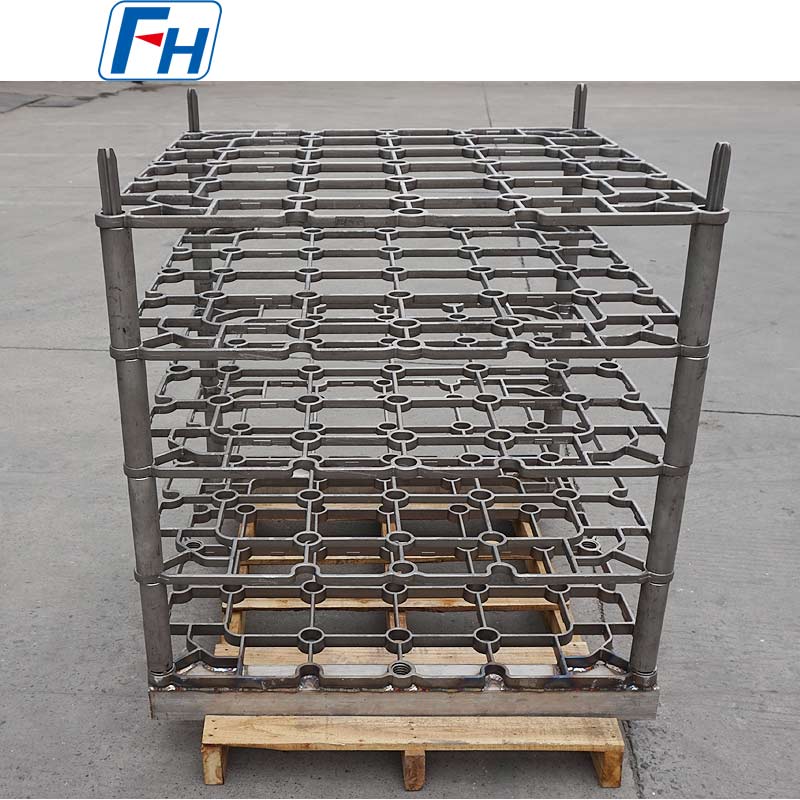
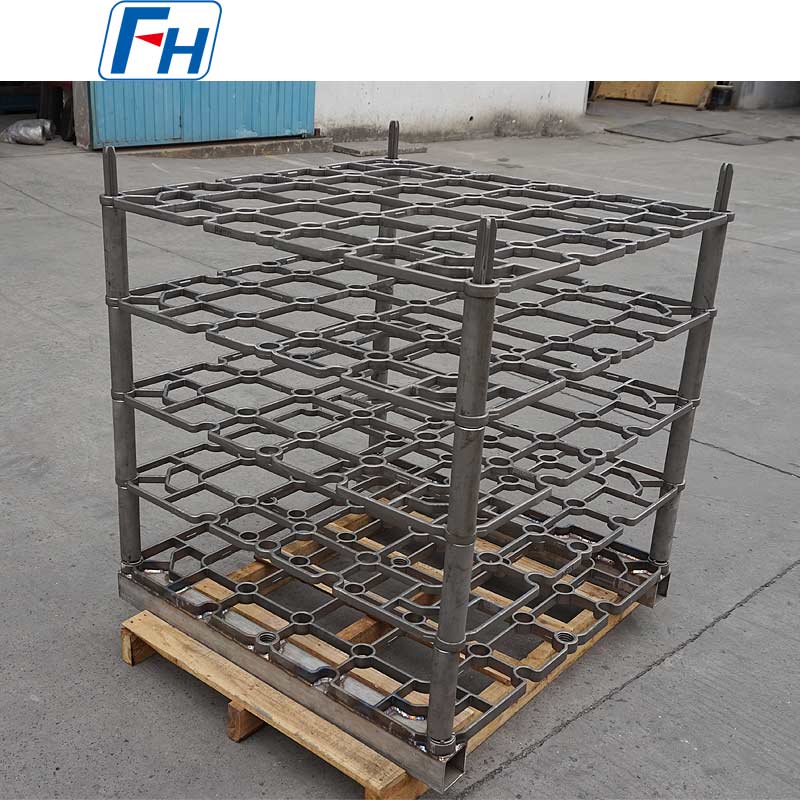
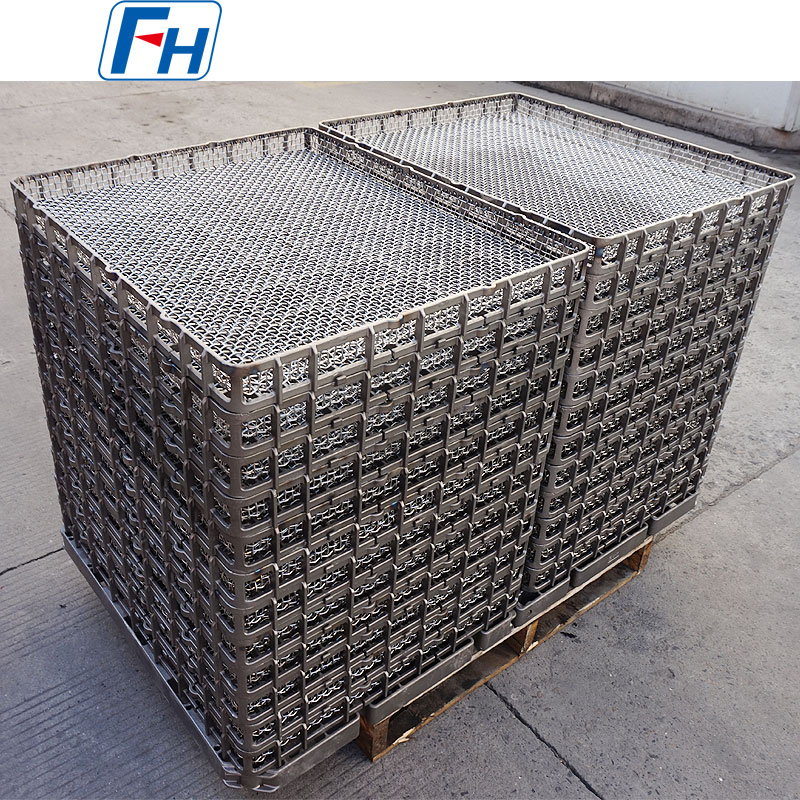
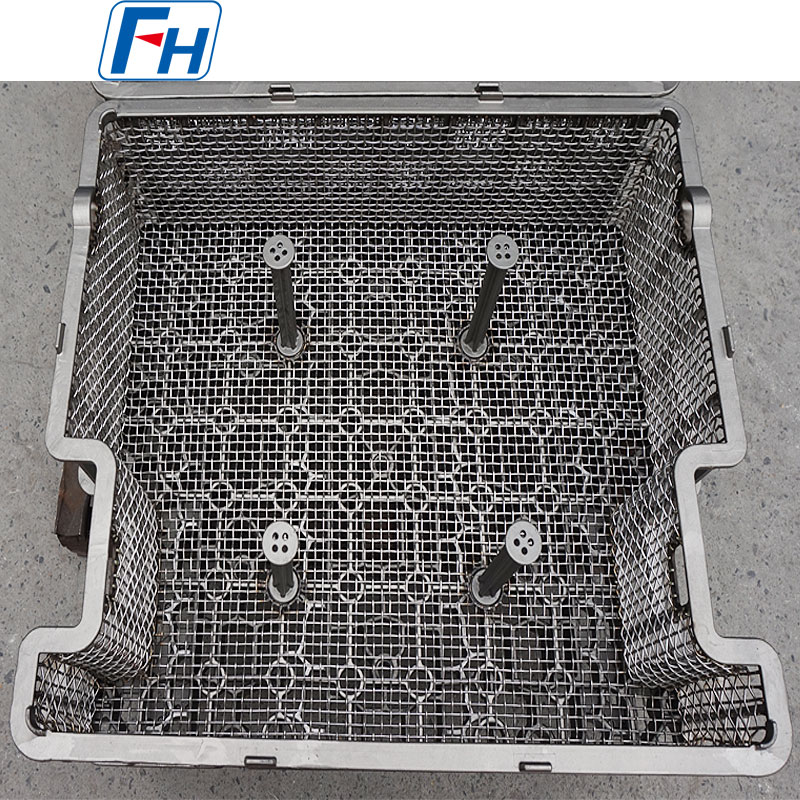
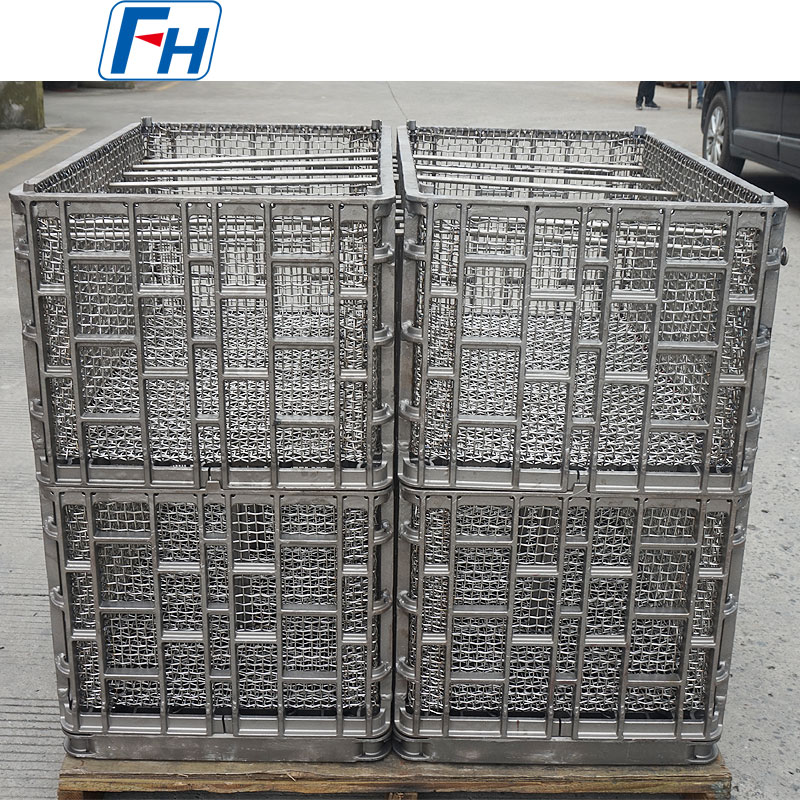
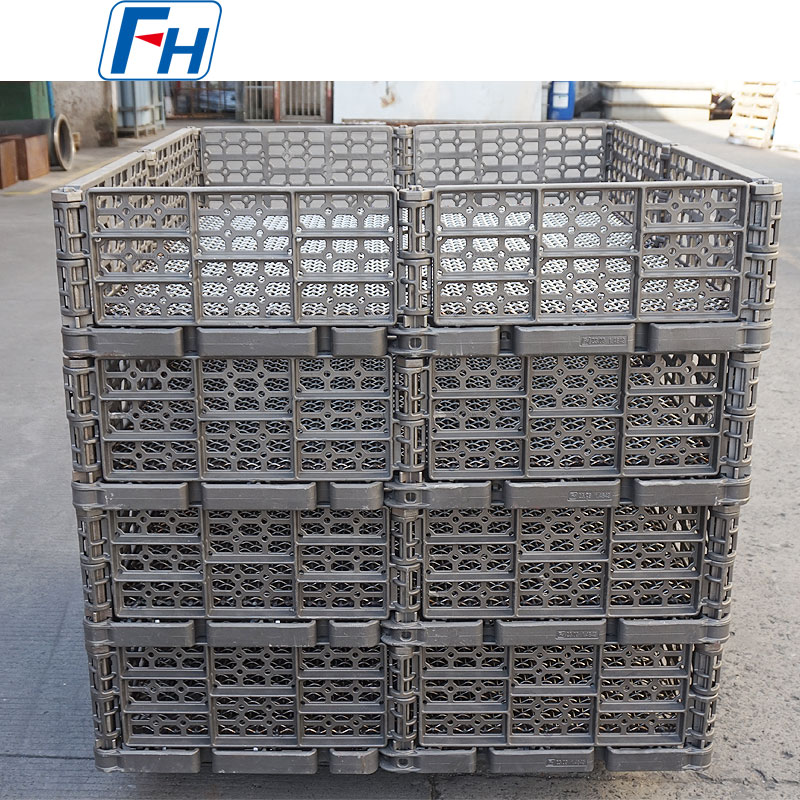

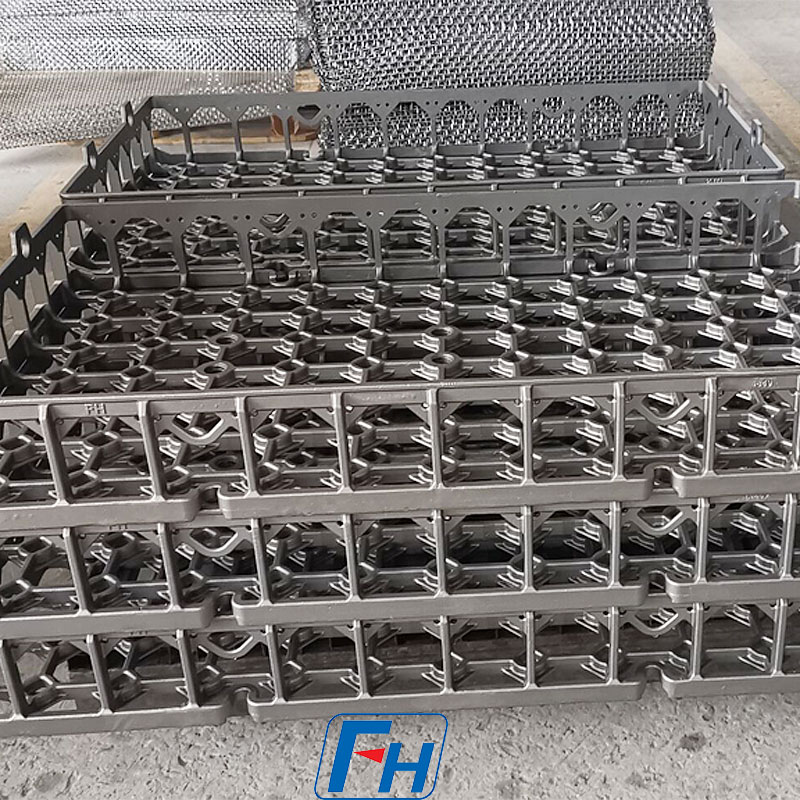

FH® Heat Treatment Fixture for Tempering Furnace
Key Benefits
- Thermally Stable Design
Engineered to withstand repeated heating and cooling cycles between 150°C–700°C without progressive warping or loosening of joints. - No Scale, No Contamination
Smooth surface and oxidation-resistant material prevent loose scale formation – keeps workpiece surfaces clean and reduces post-treatment cleaning. - Uniform Airflow / Heat Transfer
Open grid or perforated design allows optimal hot air circulation – minimizes temperature gradients across loaded parts. - Lightweight Yet Strong
Optimized section thickness reduces thermal mass (faster heating/cooling) while maintaining sufficient load capacity. - Custom Configurations
Trays, stacking grids, hanging fixtures, or part-specific nests – designed for your furnace size and part geometry.
Technical Specifications
| Parameter | Value |
| Typical materials | 310S, 1.4828, 1.4849, or carbon steel (budget option) |
| Operating temp. range | 150°C – 700°C continuous |
| Surface finish | As-welded / pre-oxidized / shot-blasted |
| Load capacity | 50 – 500 kg (design dependent) |
| Fabrication | Precision casting/TIG welding |
| Expected service life | 500 – 1000+ cycles (with proper use) |
| Material certificate available on request | |
Why Choose FH® Tempering Furnace Fixtures?
1. Designed for Tempering – Not Just Repurposed Hardening Fixtures
Many shops use the same baskets for hardening and tempering. Hardening fixtures are often too heavy (high thermal mass) and have rough surfaces that scale and flake at tempering temperatures. FH® tempering fixtures are optimized specifically for this lower-temperature, long-cycle application.
2. Material Selection for Tempering
| Material | Max Temp | Pros | Best For |
| Carbon steel | 450°C | Low cost | Low-temp tempering, non-critical parts |
| 310S | 700°C | Oxidation resistant, durable | General purpose, protective atmosphere |
| 1.4828 | 800°C | Higher Ni than 310S | Higher temp tempering (650-700°C) |
| 1.4849 | 850°C | Maximum creep strength | Heavy loads, long cycles |
3. Clean Operation – No Scale Flaking
- Pre-oxidized surface forms a stable oxide layer
- No sharp weld spatter or rough cast surfaces
- Parts come out clean – reduces or eliminates secondary cleaning
4. Lightweight = Energy Efficient
FH® tempering furnace fixtures use thinner, optimized sections (without sacrificing strength). Lower thermal mass means:
- Faster furnace heat-up
- Reduced energy consumption
- Quicker turnaround between cycles
Applications
- Air tempering furnaces
- Protective atmosphere tempering (N₂, endogas)
- Vacuum tempering (with appropriate material)
- Stress relieving (400–650°C)
- Parts: gears, shafts, bearings, springs, tools, dies, fasteners
Material Grade Table:
| Heat-resistant Steel | |||||||||||||
| / | GB | DIN | ASTM | JIS | Chemical Composition (%) | Maximum Operation Temperature | |||||||
| C | Si | Mn | Cr | Ni | Nb/Cb | Mo | Other | ||||||
| 1 | ZG40Cr27Ni4 | 1.4823 | HD | SCH11 | 0.30 - 0.50 | ≤2.00 | ≤1.00 | 24.00 - 28.00 | 4.00 - 6.00 | - | ≤0.50 | - | 1050℃ |
| 2 | ZG40Cr22Ni10 | 1.4826 | HF | SCH12 | 0.30 - 0.50 | 1.00 - 2.50 | ≤2.00 | 19.00 - 23.00 | 8.00 - 12.00 | - | ≤0.50 | - | 950℃ |
| 3 | ZG30Cr28Ni10 | - | HE | SCH17 | 0.20 - 0.50 | ≤2.00 | ≤2.00 | 26.00 - 30.00 | 8.00 - 11.00 | - | - | - | 1050℃ |
| 4 | ZG40Cr25Ni12 | 1.4837 | HH | SCH13 | 0.30 - 0.50 | 1.00 - 2.50 | ≤2.00 | 24.00 - 27.00 | 11.00 - 14.00 | - | ≤0.50 | - | 1050℃ |
| 5 | ZG30Cr28Ni16 | - | HI | SCH18 | 0.20 - 0.50 | ≤2.00 | ≤2.00 | 26.00 - 30.00 | 14.00 - 18.00 | - | - | - | 1100℃ |
| 6 | ZG40Cr25Ni20Si2 | 1.4848 | HK | SCH21 | 0.30 - 0.50 | ≤1.75 | ≤1.50 | 23.00 - 27.00 | 19.00 - 22.00 | - | ≤0.50 | - | 1100℃ |
| 7 | ZG30Cr20Ni25 | - | HN | SCH19 | 0.20 - 0.50 | ≤2.00 | ≤2.00 | 19.00 - 23.00 | 23.00 - 27.00 | - | - | - | 1100℃ |
| 8 | ZG40Cr19Ni39 | 1.4865 | HU | SCH20 | 0.35 - 0.75 | ≤2.50 | ≤2.00 | 17.00 - 21.00 | 37.00 - 41.00 | - | - | - | 1020℃ |
| 9 | ZG40Cr15Ni35 | 1.4806 | HT | SCH15 | 0.35 - 0.70 | ≤2.00 | ≤2.00 | 15.00 - 19.00 | 33.00 - 37.00 | - | ≤0.50 | - | 1000℃ |
| 10 | ZG40Cr25Ni35Nb | 1.4852 | HPCb | SCH24Nb | 0.30 - 0.50 | ≤2.00 | ≤2.00 | 24.00 - 28.00 | 33.00 - 37.00 | 0.80 - 1.80 | ≤0.50 | - | 1100℃ |
| 11 | ZG40Cr19Ni39Nb | 1.4849 | - | - | 0.30 - 0.50 | 1.00 - 2.50 | ≤2.00 | 18.00 - 21.00 | 36.00 - 39.00 | 1.20- 1.80 | ≤0.50 | - | 1100℃ |
| 12 | ZG40Cr24Ni24Nb | 1.4855 | - | - | 0.30 - 0.50 | 1.00 - 2.50 | ≤2.00 | 23.00 - 25.00 | 23.00 - 25.00 | 0.80 - 1.80 | ≤0.50 | - | 1050℃ |
| 13 | ZG40Cr25Ni35 | 1.4857 | HP | SCH24 | 0.35 - 0.50 | 1.00 - 2.50 | ≤2.00 | 24.00 - 28.00 | 33.00 - 37.00 | - | ≤0.50 | - | 1100℃ |
| 14 | ZG1Cr20Ni32Nb | 1.4859 | - | - | 0.06 - 0.15 | 0.50 - 1.50 | ≤2.00 | 19.00 - 21.00 | 31.00 - 33.00 | 0.50 - 1.50 | ≤0.50 | - | 1050℃ |
| 15 | ZG45Cr12Ni60 | - | HW | - | 0.35 - 0.75 | ≤2.00 | ≤2.00 | 10.00 - 14.00 | 58.00 - 62.00 | - | - | - | 1100℃ |
| 16 | ZG45Cr18Ni66 | - | HX | - | 0.35 - 0.75 | ≤2.00 | ≤2.00 | 15.00 - 19.00 | 64.00 - 68.00 | - | - | - | 1100℃ |
| 17 | ZG1Cr28Co50 | 2.4778 | - | - | 0.05 - 0.25 | 0.50 - 1.00 | ≤1.50 | 27.00 - 30.00 | ≤1.00 | ≤0.50 | ≤0.50 | Co:48.0 - 52.0 | 1200℃ |
| 18 | ZG30Cr28Co50Nb | 2.4779 | - | - | 0.25 - 0.35 | 0.50 - 1.50 | 0.50 - 1.50 | 27.00 - 29.00 | - | 1.50 - 2.50 | ≤0.50 | Co:48.0 - 52.0 | 1200℃ |
| 19 | ZG40Cr28Ni48W5 | 2.4879 | - | SCH42 | 0.35 - 0.55 | 1.00 - 2.00 | ≤1.50 | 27.00 - 30.00 | 47.00 - 50.00 | - | ≤0.50 | W:4.0 - 5.5 | 1200℃ |
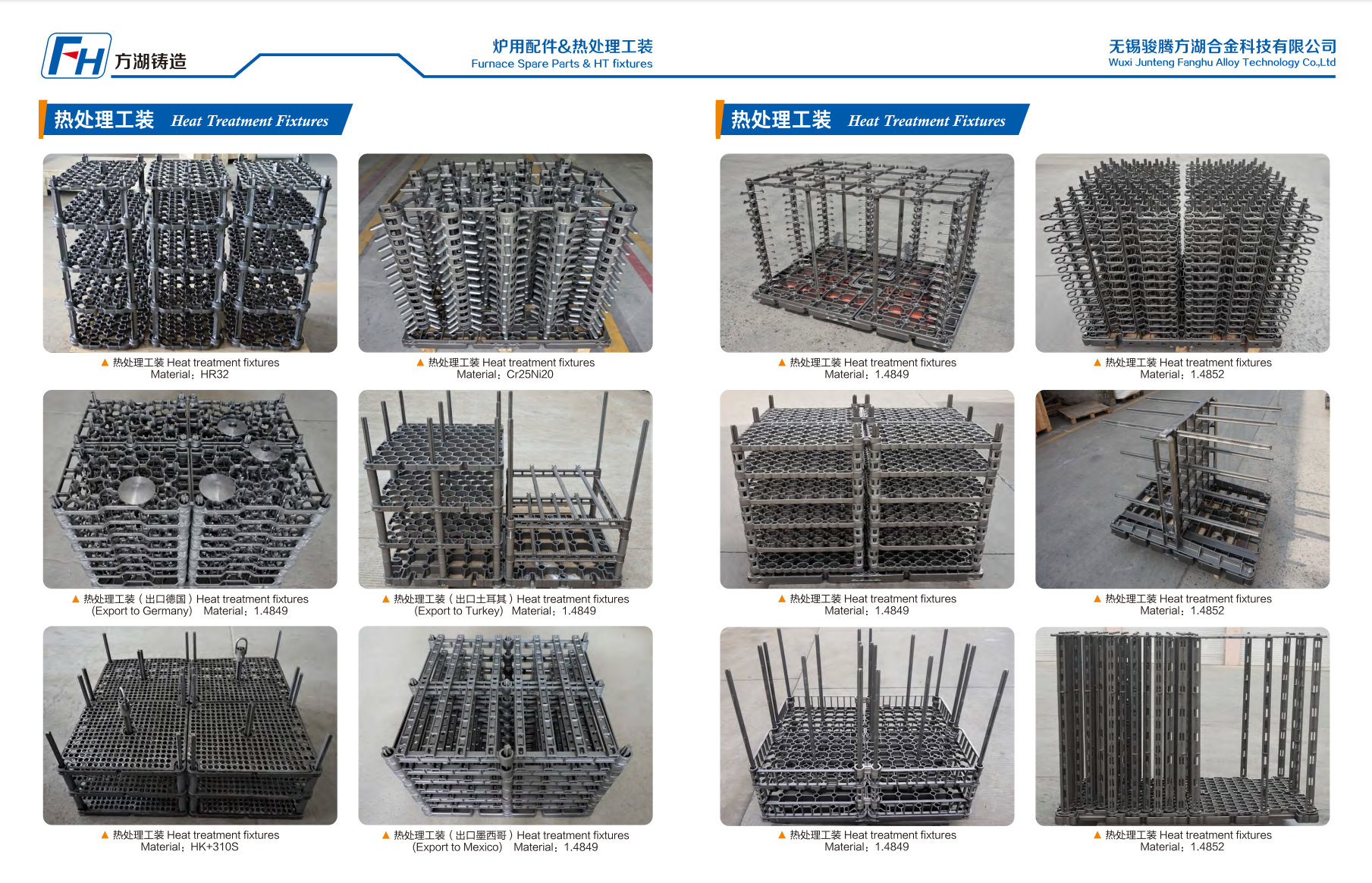
Genuine Photos of FH® Heat Treatment Fixtures
Ordering Process
- Provide furnace internal dimensions and part photos
- Specify operating temperature and atmosphere
- Share load weight per cycle
- FH® proposes grid design, material grade, and thickness
- Production: 7–12 working days
- Delivery includes: inspection report and care instructions
FAQ:
Q1: Why can't I just use my hardening fixtures for tempering?
A: You can, but it's not optimal. Hardening baskets are typically heavier (higher thermal mass, slower cycles) and often have rough surfaces that can scale and flake at tempering temperatures, potentially contaminating your parts. FH® tempering fixtures are lighter, have smooth surfaces, and are designed specifically for clean, efficient tempering.
Q2: Will the fixture warp after many cycles?
A: Minimal. FH® tempering fixtures are stress-relieved during manufacturing and use reinforced grid designs. Typical distortion after 500 cycles is <2 mm over 500 mm length. To maximize life, avoid quenching the fixture (allow it to cool with the furnace or in still air).
Q3: How do I clean the fixture?
A: Light wire brushing or bead blasting every 100–200 cycles is usually sufficient. If scale does form, avoid heavy grinding – it can create rough spots that will scale again faster. For carbon steel fixtures, occasional re-blasting removes rust.
Q4: Do you offer hanging fixtures for long parts (shafts, bars)?
A: Yes. FH® designs hanging trees, pin racks, and vertical fixtures for shafts, long tubes, and bars. We just need part length, hanging point location, and furnace height.
Q5: What is your warranty?
A: 12 months against manufacturing defects (weld cracks, material flaws). Normal thermal discoloration, minor surface oxidation, and gradual warp are considered wear – not covered. Every fixture is inspected before shipment for flatness and weld integrity.



 Tel: 0510-83310100
  E-mail: info@alloy-casting.com
  Add: Room 1105,Building 6, Jiaye Wealth Center,Wuxi, Jiangsu, P.R.China P.C.:214000.