

 English
 Español
 italiano
 Deutsch
 0086-13338774804

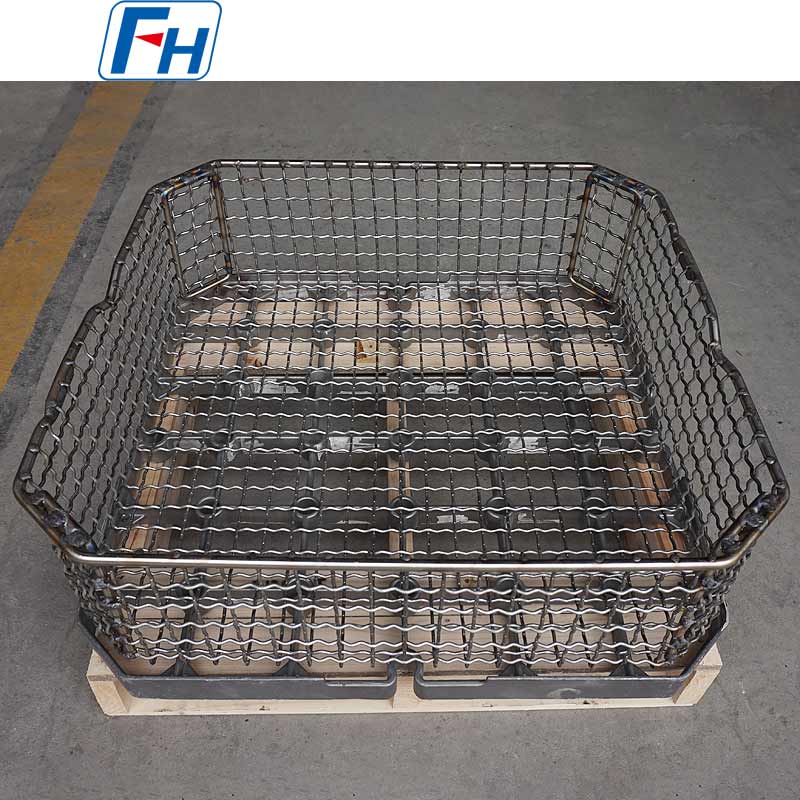
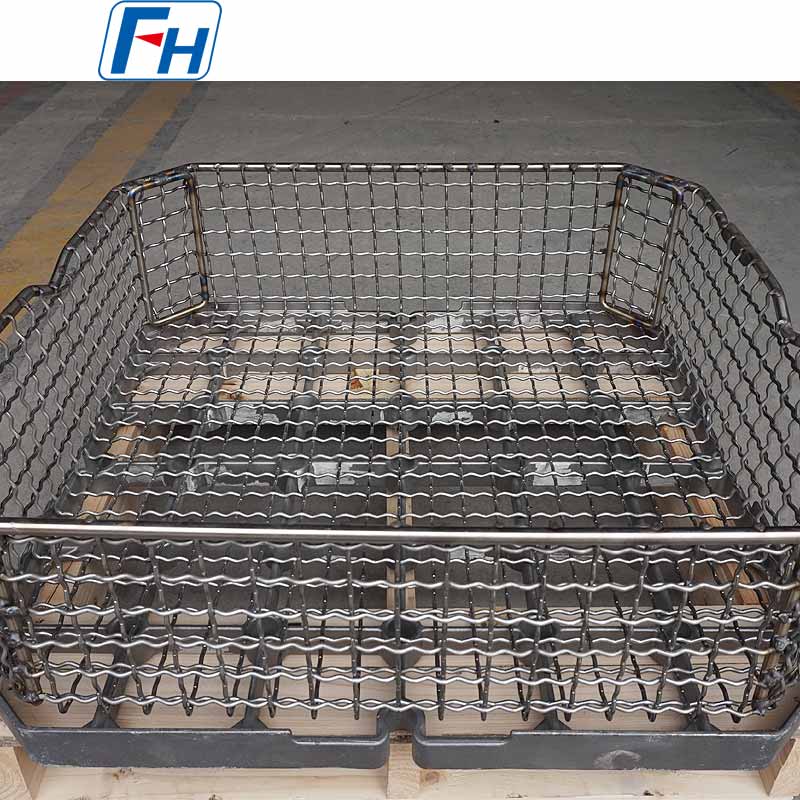
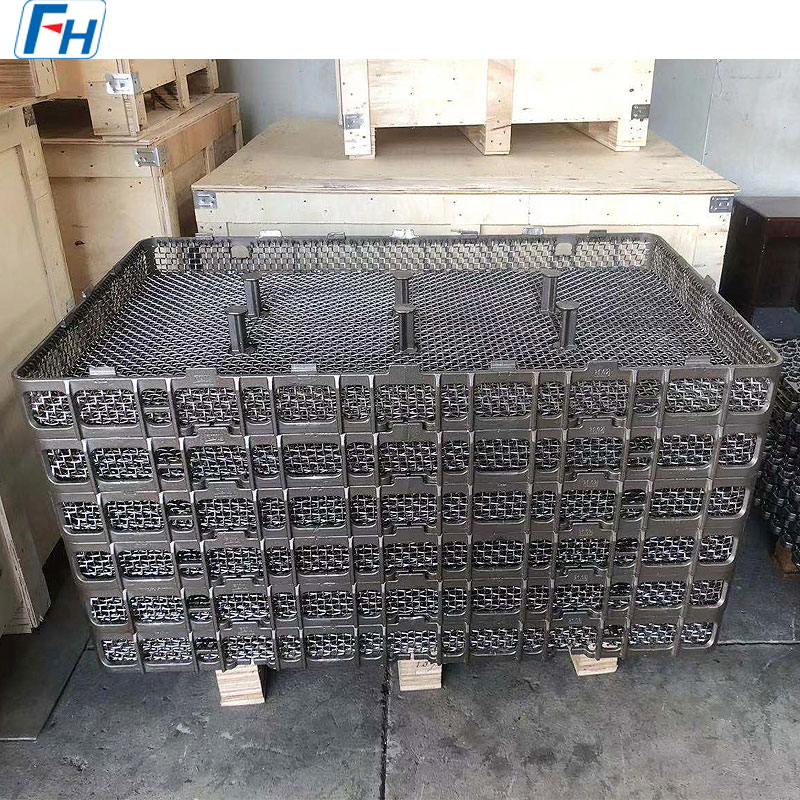
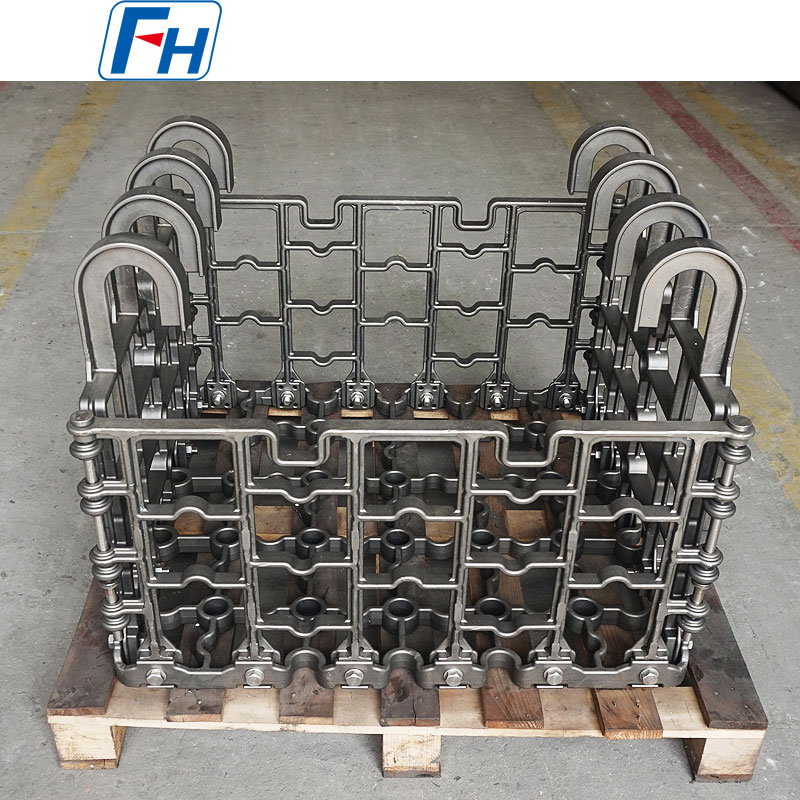
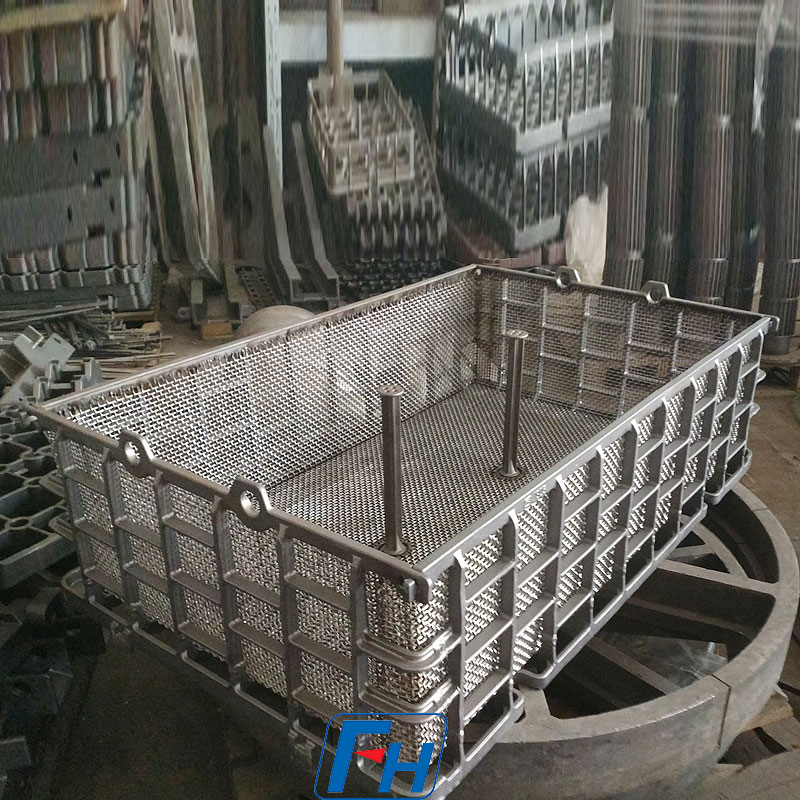
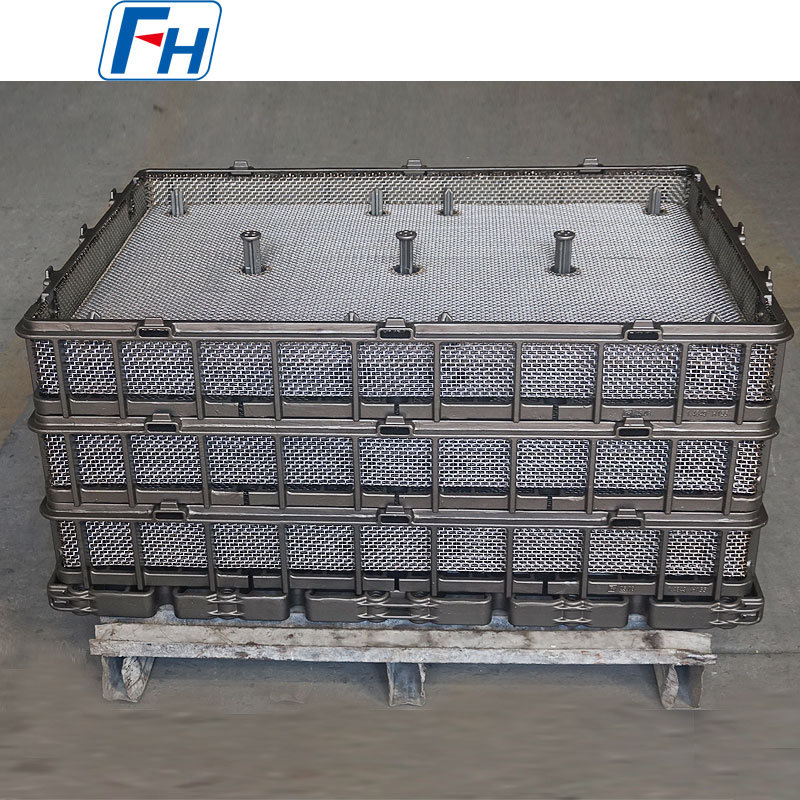
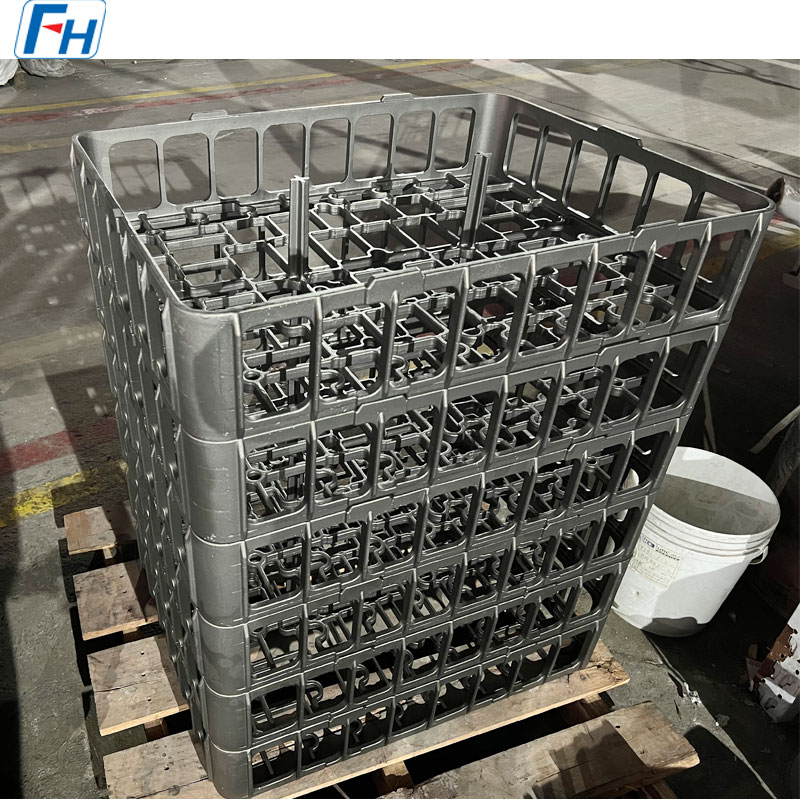
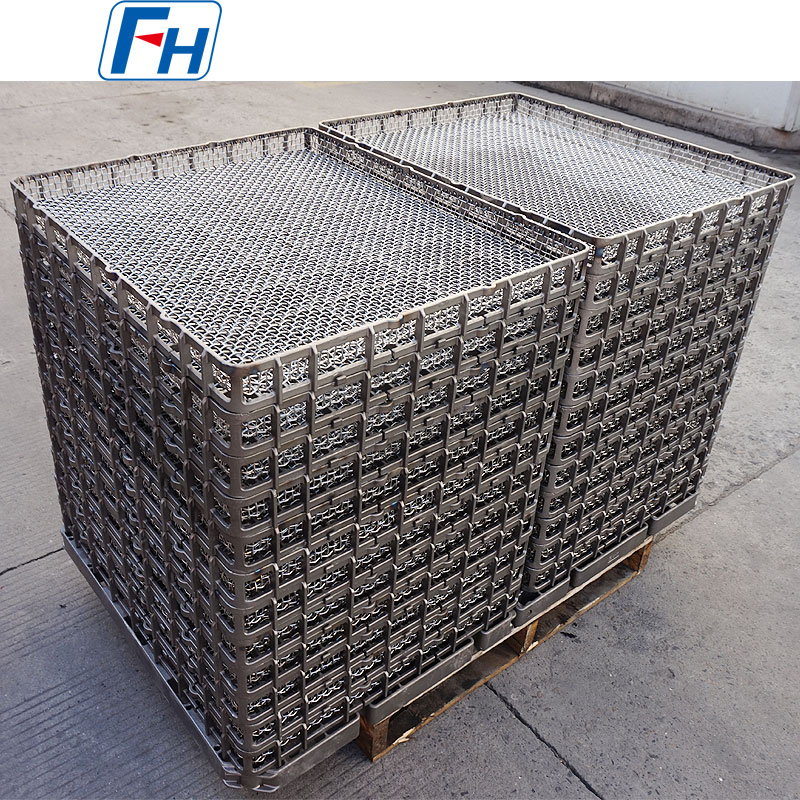

FH® Welded Heat Treatment Fixtures
Key Benefits
- Precision Welding Technology
Hybrid laser + TIG welding process – minimal heat-affected zone, full penetration, and smooth spatter-free seams. - No Weld Drop or Spatter
Clean welding process eliminates loose weld beads or spatter that can fall onto parts during processing. - Thermal Fatigue Resistant
Stress-relieved construction and optimized weld geometry resist cracking through hundreds of heating and cooling cycles. - Stronger Than Cast
Welded structures offer higher tensile strength and better impact resistance than cast alternatives – ideal for heavy loads. - Fully Customizable
Any size, shape, or configuration – trays, baskets, grids, racks, hanging fixtures, and part-specific designs.
Welding Capabilities
| Parameter | Value |
| Welding processes | Laser welding, TIG welding, hybrid laser-TIG |
| Materials | 310S, 1.4828, 1.4849, Ni-base alloys |
| Max part size | Up to 4000 mm × 2500 mm × 2000 mm |
| Wall thickness | 2 mm – 20 mm |
| Weld finish | Smooth, spatter-free, no undercut |
| Heat treatment after weld | Stress relieving (standard for high-temp alloys) |
| Inspection | Visual, dimensional, dye penetrant (on request) |
| Weld inspection report available on request | |
Why Choose FH® Welded Fixtures?
1. Precision Welding – The FH® Difference
| Feature | FH® Welded Fixture | Typical Competitor |
| Weld spatter | None – laser/TIG | Present – stick/MIG |
| Weld consistency | Uniform, full penetration | Variable, shallow penetration |
| Heat-affected zone | Minimal | Large – risk of sensitization |
| Post-weld cleaning | Not required | Grinding needed – creates stress risers |
| Thermal fatigue life | 2-3X longer | Baseline |
2. Clean Operation – No Part Contamination
Weld spatter, loose beads, or rough grinding marks can detach during furnace cycling and fall onto your parts – causing surface defects or rework. FH® laser/TIG welding produces clean, smooth seams that remain intact through hundreds of cycles.
3. Stronger Than Cast – For Heavy Loads
| Property | Welded FH® | Cast |
| Tensile strength | Higher | Baseline |
| Impact resistance | Better | Brittle risk |
| Porosity | None | Possible internal voids |
| Repair ability | Easily re-welded | Difficult |
| Lead time | Faster (no pattern) | Slower (pattern required) |
4. Stress-Relieved Construction
- All FH® welded fixtures for high-temperature service (≥600°C) undergo stress relieving after welding. This:
- Reduces residual stresses from welding
- Prevents distortion during first furnace cycles
- Extends thermal fatigue life
Technical Specifications
| Parameter | Value |
| Operating temp. range | 150°C – 1200°C (depending on material) |
| Material options | 310S, 1.4828, 1.4849, Ni-base |
| Load capacity | 10 kg – 4000 kg (design dependent) |
| Furnace compatibility | Box, pit, car bottom, bell, rotary |
| Welding standard | EN ISO 5817 / AWS D1.1 (upon request) |
| Surface finish | As-welded / shot-blasted / pre-oxidized |
| Lead time (standard) | 7–15 working days |
| Lead time (custom) | 10–20 working days |
| Material test certificate (MTC) included with every FH® fixture | |
Quality Control
Every FH® welded fixture undergoes:
- Material verification – MTC confirms grade and composition
- Dimensional inspection – ±1 mm tolerance on critical dimensions
- Visual weld inspection – No cracks, porosity, or spatter
- Flatness check – For trays and base trays
- Load test – On request for heavy-duty designs
Applications
Processes:
- Hardening / Quenching
- Tempering
- Annealing
- Carburizing / Carbonitriding
- Gas / Plasma Nitriding
- Stress relieving
Material Grade Table:
| Heat-resistant Steel | |||||||||||||
| / | GB | DIN | ASTM | JIS | Chemical Composition (%) | Maximum Operation Temperature | |||||||
| C | Si | Mn | Cr | Ni | Nb/Cb | Mo | Other | ||||||
| 1 | ZG40Cr27Ni4 | 1.4823 | HD | SCH11 | 0.30 - 0.50 | ≤2.00 | ≤1.00 | 24.00 - 28.00 | 4.00 - 6.00 | - | ≤0.50 | - | 1050℃ |
| 2 | ZG40Cr22Ni10 | 1.4826 | HF | SCH12 | 0.30 - 0.50 | 1.00 - 2.50 | ≤2.00 | 19.00 - 23.00 | 8.00 - 12.00 | - | ≤0.50 | - | 950℃ |
| 3 | ZG30Cr28Ni10 | - | HE | SCH17 | 0.20 - 0.50 | ≤2.00 | ≤2.00 | 26.00 - 30.00 | 8.00 - 11.00 | - | - | - | 1050℃ |
| 4 | ZG40Cr25Ni12 | 1.4837 | HH | SCH13 | 0.30 - 0.50 | 1.00 - 2.50 | ≤2.00 | 24.00 - 27.00 | 11.00 - 14.00 | - | ≤0.50 | - | 1050℃ |
| 5 | ZG30Cr28Ni16 | - | HI | SCH18 | 0.20 - 0.50 | ≤2.00 | ≤2.00 | 26.00 - 30.00 | 14.00 - 18.00 | - | - | - | 1100℃ |
| 6 | ZG40Cr25Ni20Si2 | 1.4848 | HK | SCH21 | 0.30 - 0.50 | ≤1.75 | ≤1.50 | 23.00 - 27.00 | 19.00 - 22.00 | - | ≤0.50 | - | 1100℃ |
| 7 | ZG30Cr20Ni25 | - | HN | SCH19 | 0.20 - 0.50 | ≤2.00 | ≤2.00 | 19.00 - 23.00 | 23.00 - 27.00 | - | - | - | 1100℃ |
| 8 | ZG40Cr19Ni39 | 1.4865 | HU | SCH20 | 0.35 - 0.75 | ≤2.50 | ≤2.00 | 17.00 - 21.00 | 37.00 - 41.00 | - | - | - | 1020℃ |
| 9 | ZG40Cr15Ni35 | 1.4806 | HT | SCH15 | 0.35 - 0.70 | ≤2.00 | ≤2.00 | 15.00 - 19.00 | 33.00 - 37.00 | - | ≤0.50 | - | 1000℃ |
| 10 | ZG40Cr25Ni35Nb | 1.4852 | HPCb | SCH24Nb | 0.30 - 0.50 | ≤2.00 | ≤2.00 | 24.00 - 28.00 | 33.00 - 37.00 | 0.80 - 1.80 | ≤0.50 | - | 1100℃ |
| 11 | ZG40Cr19Ni39Nb | 1.4849 | - | - | 0.30 - 0.50 | 1.00 - 2.50 | ≤2.00 | 18.00 - 21.00 | 36.00 - 39.00 | 1.20- 1.80 | ≤0.50 | - | 1100℃ |
| 12 | ZG40Cr24Ni24Nb | 1.4855 | - | - | 0.30 - 0.50 | 1.00 - 2.50 | ≤2.00 | 23.00 - 25.00 | 23.00 - 25.00 | 0.80 - 1.80 | ≤0.50 | - | 1050℃ |
| 13 | ZG40Cr25Ni35 | 1.4857 | HP | SCH24 | 0.35 - 0.50 | 1.00 - 2.50 | ≤2.00 | 24.00 - 28.00 | 33.00 - 37.00 | - | ≤0.50 | - | 1100℃ |
| 14 | ZG1Cr20Ni32Nb | 1.4859 | - | - | 0.06 - 0.15 | 0.50 - 1.50 | ≤2.00 | 19.00 - 21.00 | 31.00 - 33.00 | 0.50 - 1.50 | ≤0.50 | - | 1050℃ |
| 15 | ZG45Cr12Ni60 | - | HW | - | 0.35 - 0.75 | ≤2.00 | ≤2.00 | 10.00 - 14.00 | 58.00 - 62.00 | - | - | - | 1100℃ |
| 16 | ZG45Cr18Ni66 | - | HX | - | 0.35 - 0.75 | ≤2.00 | ≤2.00 | 15.00 - 19.00 | 64.00 - 68.00 | - | - | - | 1100℃ |
| 17 | ZG1Cr28Co50 | 2.4778 | - | - | 0.05 - 0.25 | 0.50 - 1.00 | ≤1.50 | 27.00 - 30.00 | ≤1.00 | ≤0.50 | ≤0.50 | Co:48.0 - 52.0 | 1200℃ |
| 18 | ZG30Cr28Co50Nb | 2.4779 | - | - | 0.25 - 0.35 | 0.50 - 1.50 | 0.50 - 1.50 | 27.00 - 29.00 | - | 1.50 - 2.50 | ≤0.50 | Co:48.0 - 52.0 | 1200℃ |
| 19 | ZG40Cr28Ni48W5 | 2.4879 | - | SCH42 | 0.35 - 0.55 | 1.00 - 2.00 | ≤1.50 | 27.00 - 30.00 | 47.00 - 50.00 | - | ≤0.50 | W:4.0 - 5.5 | 1200℃ |
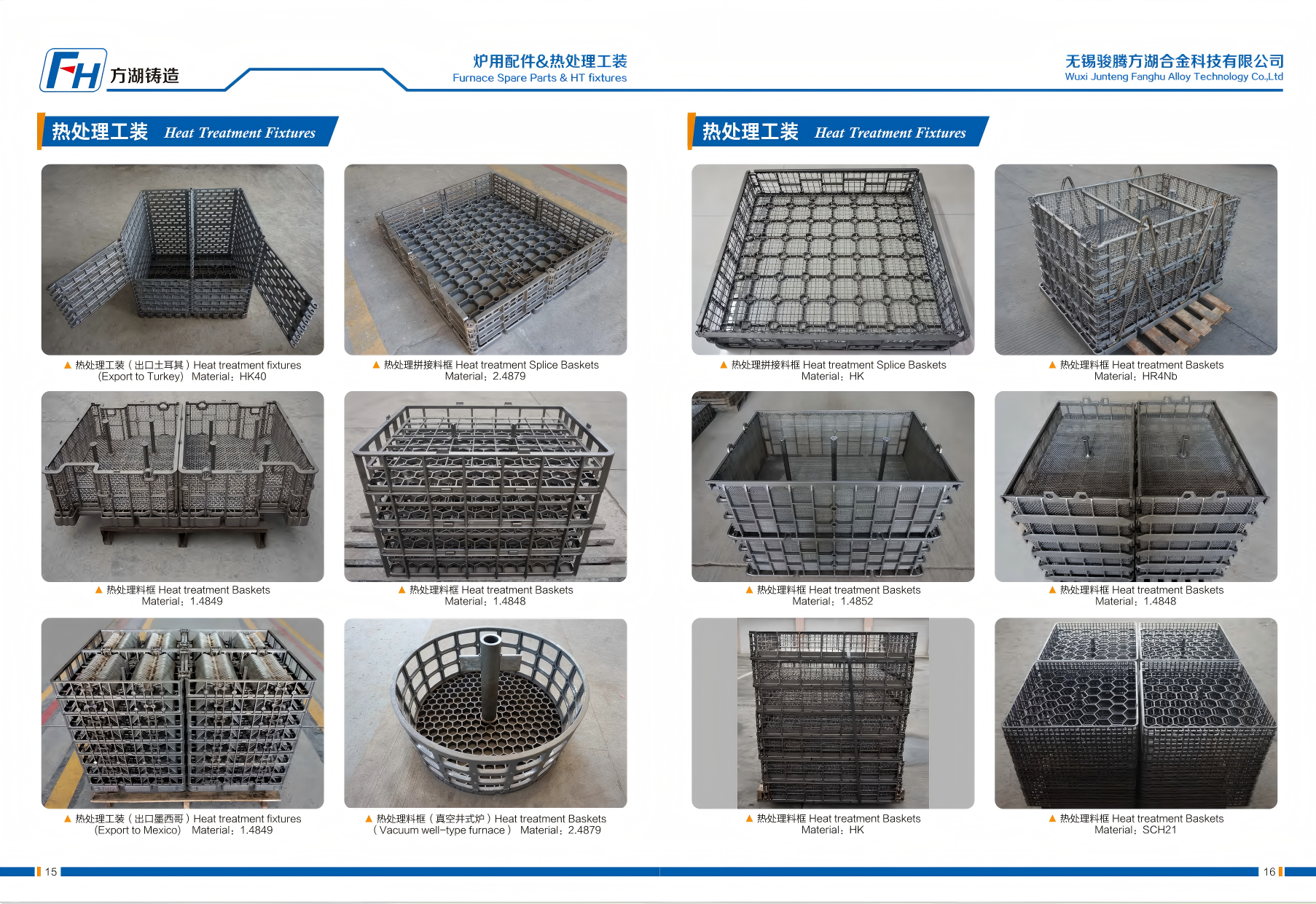
Genuine Photos of FH® Heat Treatment Fixtures
Ordering Process
- Provide furnace internal diameter (or L×W), depth, and access method
- Share part dimensions, max load weight per batch, and operating temperature
- Specify atmosphere (carburizing, carbonitriding, annealing, etc.)
- FH® engineers propose complete system design + 3D layout
- Confirm component quantities (one base tray + number of baskets)
- Production: 15–25 working days
- Delivery includes: MTC, inspection reports, stacking diagram, care guide
FAQ:
Q1: Why choose welded fixtures over cast fixtures?
A: Welded fixtures offer several advantages:
- Higher strength – better tensile and impact resistance
- Faster lead time – no pattern casting required
- Easier repair – damaged welds can be re-welded
- No porosity – cast parts can have internal voids
- Lower cost for small quantities – no tooling investment
For complex geometries or very high-volume runs, cast may still be appropriate – FH® offers both.
Q2: What welding processes does FH® use?
A: We use hybrid laser + TIG welding for most heat treatment fixtures. Laser provides deep penetration with minimal heat input; TIG provides smooth, spatter-free surface finish. This combination produces the strongest, cleanest welds for furnace applications.
Q3: How do I prevent weld cracking in high-temperature service?
A: FH® prevents weld cracking through three methods:
- Material selection – using weldable heat-resistant alloys
- Pre-weld preparation – clean, properly fitted joints
- Post-weld stress relieving – removes residual stresses before first use
Our fixtures are designed specifically for thermal cycling.
Q4: Will weld spatter or loose beads fall onto my parts?
A: No. FH® laser/TIG welding produces zero spatter – unlike stick or MIG welding. Weld seams are smooth and fully fused. No post-weld grinding is needed, which means no grinding dust or stress risers.
Q5: Can you repair my existing welded fixture?
A: Yes, if the damage is localized. We can:
- Re-weld cracked joints
- Replace damaged sections
- Reinforce weak areas
Contact us with photos for a repair assessment. Severely warped or carburized fixtures are typically not repairable.
Q6: What materials can FH® weld for heat treatment fixtures?
A: We weld all common heat treatment materials:
- Carbon steel (low temperature applications)
- 310S (UNS S31008)
- 1.4828 (X15CrNiSi20-12)
- 1.4849 (X15CrNiSi25-21)
- Inconel / Ni-base alloys
Contact us for other alloys.
Q7: Do you provide weld inspection reports?
A: Yes. Standard inspection includes visual and dimensional checks. For critical applications, we can provide dye penetrant (PT) or radiographic (X-ray) inspection reports upon request.
Q8: What is your warranty?
A: 12 months against manufacturing defects (weld cracks, material flaws, poor workmanship). Normal wear including creep, thermal fatigue, and atmosphere attack is not covered – these are expected over time. All fixtures are inspected before shipment.
Q9: How do I place an order for a custom welded fixture?
A: Simple process:
- Send us your part drawings, furnace dimensions, and process details
- FH® provides a CAD design and quote within 48 hours
- Approve design and place order
- Production: 10–20 working days
- Delivery with MTC and inspection report


 Tel: 0510-83310100
  E-mail: info@alloy-casting.com
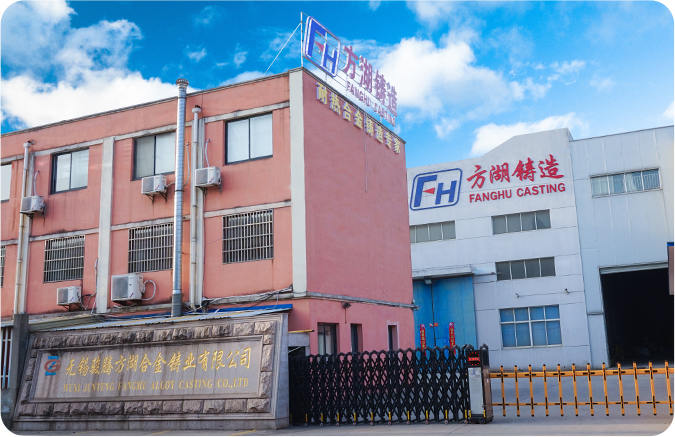
  Add: Room 1105,Building 6, Jiaye Wealth Center,Wuxi, Jiangsu, P.R.China P.C.:214000.