 Jul 27, 2026
 Content
Wear-resistant castings are most commonly produced from three alloy families: high chromium white iron (typically 12 to 28 percent chromium), Ni-Hard cast iron (nickel-chromium white iron), and high manganese steel (around 11 to 14 percent manganese). High chromium iron is chosen for abrasive sliding wear, Ni-Hard is used where a balance of hardness and cost is needed, and high manganese steel is selected for heavy impact loading because it work-hardens on contact. The right choice depends on whether the part faces abrasion, impact, or elevated temperature in service.
Foundries select an alloy system based on the dominant wear mechanism a part will face, then adjust the chemistry and heat treatment to fine-tune hardness, toughness, and corrosion behavior. The table below summarizes the alloy groups most often specified for wear-resistant castings.
| Alloy Family | Typical Composition | Hardness Range | Primary Application |
|---|---|---|---|
| High Chromium White Iron | 12-28% Cr, 2-3.5% C, Mo/Ni additions | 58-65 HRC | Grinding cylinders, liners, crusher parts |
| Ni-Hard Cast Iron | 3-5% Ni, 1.4-4% Cr, 2.5-3.6% C | 50-60 HRC | Mixer blades, pump housings, chutes |
| High Manganese Steel | 11-14% Mn, 1-1.4% C | 200 HB as cast, 500+ HB work-hardened | Crusher jaws, impact plates, hammers |
| Low Alloy Wear Steel (42CrMo type) | 0.4% C, Cr-Mo additions | 28-35 HRC (quenched/tempered) | Valve components, structural wear parts |
| Martensitic Stainless Steel | 12-17% Cr, moderate carbon | 45-55 HRC | Corrosive-abrasive combined wear |
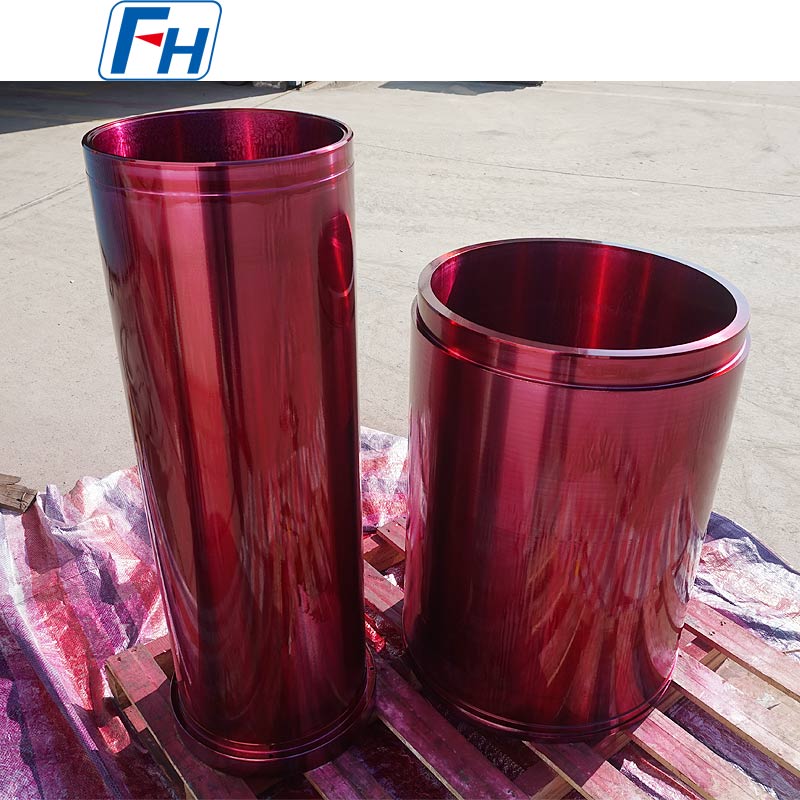
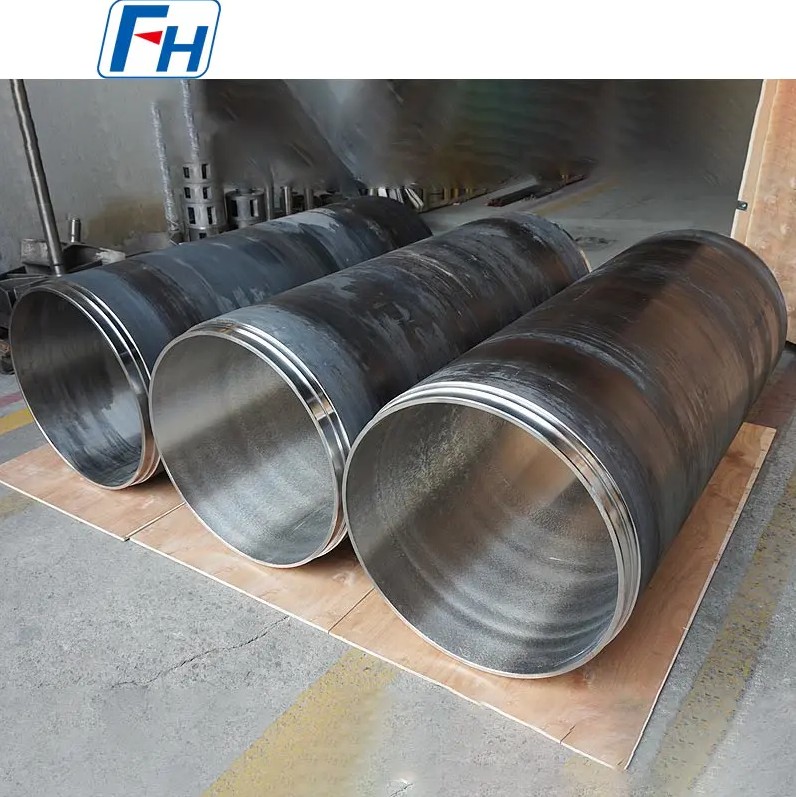
High chromium white iron is the reference material for pure abrasive wear because its microstructure contains dense M7C3 chromium carbides embedded in a martensitic matrix. Chromium content between 15 and 26 percent produces carbides that resist gouging from sand, ore, or cement aggregate far better than plain carbon steel. Grinding cylinders and drum liners are frequently cast in this alloy, since the carbide network keeps wearing surfaces intact through thousands of operating hours. Heat treatment through destabilization and tempering is used to convert retained austenite into martensite, which raises surface hardness without making the casting brittle enough to crack under normal service loads.
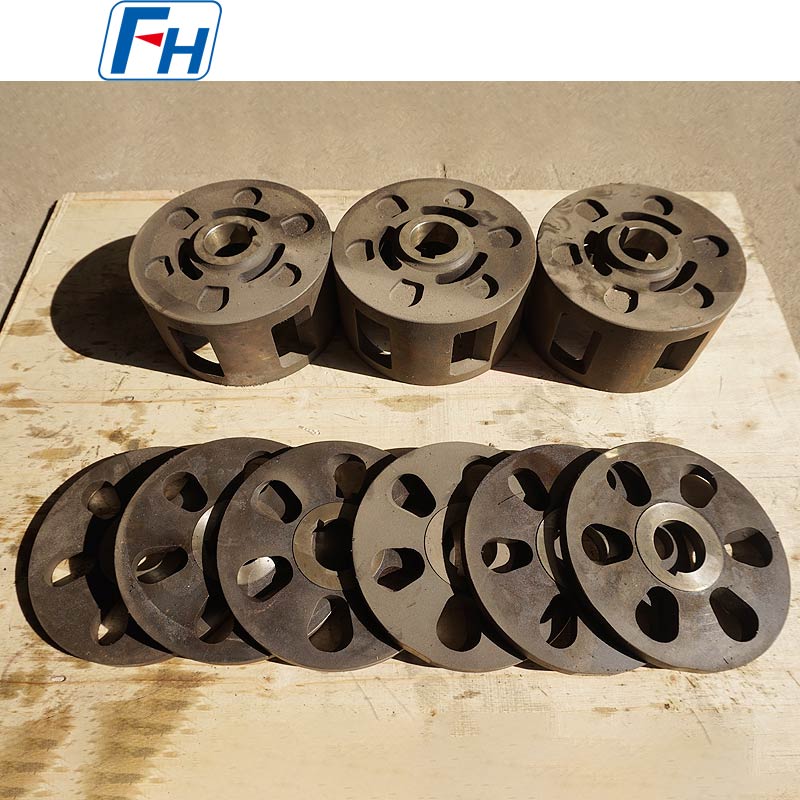
Ni-Hard iron adds nickel to suppress the formation of soft pearlite during cooling, allowing the matrix to transform directly to martensite even in thick sections. This gives Ni-Hard castings a favorable balance between hardness, casting cost, and machinability compared with high chromium iron. Concrete mixer blades are a common Ni-Hard application, since the material tolerates the mixed abrasion and light impact from aggregate, sand, and cement paste. Material grades such as AS2027 NiCr4 are widely specified because they combine wear life with the dimensional consistency needed for bolt-on replacement parts.
High manganese steel, also known as Hadfield steel, behaves differently from the two iron families above. In its as-cast condition it is relatively soft and tough, but repeated impact causes the surface layer to work-harden through deformation twinning, raising surface hardness while the core stays ductile. Industry data indicates this mechanism can deliver roughly a 25-fold increase in wear resistance compared with untreated carbon steel once the surface has fully work-hardened. This makes high manganese steel the standard choice for crusher jaws, hammers, and impact plates where sudden shock loading, not gradual abrasion, is the dominant failure mode.
Selecting an alloy purely on hardness numbers can lead to premature cracking or excessive cost. A more reliable approach is to classify the operating environment first, then match the alloy family and, where needed, a surface treatment.
| Wear Condition | Recommended Alloy | Reasoning |
|---|---|---|
| Heavy Impact | Cr-Al-Ni heat-resistant alloy or REM-modified high manganese cast iron | Better toughness and crack propagation resistance under repeated shock |
| Abrasive Sliding | High chromium white iron with laser cladding using TiC, WC-Ni, or MoS2 composite powders | Hard carbides plus self-lubricating phases reduce friction and mass loss |
| High Temperature Wear | Cr-Al heat-resistant alloy with Al, Si, Nb additions | Improved oxidation resistance above 1100 degrees Celsius |
| Combined Corrosion and Abrasion | Martensitic stainless steel or nickel alloy castings | Chromium oxide layer resists chemical attack alongside particle wear |
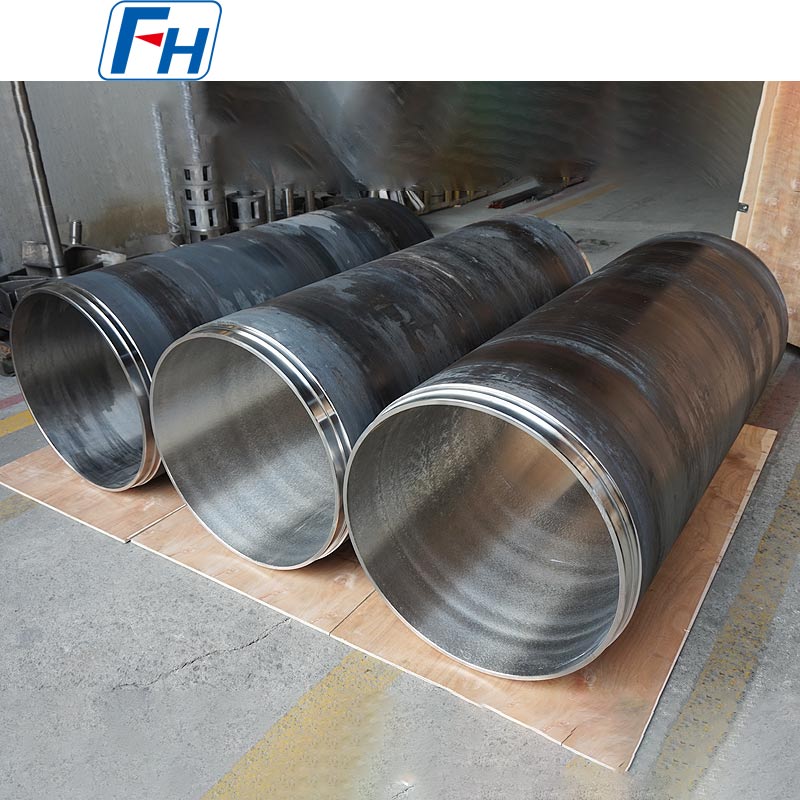
The alloy composition determines the theoretical wear life of a casting, but the casting process determines whether that potential is realized. Centrifugal casting is often applied to cylindrical wear parts such as grinding barrels and rollers, because the rotational solidification packs denser metal toward the outer wall, where wear resistance matters most, while porosity and lighter inclusions migrate toward the bore. Static sand casting remains common for irregular shapes like mixer blades and guide plates, where a precision casting basket or shell mold controls dimensional accuracy for parts that must fit existing equipment without rework. Controlled cooling rates after pouring are equally important, since rapid or uneven cooling can trap retained austenite in high chromium iron, leaving the casting softer than its design hardness until a proper destabilization heat treatment is applied.
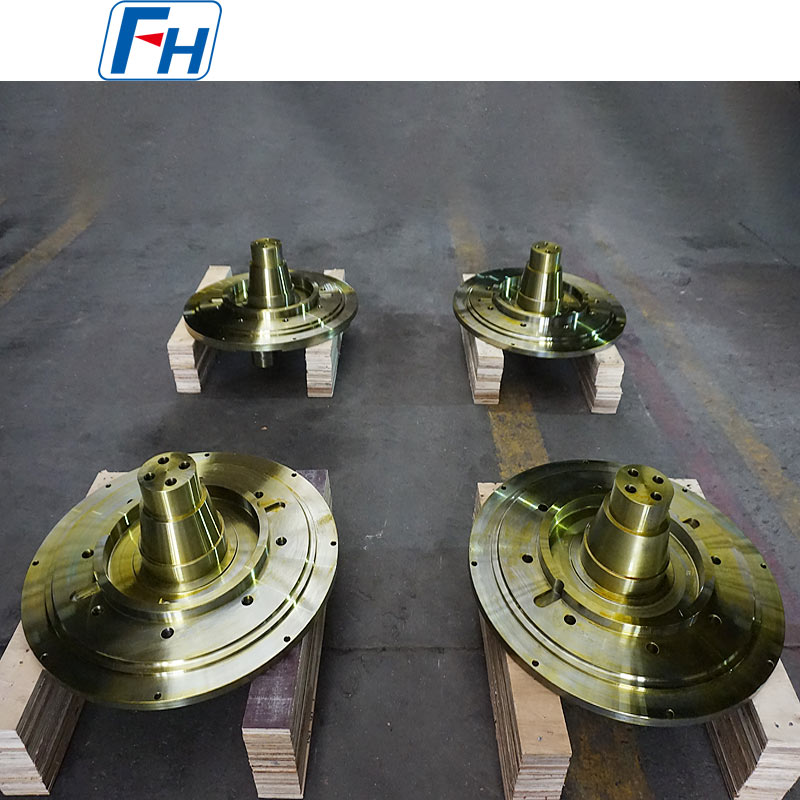
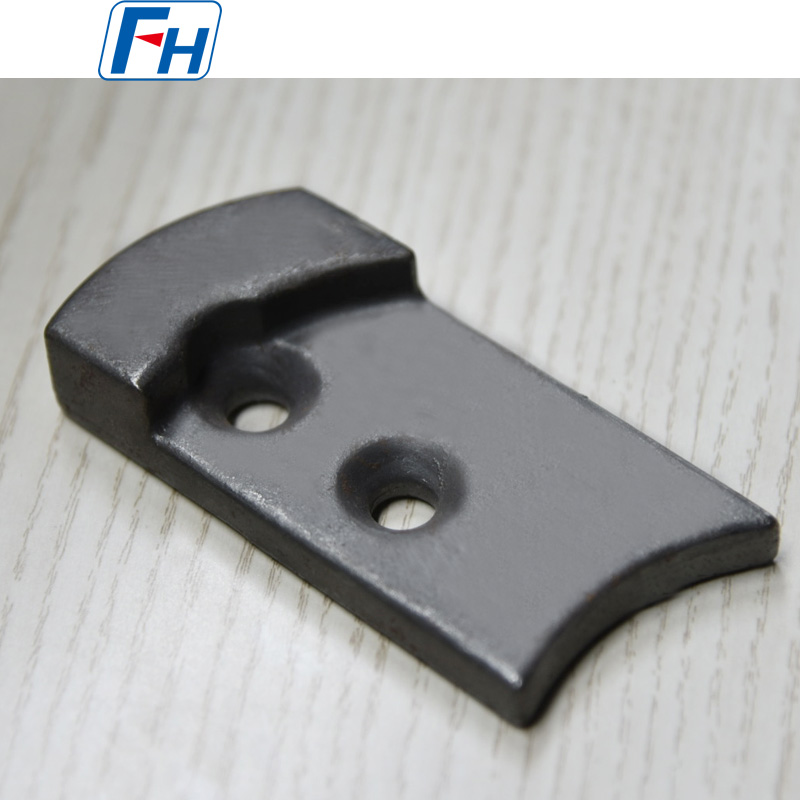
The following components illustrate how different alloy families are applied across grinding, mixing, and flow-control equipment, from high chromium grinding cylinders to Ni-Hard mixer blades.
Because alloy performance depends heavily on microstructure, visual inspection alone cannot confirm wear resistance. Reliable suppliers verify castings through a combination of methods.
| Verification Method | What It Detects |
|---|---|
| Macroscopic Microstructure Inspection | Coarse grains, surface cracks, or a decarburized layer that lowers wear resistance |
| Hardness and Wear Testing | Rockwell or Vickers hardness plus ball-disc wear tests benchmarked against industry standards |
| Chemical Composition Analysis | Spectroscopic or EDS confirmation of alloy content and carbide distribution at grain boundaries |
| Non-Destructive Testing | Ultrasonic or magnetic particle inspection to catch internal porosity or cracking before failure |
Extending the service life of a wear-resistant casting usually costs less than full replacement, provided the repair method matches the alloy and the extent of damage.
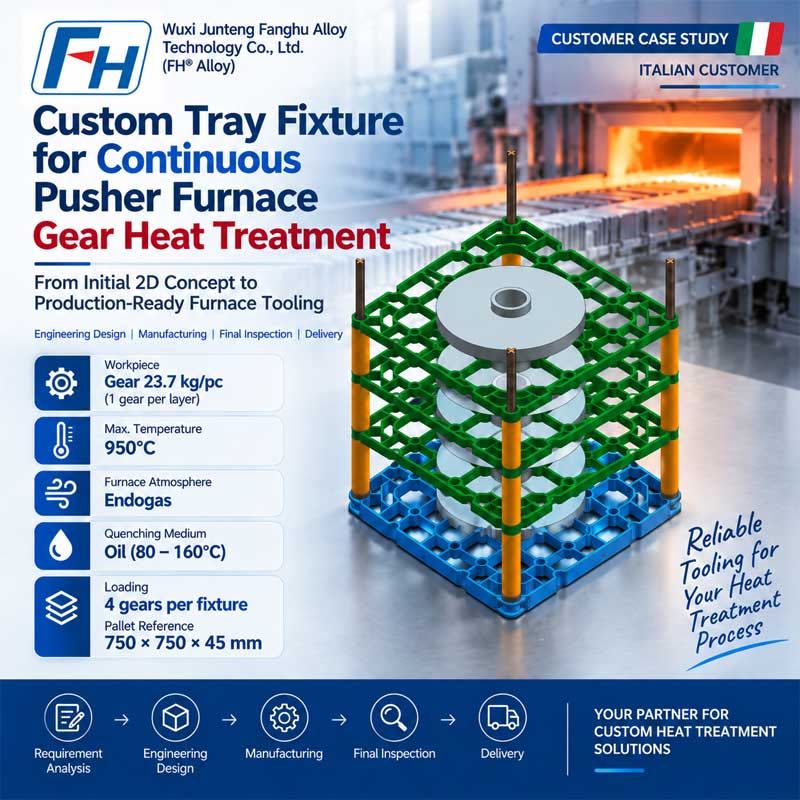
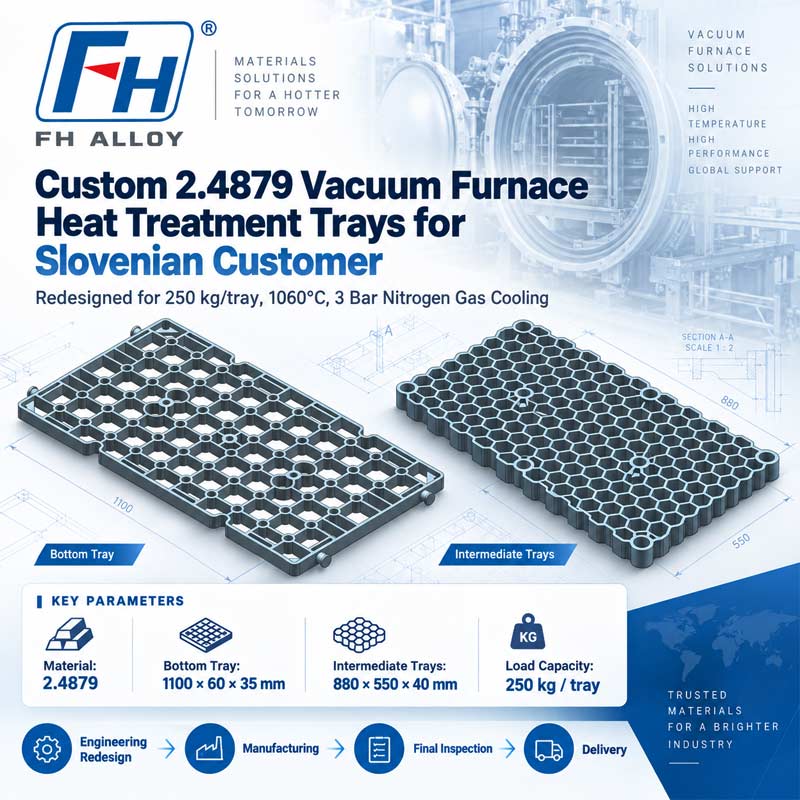
Many facilities that operate wear-resistant equipment also run heat treatment lines, so it is worth noting the related alloy castings used in those systems. Radiant heat tubes, furnace rollers, and furnace rollers for continuous furnace lines are typically cast in heat-resistant Cr-Ni alloys rather than the wear alloys described above, since their main challenge is oxidation and creep at high temperature rather than abrasion. Heat-treatment fixtures, welding heat treatment fixtures, heat treatment base trays, and precision casting baskets carry workpieces through the furnace and must resist thermal fatigue over repeated cycles. Components such as the Ipsen fan blade, furnace piers, AFC furnace roller rails and rollers, AFC pusher head, hearth roll for cast link belt furnace, and chain plate for chain casting furnace round out the fixture and conveying system inside continuous furnaces. Where these systems also encounter particle abrasion, such as at loading zones, wear resistant liners in high chromium or Ni-Hard alloy are often added to protect the underlying structure.
Beyond alloy selection, supplier experience affects consistency across production batches. Foundries that control melt chemistry, heat treatment cycles, and post-cast inspection tend to deliver castings with more predictable service life. Requesting material certificates, hardness test reports, and, where relevant, non-destructive testing records before large orders helps confirm that the delivered alloy matches the specification rather than relying on nominal grade names alone.
 CategoryRecent Post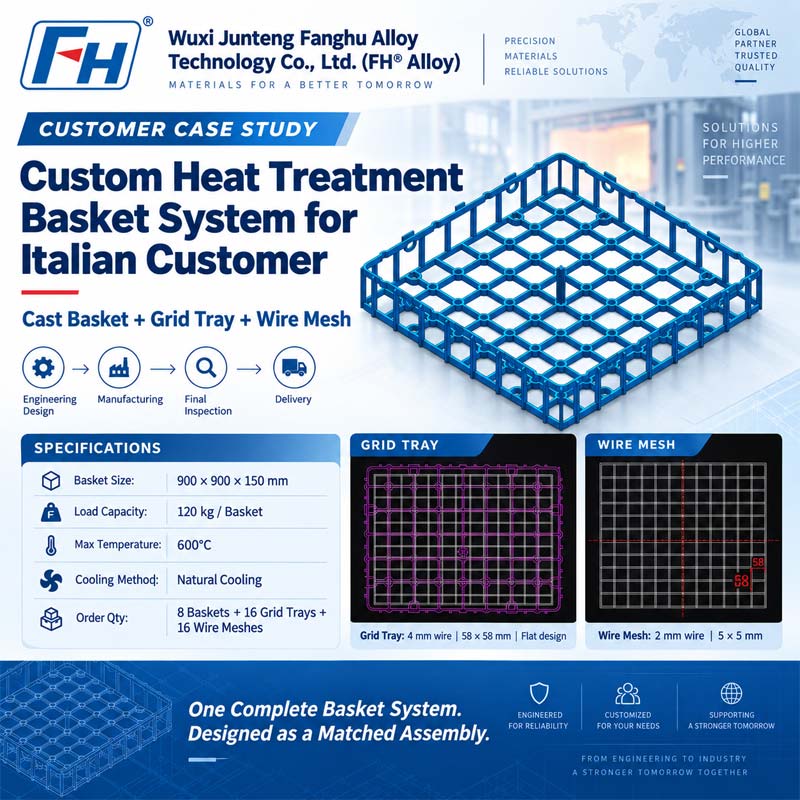

Focus on Designing and Manufacturing Alloy Steel Parts since 2006
 Tel: 0510-83310100
  E-mail: info@alloy-casting.com
  Office Add: Room 1105,Building 6, Jiaye Wealth Center,Wuxi, Jiangsu, P.R.China P.C.:214000.
  Privacy

 English
 Español
 italiano
 Deutsch
 0086-13338774804