
 Nov 24, 2026
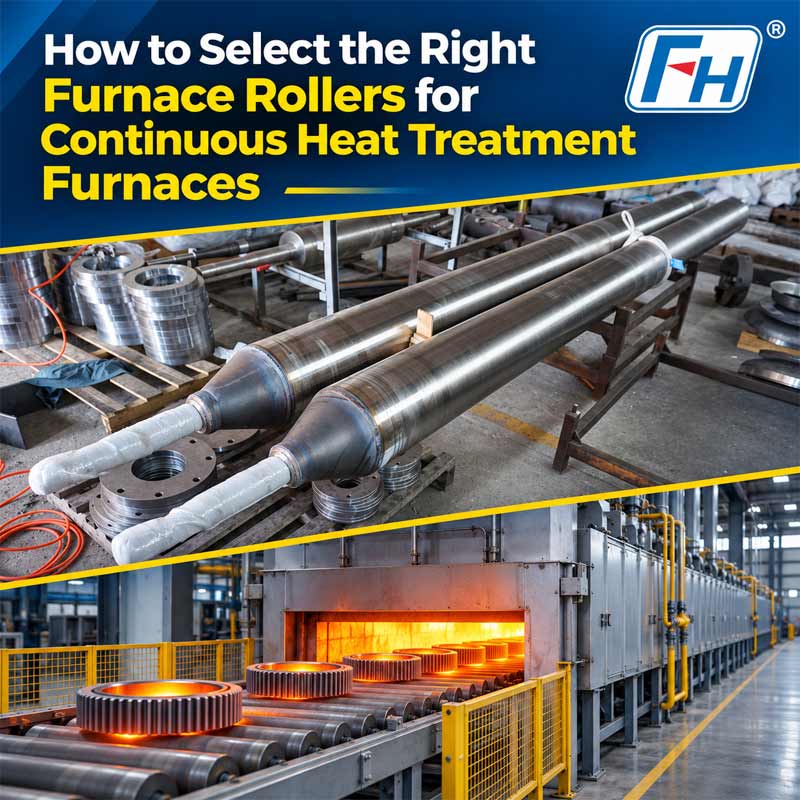
Selecting the right furnace rollers is essential for maintaining stable operation in continuous heat treatment furnaces.
Furnace rollers must support workpieces and transport them through high-temperature processing zones while maintaining dimensional stability and mechanical performance.
Incorrect material selection, unsuitable dimensions, or insufficient attention to operating conditions may contribute to premature deformation, cracking, or other operational problems.
This guide explains the main factors to consider when selecting furnace rollers for continuous heat treatment equipment.
1. Identify the Furnace Type
Start by identifying the furnace and its conveying system.
Common applications include:
Different furnace designs have different roller configurations, support arrangements, and operating requirements.
2. Determine the Actual Operating Temperature
Temperature is one of the most important factors in alloy selection.
However, the furnace set temperature does not always equal the actual roller metal temperature.
Engineers should consider:
Long-term exposure to elevated temperatures can reduce mechanical strength and increase creep deformation risk.
3. Understand the Furnace Atmosphere
Furnace atmosphere is another critical factor.
Common conditions include:
Oxidizing Atmosphere
Can lead to oxide scale formation and material degradation.
Carburizing Atmosphere
Can affect alloy performance through carbon interaction and related high-temperature reactions.
Nitriding Atmosphere
Requires evaluation of the chemical environment and its interaction with the selected alloy.
Protective Atmosphere
Gas composition, oxygen potential, and moisture content should be considered.
A material suitable for one atmosphere may not provide the same performance in another.
4. Evaluate Mechanical Loading
Determine the load supported by each roller.
The evaluation should include:
The roller design must provide sufficient structural capacity under actual operating conditions.
5. Select the Appropriate Alloy
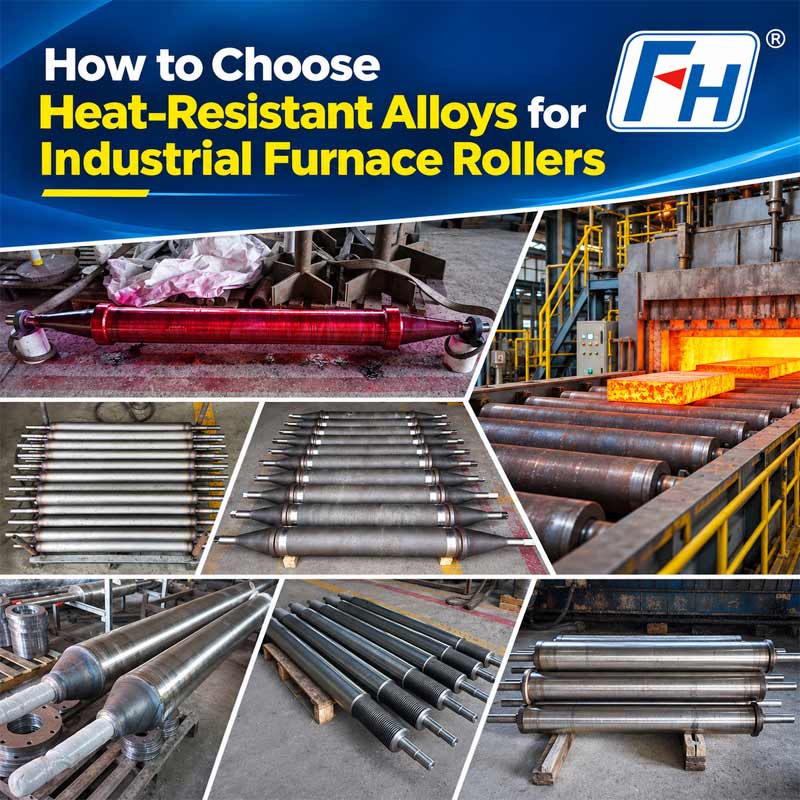
Common heat-resistant alloy grades used in furnace component manufacturing include:
| Material Grade | General Alloy Characteristics |
| 1.4848 | Approximately 25Cr-20Ni heat-resistant cast alloy |
| 1.4849 | Nb-containing high-nickel heat-resistant cast alloy |
| 1.4852 | Nb-containing high-chromium, high-nickel heat-resistant cast alloy |
| 2.4879 | Nickel-based chromium-tungsten heat-resistant alloy |
This is a preliminary material overview, not a universal ranking.
The final selection should be based on chemical composition requirements, material standards, high-temperature mechanical properties, and furnace conditions.
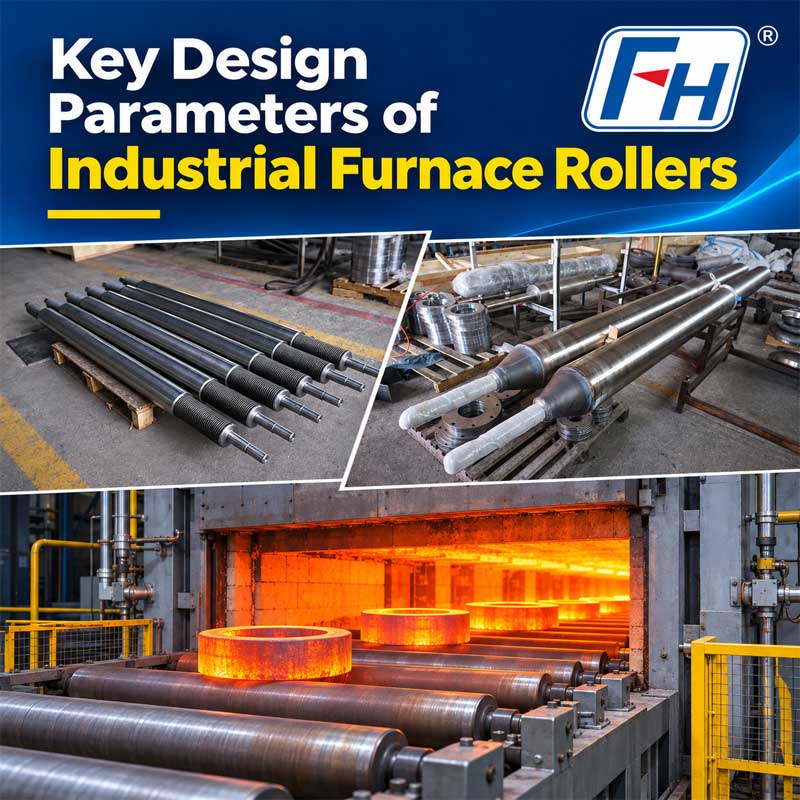
6. Confirm Roller Dimensions
Before ordering, confirm:
Dimensions should match the existing equipment or an approved engineering design.
7. Consider Manufacturing Quality
The manufacturing process affects the final quality of a furnace roller.
Important quality considerations include:
Inspection requirements should be agreed upon before production.
8. Evaluate Total Operating Cost
The lowest initial purchase price does not necessarily represent the best long-term solution.
Consider:
A properly specified furnace roller can help reduce operational interruptions and replacement-related costs.
9. Prepare Technical Information for Your Supplier
When contacting a manufacturer, provide the following information:
The more complete the information, the easier it is to evaluate a suitable solution.
FH® Furnace Roller Solutions
FH® specializes in heat-resistant alloy castings and industrial furnace components.
We support custom manufacturing requirements based on technical drawings, material specifications, and application conditions.
For continuous furnace applications, FH® can discuss roller dimensions, alloy selection, and manufacturing requirements according to your project.
Explore FH® Furnace Rollers.
Frequently Asked Questions
What is the most important factor when selecting furnace rollers?
There is no single deciding factor. Material, temperature, atmosphere, loading, dimensions, and manufacturing quality must be evaluated together.
Can the same alloy be used for every furnace roller?
No. Different operating conditions require different material evaluations.
Should I provide a drawing when requesting a quotation?
Yes. A technical drawing is one of the most useful references for confirming dimensions and manufacturing requirements.
Can furnace rollers be replaced with a different material grade?
Potentially, but the alternative must be evaluated for chemical composition, high-temperature performance, mechanical loading, and compatibility with the furnace atmosphere.
Looking for a Furnace Roller Manufacturer?
Send FH® your existing roller drawings, material requirements, and furnace operating information.
Our team can discuss a custom manufacturing solution for your continuous heat treatment equipment.
 CategoryRecent Post
 Mon 11, 2026

Focus on Designing and Manufacturing Alloy Steel Parts since 2006
 Tel: 0510-83310100
 E-mail: info@alloy-casting.com
 Office Add: Room 1105,Building 6, Jiaye Wealth Center,Wuxi, Jiangsu, P.R.China P.C.:214000.
 Privacy

 English
 Español
 italiano
 Deutsch
 0086-13338774804
