 Jul 20, 2026
 Content
Direct Answer
Fixture type should be selected by matching three variables at once: furnace type, peak operating temperature, and load geometry. As a working rule, precision cast fixtures made by centrifugal casting suit continuous, high-load furnaces such as pusher and mesh-belt lines, while welded heat treatment fixtures suit lighter, batch-type chamber furnaces where fast turnaround and design flexibility matter more than absolute service life. Well-type and pit furnaces generally rely on furnace piers and cast base trays rather than mesh baskets, because the vertical loading pattern needs a rigid, flat-bottom support.
Before comparing materials or shapes, the furnace configuration itself narrows the field. A heat-treatment fixture that performs well in a vacuum furnace can fail prematurely in an atmosphere pit furnace, simply because the thermal cycle, atmosphere chemistry, and mechanical loading are different.
| Furnace Type | Recommended Fixture | Why It Fits |
|---|---|---|
| Vacuum / Sealed Quench Furnace | Cast fixture, centrifugal casting alloy | Uniform grain structure resists creep under repeated thermal cycling |
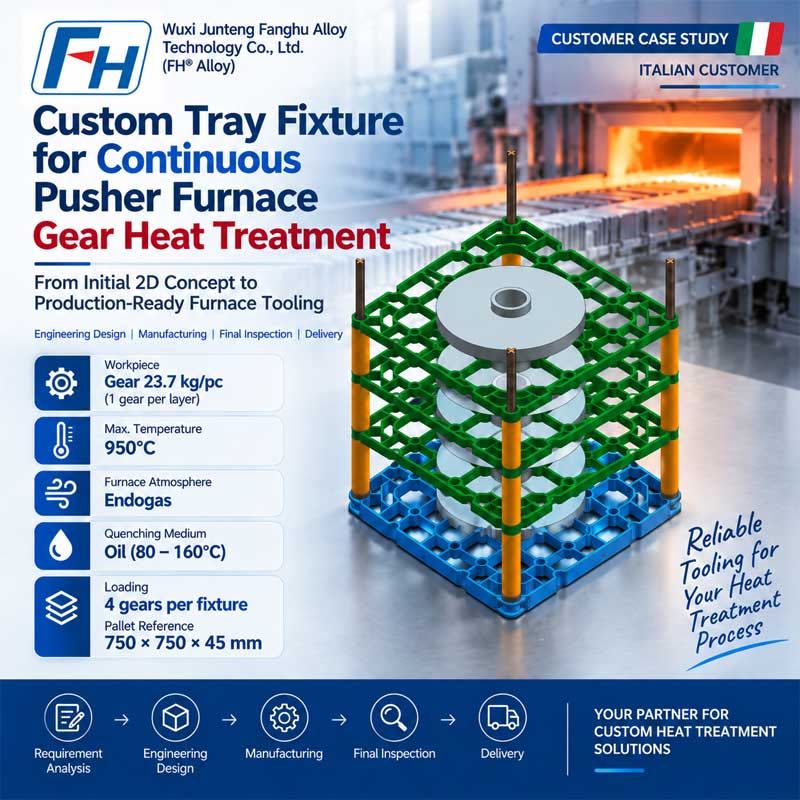
| Continuous Pusher / Mesh Belt Furnace | Heat Treatment Base Trays + furnace roller assemblies | Flat, load-rated trays move smoothly across rollers without tipping |
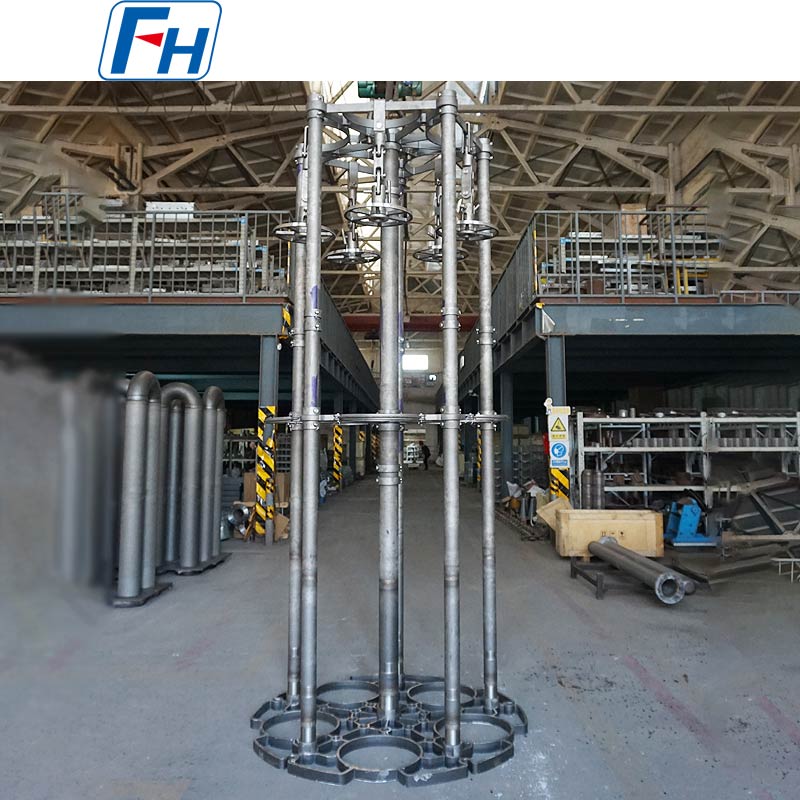
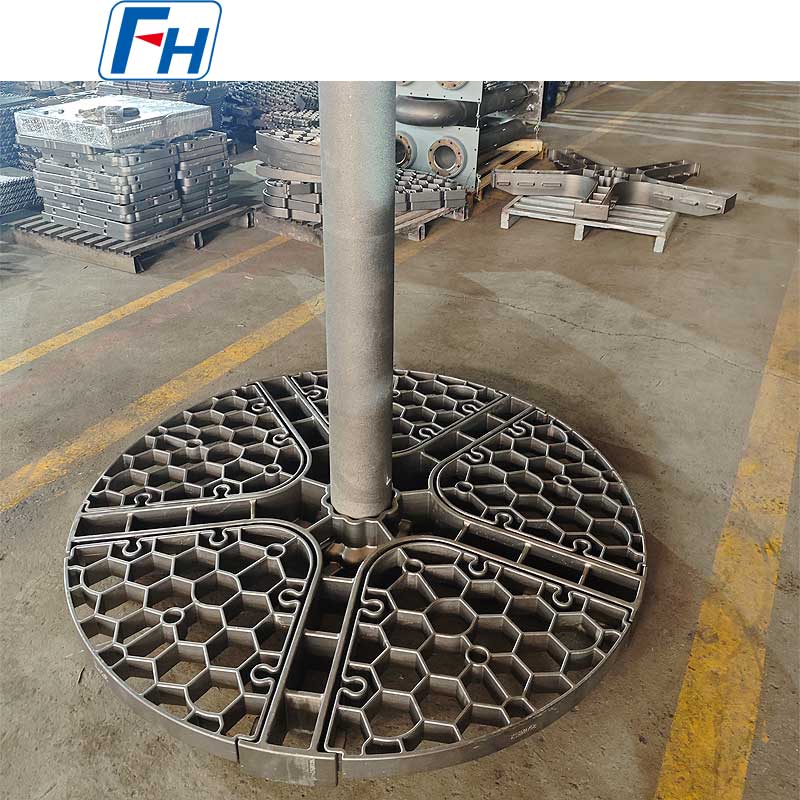
| Well-Type / Pit Furnace | Furnace piers with cast support baskets | Vertical loading needs a rigid base that will not sag under weight |
| Chamber / Box-Type Furnace | Welded heat treatment fixtures | Lower unit cost and shorter lead time for varied batch sizes |
| Salt Bath / Carburizing Furnace | Coated or wear resistant liners on cast frames | Corrosion protection extends life against molten salt attack |
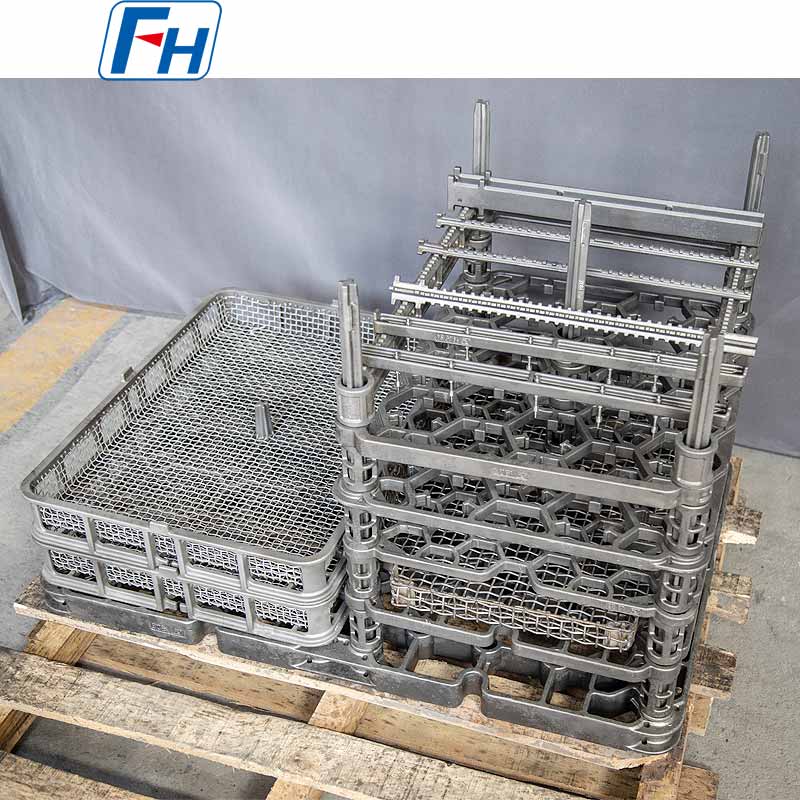
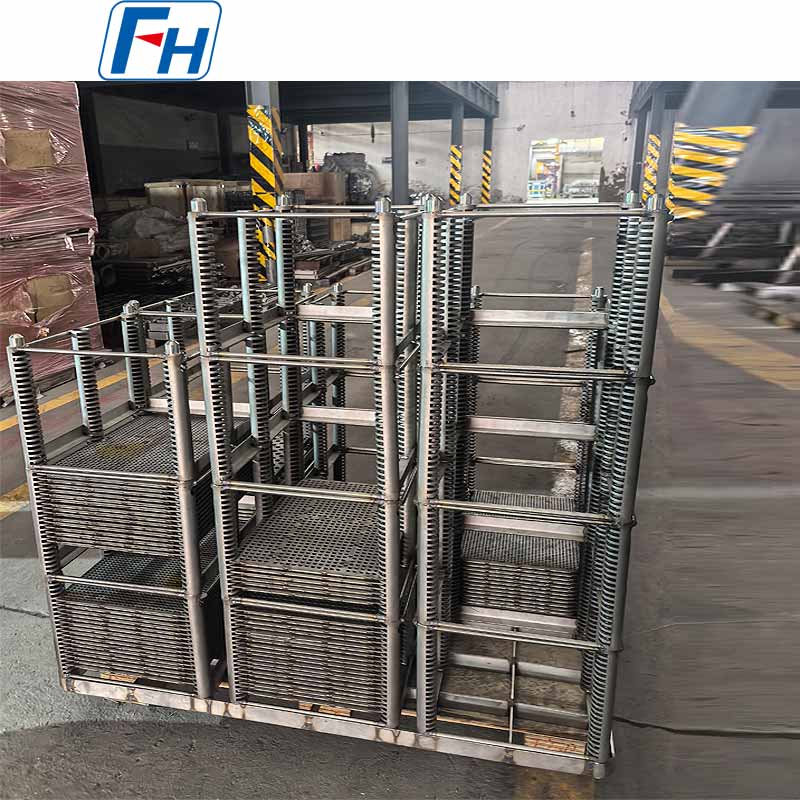
This is the second decision point after furnace type. A precision casting basket produced through the lost-wax process gives a smoother, flatter surface and holds tighter tolerances across thousands of thermal cycles, but it takes longer to tool up. A welded heat treatment fixture can be built from stock plate and bar in days, which matters when a customer needs a fixture for a one-off or low-volume run.
| Factor | Cast Fixture | Welded Fixture |
|---|---|---|
| Typical Service Life | 600 – 1,200 thermal cycles | 200 – 400 thermal cycles |
| Peak Temperature Tolerance | Up to 1,180°C with heat-resistant alloy grades | Usually limited to 950 – 1,050°C |
| Dimensional Stability | High, low warping under repeated stress | Moderate, weld seams are the first failure point |
| Lead Time | Longer, tooling required | Shorter, no tooling needed |
| Best Fit | High-volume, continuous production lines | Low-volume, mixed-batch operations |
Within both the cast and welded categories, the fixture shape still needs to match the part geometry and the furnace loading method.
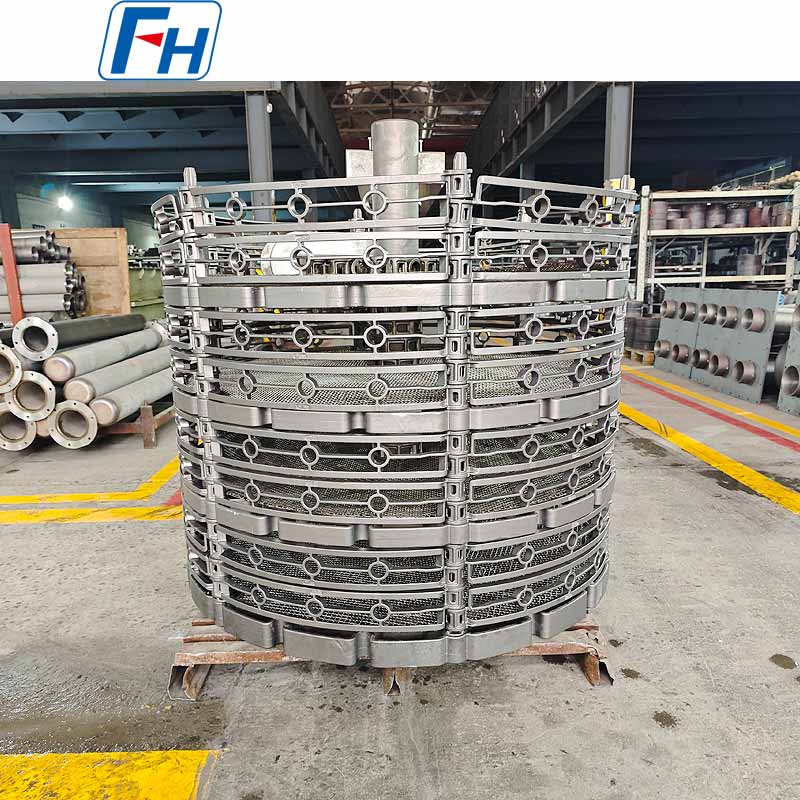
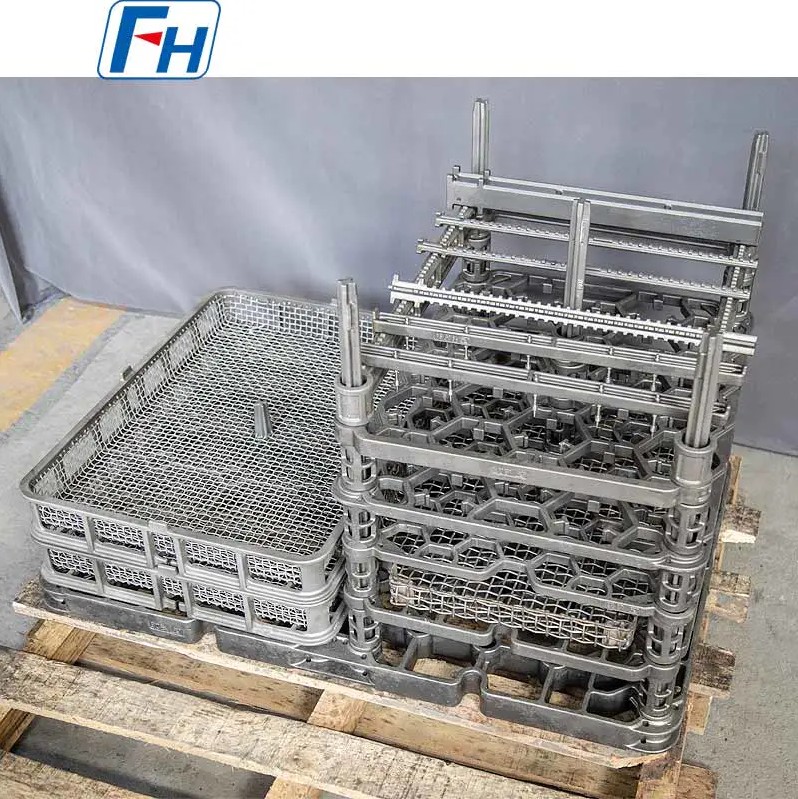
The following fixture families cover the most common furnace configurations described above, from continuous pusher lines to well-type units.
Fixture shape is only half the decision — the alloy grade determines whether the fixture survives the actual thermal profile without sagging or cracking. Fixtures manufactured through centrifugal casting typically achieve a more uniform grain structure than statically cast parts, which improves resistance to creep at sustained high temperature.
| Material Grade | Approx. Peak Temperature | Typical Use |
|---|---|---|
| 1.4848 | Up to 1,100°C | Pit furnaces, general-purpose baskets |
| 1.4849 | Up to 1,150°C | Continuous furnace charging racks |
| 1.4852 | Up to 1,180°C | Well-type furnaces, precision cast fixtures |
| Cr25Ni20 | Up to 1,100°C | High-temp operation fixtures, general carburizing |
Running through these questions before placing an order avoids the most common mismatch between fixture type and furnace performance.
 CategoryRecent Post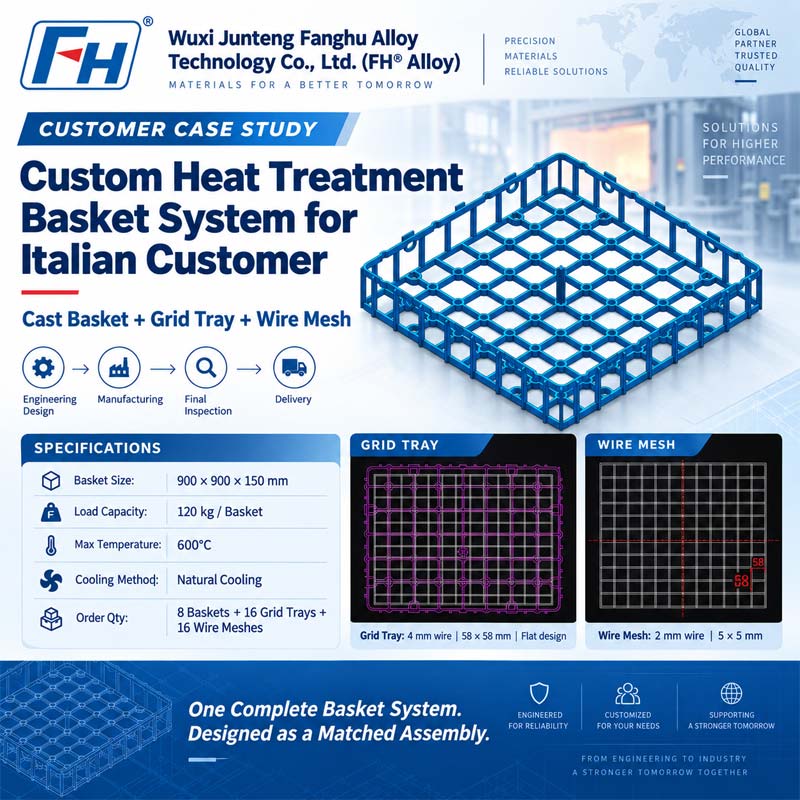

Focus on Designing and Manufacturing Alloy Steel Parts since 2006
 Tel: 0510-83310100
  E-mail: info@alloy-casting.com
  Office Add: Room 1105,Building 6, Jiaye Wealth Center,Wuxi, Jiangsu, P.R.China P.C.:214000.
  Privacy

 English
 Español
 italiano
 Deutsch
 0086-13338774804