
 Aug 10, 2026
 Content
Stainless steel does not have one melting temperature. It is an alloy family, and each grade melts across its own temperature range. For common industrial grades that range falls roughly between 1,375 °C (2,500 °F) and 1,530 °C (2,786 °F). The figure most often quoted for the popular austenitic grade 304 is 1,400–1,450 °C; a martensitic grade such as 410 melts higher, at 1,480–1,530 °C.
Why a range instead of a point? A pure metal melts at a fixed temperature, but stainless steel is a mixture of iron, chromium, nickel, and other elements. When the alloy is heated, its lowest-melting constituents become liquid first. That temperature is the solidus. The liquidus is the temperature at which the last solid disappears. Between the two, the material is partly solid and partly liquid, which is why published values always appear as a range.
Both ends of the range matter. The solidus tells you when a furnace load will start to lose its shape; the liquidus tells you when it is fully molten. Neither number, however, is a temperature at which a component should be operated.
The table below lists melting ranges for grades commonly specified in industrial equipment. The final column is deliberately included: it shows typical maximum continuous service temperature in air, and it makes the gap between melting range and safe operation immediately visible.
| Grade | Type | Melting Range (°C) | Melting Range (°F) | Typical Max Continuous Service (°C) |
|---|---|---|---|---|
| 304 | Austenitic | 1,400–1,450 | 2,550–2,642 | 870 |
| 316 | Austenitic (molybdenum) | 1,375–1,400 | 2,507–2,552 | 870 |
| 321 | Austenitic (titanium) | 1,400–1,430 | 2,552–2,606 | 870 |
| 410 | Martensitic | 1,480–1,530 | 2,696–2,786 | 700 |
| 430 | Ferritic | 1,425–1,510 | 2,597–2,750 | 815 |
| 310S | Austenitic (high nickel) | 1,400–1,450 | 2,552–2,642 | 1,050 |
304, 316, and 321 melt within a similar window even though their alloy packages differ. 410 melts noticeably higher because its martensitic structure is closer to a straight iron–chromium alloy. The most instructive comparison, though, is 304 versus 310S: they share the same melting range, yet 310S can run at a service temperature almost 200 °C higher. The melting range alone would not tell you which grade belongs inside a furnace.
Cast heat-resistant grades used for furnace tooling, such as 1.4848 and 1.4837, behave in the same way. Their melting ranges sit close to those of their wrought equivalents, but higher carbon and silicon widen the solidification interval. That matters during casting, and it also means their usable strength is set by creep and oxidation behaviour rather than by the melting point.
Chromium makes stainless steel stainless, but it does not raise the melting point. Nickel stabilizes the austenitic structure and improves high-temperature strength, yet it tends to lower the solidus. Carbon, kept low in most wrought stainless grades and raised deliberately in cast heat-resistant grades, widens the gap between solidus and liquidus. Molybdenum, added to 316, improves pitting resistance while nudging the melting range slightly downward.
The practical result is that the austenitic grades (304, 316, 321, 310S) melt in a band around 1,375–1,450 °C, while martensitic and ferritic grades such as 410 and 430 can melt higher. When a buyer compares data sheets, small differences in melting range between similar grades are rarely the deciding factor. The gap between a grade's melting range and its maximum service temperature matters far more.
Reference tables do not always agree to the last degree, and they are not expected to. Each production heat has a slightly different analysis, and small changes in chromium, nickel, carbon, silicon, or residual elements shift the solidus by a few degrees. For engineering purposes that variation is irrelevant; what matters is whether the grade stays solid and strong at the operating temperature of the furnace.
For any stainless steel component, the melting range is a ceiling, not an operating target. A part will lose its useful mechanical properties long before it begins to melt.
Metals begin to creep, or deform slowly under sustained load, at roughly 40–50 percent of their melting temperature on the absolute scale. For 304, which melts around 1,400–1,450 °C, the creep-sensitive zone starts near 400–560 °C; by 800–900 °C, creep already dominates the life of a loaded component. That is exactly why 304 is not recommended for continuous service much above 870 °C, even though its melting range sits almost 600 °C higher. Rotating parts are even more demanding: furnace fan blades combine high temperature with centrifugal stress, so their safe envelope is set well below the melting point.
In air, the service limit of a stainless grade is governed by scaling resistance. Chromium forms and maintains the protective oxide layer; 310S, with roughly 25 percent chromium and 20 percent nickel, resists oxidation at temperatures that would quickly destroy 304. In carburizing, nitriding, or reducing atmospheres, the picture changes again: carburization embrittles, nitriding forms hard brittle layers, and thermal cycling cracks oxide scales. Grade selection therefore has to consider melting range, creep strength, oxidation limit, and atmosphere response together.
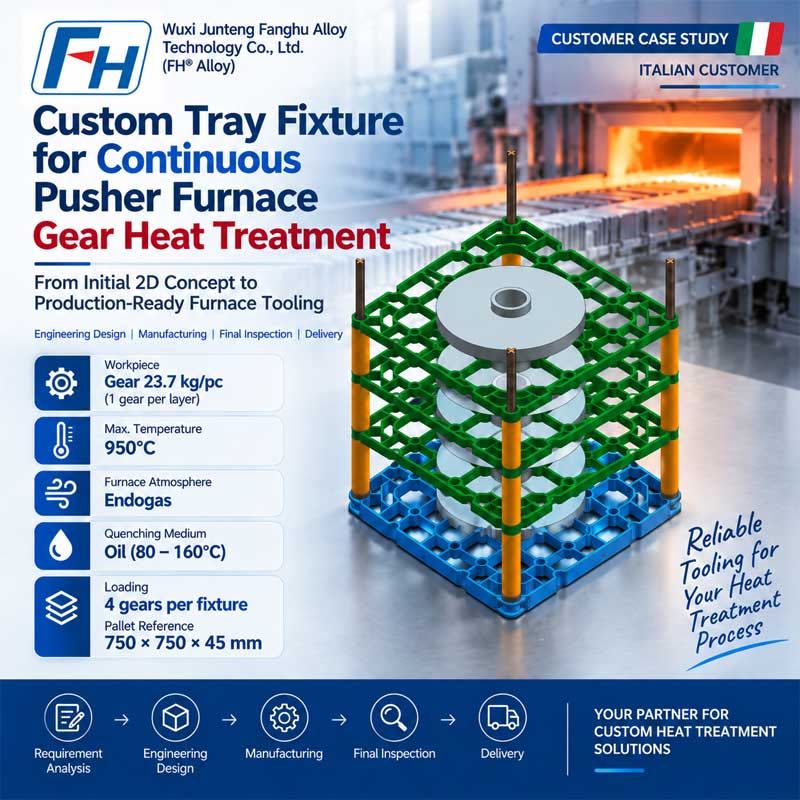
Furnace hardware such as baskets, trays, radiant tubes, rollers, and fans operates in a narrow band: hot enough to approach the lower end of stainless melting ranges, yet far below them in actual service. A heat-treatment basket running at 950 °C sits roughly 450 °C below the solidus of 304. That sounds safe, but creep, oxidation, carburization, and thermal fatigue decide whether the basket lasts one month or two years. At FH alloy casting, the same selection discipline governs every component we build.
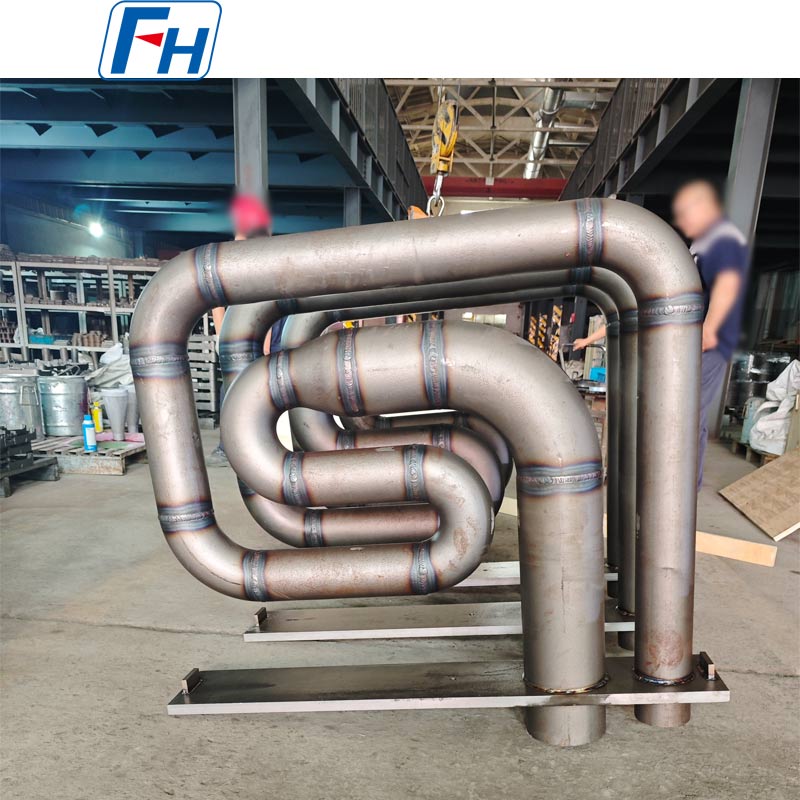
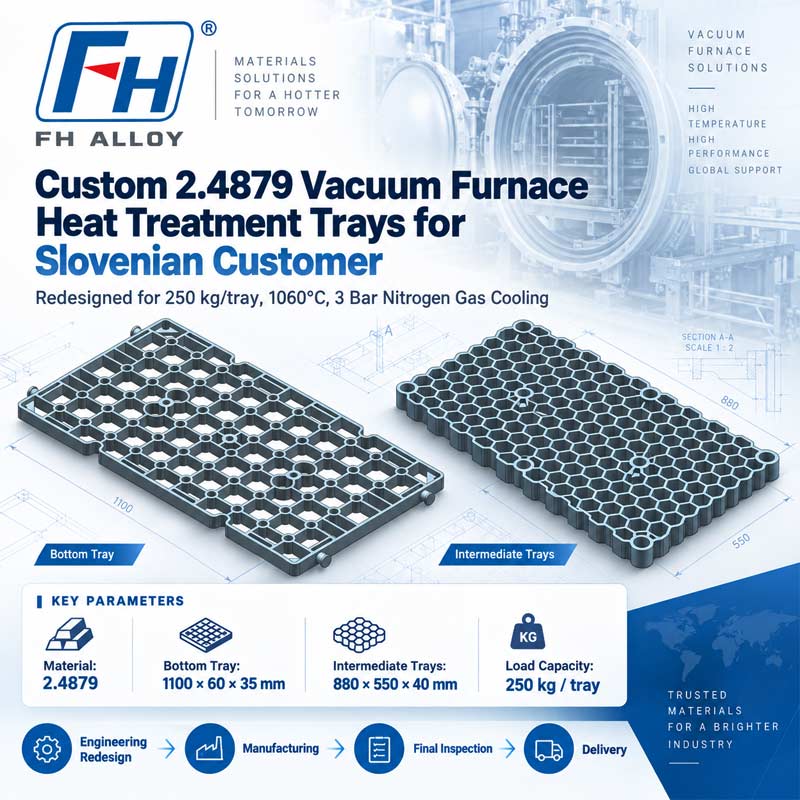
For welded baskets and fixtures that must hold their geometry at 1,000 °C and above, 310S is a frequent starting point. Its melting range overlaps that of 304, but its oxidation resistance and hot creep strength are substantially better. Fabricated components such as 310S welded heat-treatment baskets are built from this grade for vacuum and atmosphere furnaces where repeated heating and quenching cycles demand dimensional stability. The same logic applies at larger scale: large heat-treatment base trays are routinely specified against a melting-range-based grade check before a single weld is laid.
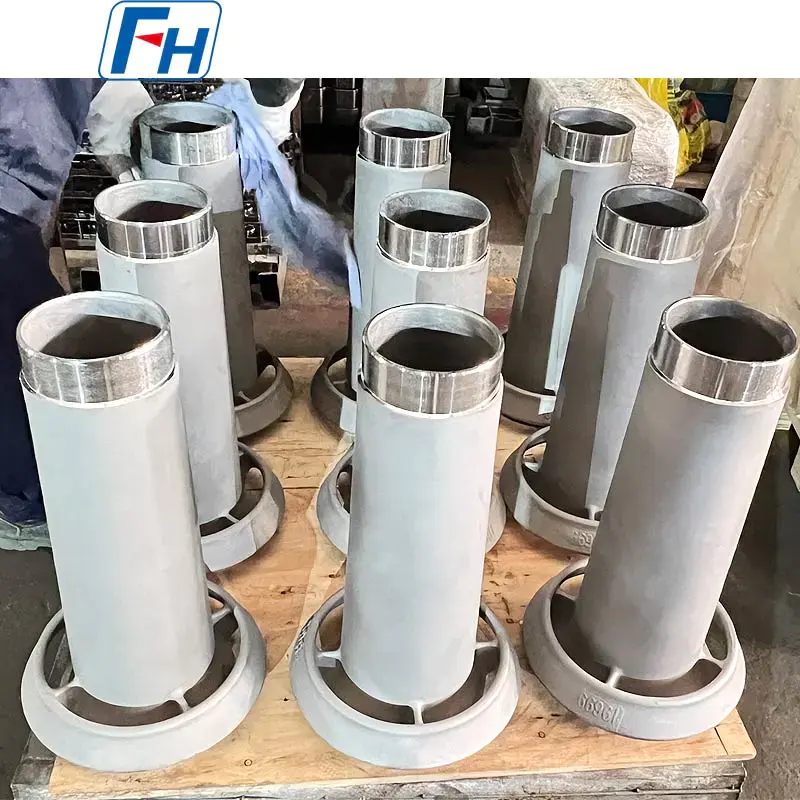
When a component is too large, too complex, or too highly stressed to fabricate from plate, casting takes over. Roller hearth furnaces, for example, use centrifugally cast rollers in grades such as 1.4848, and 1.4848 heat-resistant cast steel furnace rollers demonstrate how that grade logic becomes a working part. Radiant tubes, cast links, furnace rails, and sliders are produced the same way. For non-standard geometry, the broader heat-resistant steel castings program matches alloy and geometry to the actual furnace zone.
 Wholesale Heat Resistant Steel Castings Suppliers, OEM CompanyJunteng Fanghu Alloy Technology is a China OEM Heat Resistant Steel Castings supplier and Heat Resistant Steel Castings company, professi...View Product →
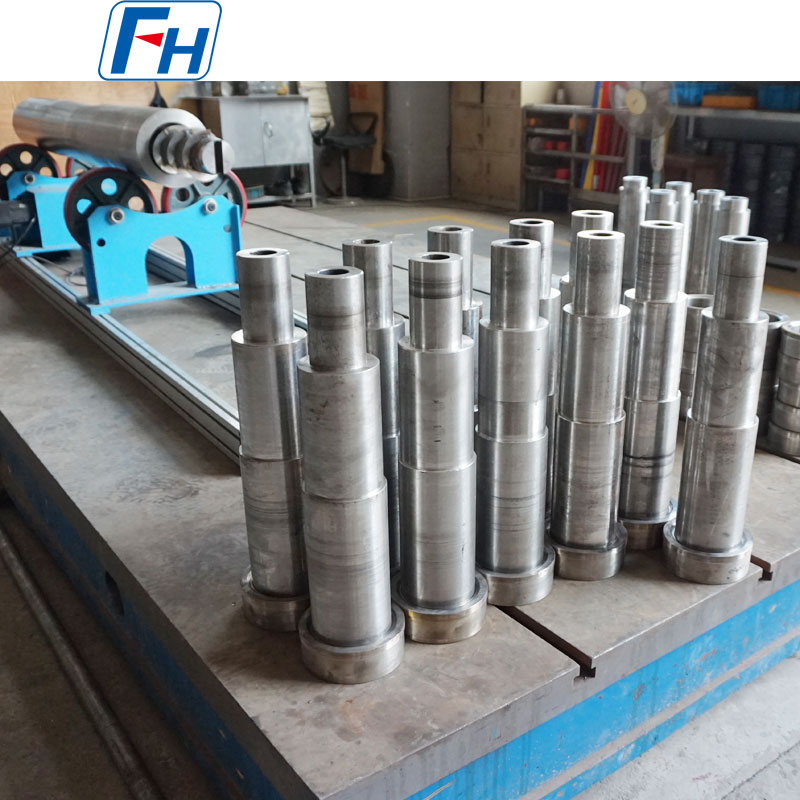 1.4848 Heat Resistant Cast Steel Furnace Rollers Suppliers, Wholesale Factory - Junteng Fanghu Alloy Technology is a China OEM 1.4848 Heat Resistant Cast Steel Furnace Rollers suppliers and wholesale factory, Brand: F...View Product →
One caution applies to every purchase: do not specify a material simply because its melting range clears the furnace temperature. The operating atmosphere, the heating and cooling cycle, the load, and the required life all play a role. If your furnace sits near the upper end of a grade's working range, a foundry engineer can review those conditions before you commit to a design.
When you evaluate a stainless steel data sheet for a high-temperature part, treat the melting range as a survival check. Then use service properties to judge performance:
The melting point of stainless steel is a range because stainless steel is a family, not a single material. Use the range as a boundary, then weigh oxidation, creep, atmosphere, and load. Those factors decide whether a component survives in a real furnace.
 CategoryRecent Post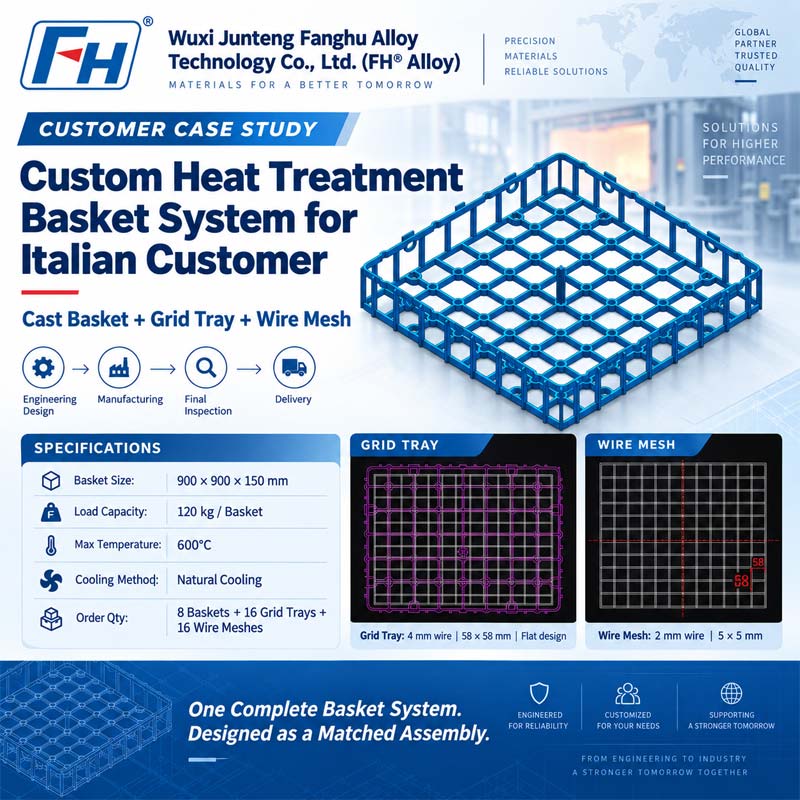

Focus on Designing and Manufacturing Alloy Steel Parts since 2006
 Tel: 0510-83310100
  E-mail: info@alloy-casting.com
  Office Add: Room 1105,Building 6, Jiaye Wealth Center,Wuxi, Jiangsu, P.R.China P.C.:214000.
  Privacy

 English
 Español
 italiano
 Deutsch
 0086-13338774804
