

 English
 Español
 italiano
 Deutsch
 0086-13338774804

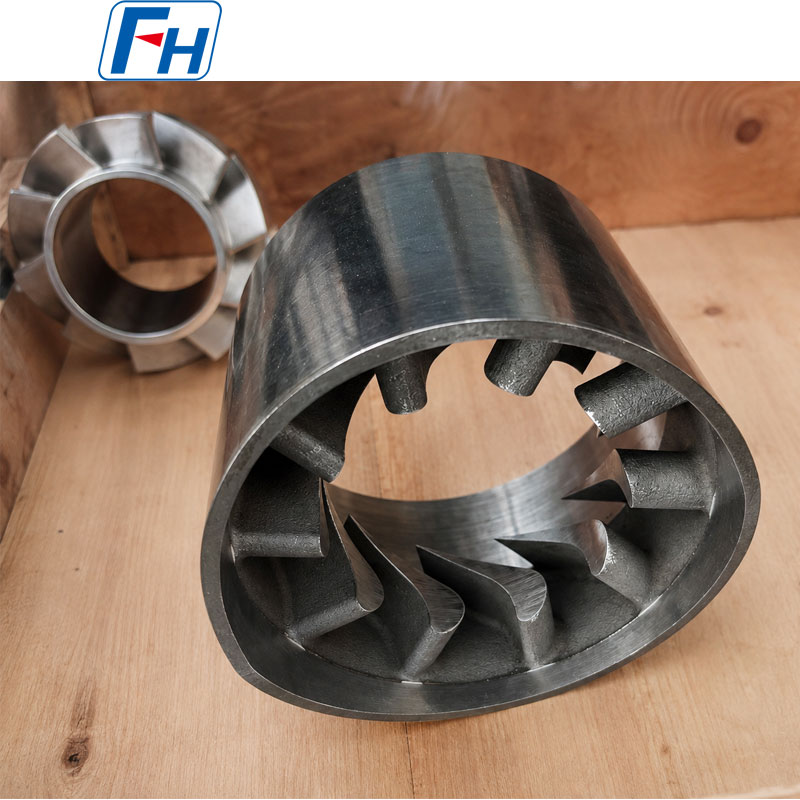
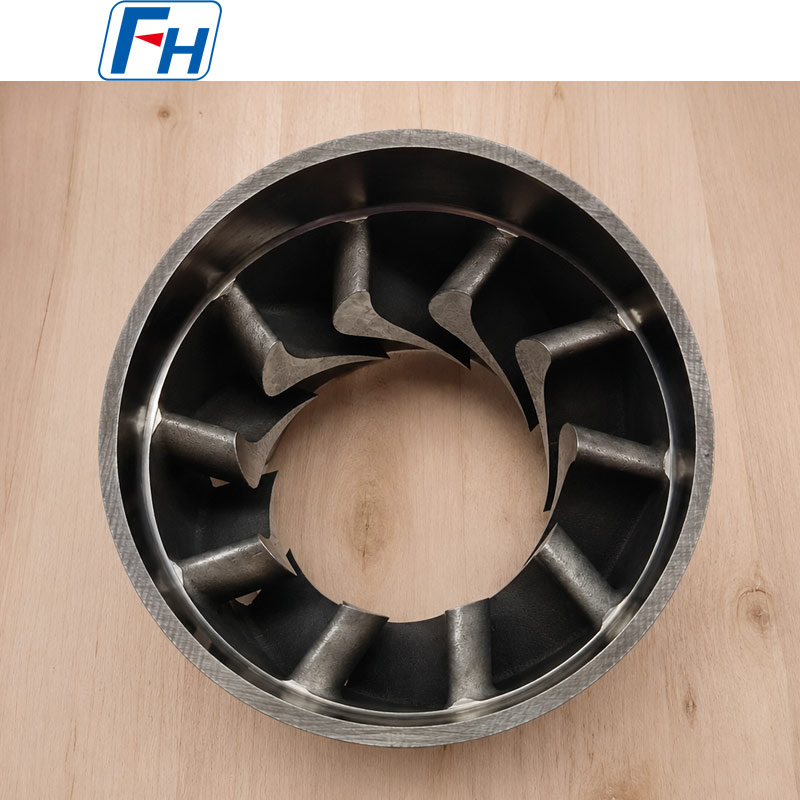
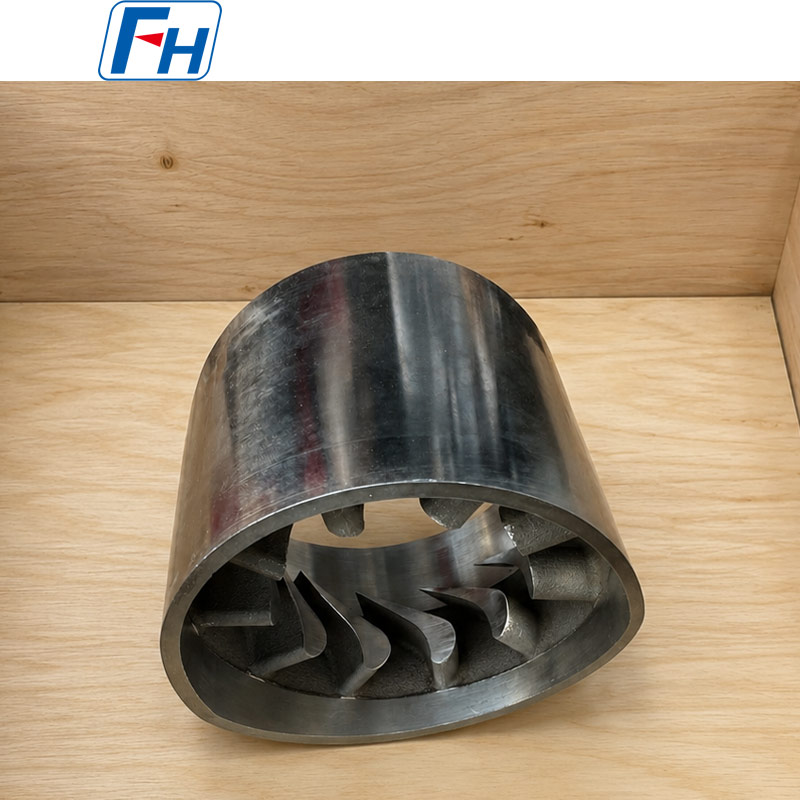
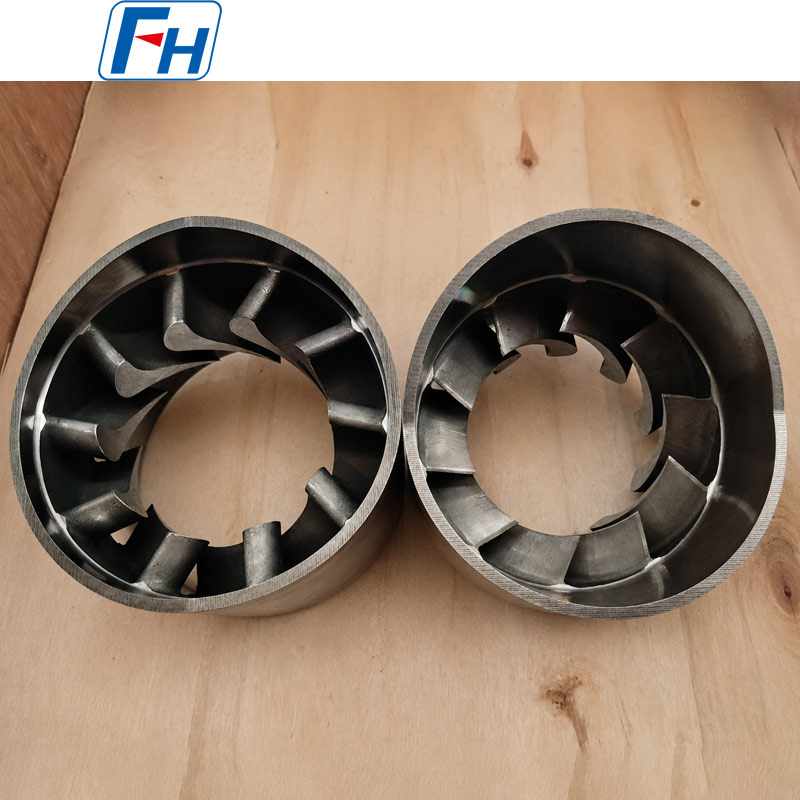

Cobalt Alloy 6 Stator Guide Ring for Oil & Gas Equipment
FH® Alloy manufactures custom Cobalt Alloy 6 stator guide rings and stationary flow-control components for oil & gas, petroleum processing, pump, valve and other severe-service equipment.
The component shown is a customized stationary guide ring with multiple internal vanes. Unlike a rotating impeller, the stator remains fixed inside the equipment and is designed to guide, redirect or stabilize fluid flow while resisting erosion, wear and corrosion.
The part can be produced by precision investment casting followed by machining of critical cylindrical, sealing and mounting surfaces according to customer drawings.
Product Specifications
| Item | Details |
| Product | Cobalt Alloy 6 Stator Guide Ring |
| Alternative Name | Stator Ring / Guide Vane Ring / Stationary Guide Ring |
| Material | Cobalt Alloy 6 |
| Alloy Type | Cobalt-Chromium-Tungsten Alloy |
| Generic Designation | Co-Cr-W Alloy 6 |
| Application | Oil & Gas / Petroleum Equipment |
| Component Type | Stationary Component |
| Manufacturing Process | Precision Investment Casting |
| Secondary Processing | Grinding + Precision Machining |
| Structure | Integral Ring with Internal Guide Vanes |
| Surface Condition | As-cast, ground and machined |
| Customization | According to Customer Drawing |
| Manufacturer | FH® Alloy |
Chemical composition, dimensions, hardness, machining tolerances and inspection requirements are manufactured according to the customer-approved specification.
Material Grade Table
| Co-Cr-W Alloy 6 Alloy | |||||||||
| Nominal Composition (Mass %) and Physical Properties | |||||||||
| Co | Cr | W | C | Other | Hardness | Density | Melting Range | ||
| Bal. | 27.00-32.00 | 3.00-6.00 | 0.90-1.40 | Ni, Fe, Si, Mn, Mo | 36-45 HRC 380-490 HV |
8.44 g/cm³ 0.305 lb/in³ |
1250-1360ºC 2282-2480ºF |
||
What Is a Cobalt Alloy Stator Guide Ring?
A stator guide ring is a non-rotating flow-control component installed around or adjacent to a rotor, impeller or other moving element.
Its internal guide vanes help control the direction and behavior of process fluids passing through the equipment.
In oilfield and petroleum-processing equipment, these components may be exposed to:
- High-velocity fluids
- Abrasive particles
- Erosion
- Corrosive process media
- Pressure fluctuations
- Repeated fluid impact
- Metal-to-metal contact
- Elevated operating temperatures
For these conditions, Cobalt Alloy 6 can provide a useful combination of wear resistance, corrosion resistance and mechanical stability.
Stator Guide Ring Design Features
The product shown incorporates:
- Cylindrical outer ring
- Multiple internal guide vanes
- Integral cast construction
- Curved flow passages
- Reinforced vane-to-ring transitions
- Machined outer cylindrical surface
- Machined end faces
- Open central flow passage
- Custom vane angle and orientation
Because the component remains stationary during operation, its function differs from that of a rotor impeller.
The rotor generates or transfers motion, while the stator guide ring controls and redirects the fluid flow around the rotating assembly.
Designed for Oil & Gas Applications
FH® Alloy manufactures custom cobalt alloy stator components for demanding petroleum and oilfield equipment.
Typical applications may include:
- Oilfield pumping equipment
- Petroleum processing systems
- Downhole equipment
- Flow-control assemblies
- High-pressure pump components
- Valve internals
- Erosion-resistant flow components
- Separation equipment
- Petrochemical processing machinery
- Fluid-guiding assemblies
- Severe-service process equipment
The final alloy and design should be confirmed according to the actual operating medium, pressure, temperature, flow velocity and solid-particle content.
Why Use Cobalt Alloy 6?
High Wear Resistance
Cobalt Alloy 6 is suitable for components exposed to abrasive and sliding wear, particularly where conventional stainless steels may experience rapid surface deterioration.
Erosion Resistance
High-velocity fluids containing sand or other particles can gradually remove material from guide vanes and flow passages.
Cobalt-based alloys are commonly selected for severe-service components where erosion resistance is a key requirement.
Corrosion Resistance
The cobalt-chromium alloy system provides resistance to many industrial media, making it suitable for petroleum and chemical-processing applications when properly selected.
Resistance to Galling
Cobalt alloys are also useful where stationary components may experience occasional contact with adjacent metallic components.
Performance at Elevated Temperatures
Cobalt Alloy 6 maintains useful mechanical and wear-related properties under elevated-temperature operating conditions.
Precision Investment Casting
The complex internal vane geometry makes precision investment casting an effective manufacturing process for this type of stator guide ring.
A typical production route includes:
- Customer drawing review
- Casting feasibility analysis
- Tooling design
- Wax-pattern manufacturing
- Wax-pattern assembly
- Refractory shell preparation
- Dewaxing
- Shell preheating
- Cobalt alloy melting and pouring
- Cooling and solidification
- Shell removal
- Gate and riser cutting
- Surface grinding
- Nondestructive testing
- Rough machining
- Finish machining
- Dimensional inspection
- Final documentation and packaging
This process allows the guide vanes and outer ring to be produced as one integral casting, reducing the need for welded vane assemblies.
Custom Manufacturing Capabilities
FH® Alloy can manufacture stator guide rings according to customer drawings with customized:
- Outer diameter
- Inner flow diameter
- Overall length
- Wall thickness
- Number of guide vanes
- Vane thickness
- Vane angle
- Vane curvature
- Flow passage geometry
- Rotation or flow direction
- Mounting features
- Locating grooves
- Sealing surfaces
- End-face dimensions
- Machining tolerances
- Surface roughness
Both 2D drawings and 3D models can be used for quotation and manufacturability review.
Critical Machining Requirements
For a stationary guide ring, several dimensions are especially important for correct equipment assembly.
FH® Alloy can control and inspect:
- Outer diameter tolerance
- Inner diameter
- End-face flatness
- Cylindrical concentricity
- Face runout
- Wall thickness
- Vane position
- Vane angle
- Flow-channel dimensions
- Mounting diameter
- Sealing surfaces
- Surface roughness
Unlike a rotor, a stationary stator generally does not require dynamic balancing, but concentricity, geometric accuracy and vane positioning can be critical for flow performance and assembly.
Inspection & Quality Control
Inspection can be performed according to customer requirements, including:
- Chemical composition analysis
- Positive Material Identification
- Visual inspection
- Dimensional inspection
- Hardness testing
- Dye penetrant testing
- Radiographic testing when required
- Surface roughness inspection
- Concentricity inspection
- End-face runout inspection
- Vane geometry inspection
- Third-party inspection
Available Quality Documentation
Depending on the purchase specification, FH® Alloy can provide:
- Material Test Certificate
- Chemical composition report
- Dimensional inspection report
- Hardness report
- Dye penetrant testing report
- Radiographic inspection report
- Machining inspection report
- Certificate of Conformity
- Heat / batch traceability
- Third-party inspection documentation
Why Choose FH® Alloy?
Custom Cobalt Alloy Castings
FH® Alloy manufactures special cobalt alloy components according to customer drawings, including stators, rotors, impellers, guide rings and other complex flow-control parts.
Complex Internal Vane Casting
Precision investment casting enables complicated internal vanes and flow passages to be manufactured as an integral component.
Casting + Machining
Casting, grinding and precision machining can be coordinated to control critical installation and sealing dimensions.
Oil & Gas Component Manufacturing
Custom cobalt alloy parts can be produced for petroleum, petrochemical, pump, valve and severe-service industrial applications.
Prototype & Batch Production
Small quantities, replacement components and repeat production batches can be evaluated according to tooling and technical requirements.
Cobalt Alloy Stator vs. Rotor Impeller
| Feature | Stator Guide Ring | Rotor Impeller |
| Movement | Stationary | Rotating |
| Main Function | Guide and redirect flow | Transfer energy to fluid |
| Key Control | Vane geometry and concentricity | Balance, runout and concentricity |
| Typical Wear | Erosion, corrosion, flow wear | Erosion, wear, mechanical loading |
| Dynamic Balancing | Normally not required | Often required |
| Manufacturing | Investment casting + machining | Investment casting + machining |
This distinction is especially useful for buyers sourcing matched rotor and stator components for oilfield equipment.
Information Required for Quotation
For an accurate quotation, please provide:
- 2D drawing or 3D model
- Required material specification
- Chemical composition requirement
- Outside diameter
- Inside diameter
- Overall length
- Number of vanes
- Vane profile
- Dimensional tolerances
- Surface roughness
- Operating medium
- Working temperature
- Working pressure
- Flow velocity
- Solid or abrasive particle content
- Inspection requirements
- Required quantity
Send your stator guide ring drawing to FH® Alloy for casting feasibility review and quotation.
FAQ
Q1: What is a cobalt alloy stator guide ring?
A cobalt alloy stator guide ring is a stationary component containing internal guide vanes that control or redirect fluid flow around a rotor or other moving component.
Q2: Is this component rotating during operation?
No. This product is a stator, meaning it remains stationary during operation.
Its primary function is to control the flow path rather than transmit rotational energy.
Q3: Why is Cobalt Alloy 6 used for oilfield stators?
Cobalt Alloy 6 is selected for applications requiring a combination of wear resistance, erosion resistance and corrosion resistance, particularly where process fluids may contain abrasive particles.
Q4: Is Cobalt Alloy 6 the same as Stellite 6?
“Stellite®” is a registered trademark and should not be presented as an FH® Alloy material brand.
For FH® Alloy website content, we recommend using the generic designation Cobalt Alloy 6 or Co-Cr-W Alloy 6.
If a customer's drawing specifies Stellite® 6, the required chemical composition, hardness, manufacturing standard and acceptance criteria should be confirmed before production.
Q5: Can FH® Alloy customize the internal guide vanes?
Yes. The number, angle, thickness, curvature and distribution of the vanes can be manufactured according to customer drawings or 3D models.
Q6: Can the stator ring be produced as one casting?
Yes. Depending on the geometry and casting feasibility, the outer ring and internal guide vanes can be manufactured as an integral precision investment casting.
Q7: Can the outer diameter and end faces be finish machined?
Yes. Critical installation surfaces can be CNC machined according to dimensional tolerance and surface-finish requirements.
Q8: Does a stator guide ring require dynamic balancing?
Normally, no. Since the stator remains stationary, dynamic balancing is generally not required.
However, concentricity, runout, vane position and mating dimensions should be carefully controlled.
Q9: Can FH® Alloy manufacture both the rotor and stator?
Yes. FH® Alloy can evaluate customized cobalt alloy rotors, impellers, stators and guide rings according to customer drawings, allowing related stationary and rotating components to be sourced together.

 Tel: 0510-83310100
  E-mail: info@alloy-casting.com
  Add: Room 1105,Building 6, Jiaye Wealth Center,Wuxi, Jiangsu, P.R.China P.C.:214000.