
 Feb 20, 2026
 Content
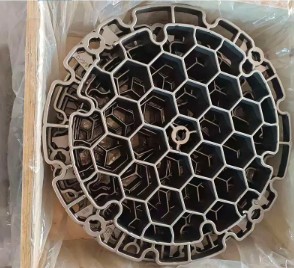
Preventing oxidation and corrosion is crucial for the service life of heat resistant steel castings under extreme conditions. Our company ensures superior oxidation resistance through a two-pronged approach: material selection and heat treatment processes.
Our castings typically contain a high proportion of chromium (Cr) and aluminum (Al). These alloying elements react rapidly with oxygen at high temperatures to form a dense oxide film. This oxide film is highly stable and effectively prevents further oxidation diffusion, thus protecting the internal metal from corrosion.
By performing heat treatments (such as quenching or tempering) within specific temperature ranges, we can adjust the material's microstructure and eliminate internal defects. This not only improves the material's mechanical strength but also significantly reduces its corrosion tendency at high temperatures.
For particularly easily corroded components (such as radiant tubes or furnace rolls), we employ precision machining techniques to remove minute surface cracks or pores. These microscopic defects, if present, can become sources of corrosion. Precision machining can effectively prevent such problems.
We not only provide finished castings but also customized protection solutions based on our customers' specific operating conditions (such as acidic or alkaline environments). By adding specific alloy components or surface treatments, we further enhance the corrosion resistance of our products.
 CategoryRecent Post

Focus on Designing and Manufacturing Alloy Steel Parts since 2006
 Tel: 0510-83310100
  E-mail: info@alloy-casting.com
  Office Add: Room 1105,Building 6, Jiaye Wealth Center,Wuxi, Jiangsu, P.R.China P.C.:214000.
  Privacy

 English
 Español
 italiano
 Deutsch
 0086-13338774804
