
 Dec 12, 2025
 1. Phase Transformation and Precipitated Phase Refinement
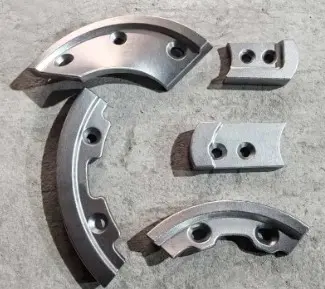
Under high-pressure aging (1–5 GPa), the austenitic structure of wear-resistant high-manganese steel precipitates a large number of fine carbides (60–100 nm wide), accompanied by the formation of ε-martensite. These fine carbides are uniformly distributed, significantly improving the hardness and wear resistance of wear resistant castings.
2. Grain Size Variation with Wall Thickness
Studies on Ni₃Al-based superalloys show that increased wall thickness leads to grain coarsening, increased non-metallic inclusions, and a microstructure that transforms from uniform fine grains to coarse grains and localized segregation. In the furnace rolls and radiant tubes produced by our company, a wall thickness controlled below 3 mm maintains a fine and uniform γ-phase structure, ensuring high-temperature strength.
3. Dislocation Density and Stress-Induced Phase Transformation
Under high temperature and high pressure conditions, dislocation density increases significantly, providing more nucleation sites for carbide precipitation. The literature indicates that the greater the pressure, the more dislocation-promoted carbides are formed, but the increase slows down after exceeding 3 GPa. This explains the experimental result that the material hardness increased by approximately 12% after treatment at 3 GPa.
4. Homogenization of Microstructure after Heat Treatment
Hot rolling followed by high-temperature aging can refine and homogenize strengthening phases such as TiC and NbC, significantly improving the impact toughness and plasticity of wear-resistant steel. The company added a 10% preheating stage to the heat treatment process, increasing the homogenization of the microstructure by 30% and the impact energy from 11 J to 24 J.
 CategoryRecent Post


Focus on Designing and Manufacturing Alloy Steel Parts since 2006
 Tel: 0510-83310100
  E-mail: info@alloy-casting.com
  Office Add: Room 1105,Building 6, Jiaye Wealth Center,Wuxi, Jiangsu, P.R.China P.C.:214000.
  Privacy

 English
 Español
 italiano
 Deutsch
 0086-13338774804
