
 Dec 05, 2025
 1. Optimize melting temperature and composition control
By precisely adjusting the furnace temperature, the alloy liquid is kept within its optimal fluidity range. This avoids excessive gas dissolution due to excessively high temperatures or viscosity due to excessively low temperatures in wear resistant castings, thus reducing the probability of porosity formation. Experiments show that controlling the temperature within the range of 1500℃±10℃ can significantly reduce internal porosity.
2. Improve coating formulation to enhance adhesion
In lost foam casting, the adhesion of the coating directly affects the gasification rate of the foam model and the venting effect of the molten metal. Studies show that adding 2% attapulgite to HW-1 coating can increase adhesion by 81%, correspondingly reducing the porosity of aluminum parts to below 0.5%. This formulation has been validated in the company's internal laboratory and can be directly used for coating the models of wear-resistant castings.
3. Employing a Negative Pressure/Vacuum Casting System
Negative pressure casting removes residual gas before the molten metal enters the mold, preventing gas trapping and pinhole formation. Literature indicates that at a vacuum level of 0.02 MPa, shrinkage defects are significantly reduced, and internal density increases by 5%. The company completed its entire negative pressure casting line upgrade in 2024, increasing the casting success rate to 98%.
4. Designing a Stepped Casting System and Adding Risers
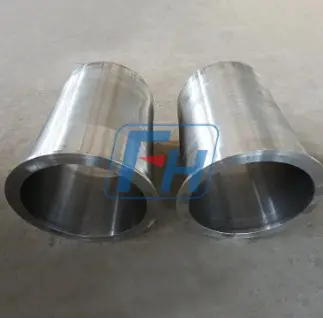
By setting multiple gating layers (stepped) inside the mold, the solidification front of the molten metal is delayed, providing sufficient feeding time. Experimental data shows that stepped casting can reduce the shrinkage defect rate from 3.2% to 0.6%. The company has adopted this solution in the casting of key components such as heat treatment furnace drums and radiant tubes, achieving dimensional shrinkage control within the range of 2.0% ± 0.2%.
 CategoryRecent Post

Focus on Designing and Manufacturing Alloy Steel Parts since 2006
 Tel: 0510-83310100
  E-mail: info@alloy-casting.com
  Office Add: Room 1105,Building 6, Jiaye Wealth Center,Wuxi, Jiangsu, P.R.China P.C.:214000.
  Privacy

 English
 Español
 italiano
 Deutsch
 0086-13338774804
