
 Jan 09, 2026
 Content
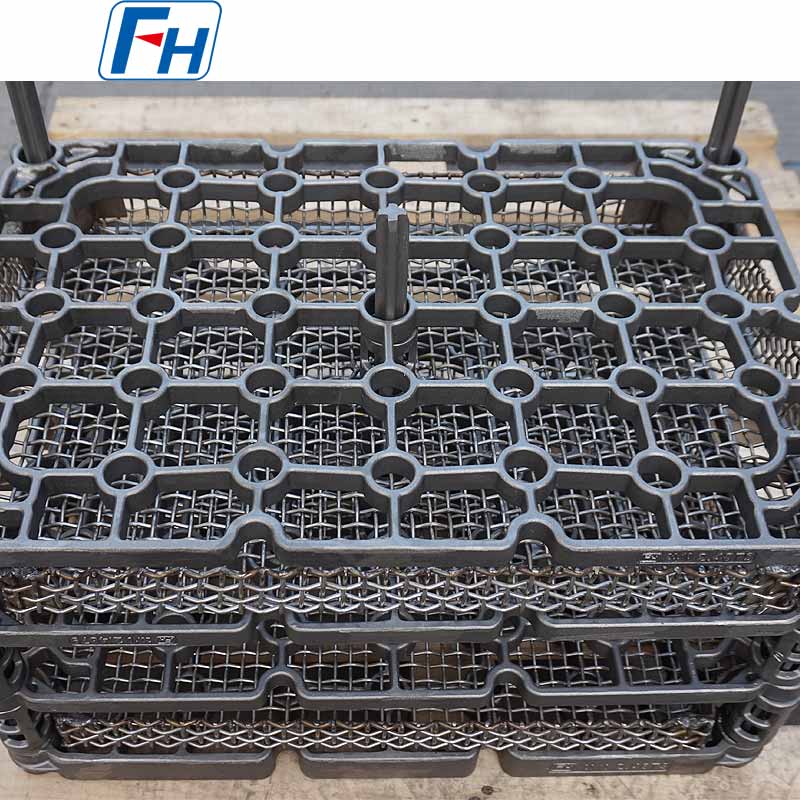
Heat Treatment Baskets play a crucial role in modern metal processing industries, enabling efficient and uniform heat treatment of various metal components. Designed to withstand high temperatures and harsh conditions, these baskets allow for the safe handling, transportation, and organization of metal parts during heat treatment processes such as annealing, quenching, carburizing, and tempering.
Heat treatment baskets are typically constructed from high-quality steel or stainless steel, often with specialized coatings to resist oxidation and corrosion. Their mesh or perforated design ensures proper airflow and heat penetration, which is essential for achieving uniform metallurgical properties. Some baskets include reinforced edges or handles for durability and ease of handling, while others are designed with stackable features to maximize furnace capacity.
The efficiency of metal heat treatment is significantly enhanced by the use of specialized baskets. Key areas of improvement include:
One of the most critical factors in heat treatment is uniform temperature exposure. Heat Treatment Baskets allow parts to be arranged in a way that ensures even airflow around each component. Unlike loose loading or improvised racks, baskets prevent hotspots and uneven heating, which reduces the risk of warping, distortion, or incomplete metallurgical transformation.
Manual handling of individual metal parts can be time-consuming and labor-intensive. Baskets enable operators to load multiple components simultaneously and transport them efficiently into and out of furnaces. This not only speeds up the production cycle but also reduces labor costs and minimizes handling errors.
Handling red-hot metal components poses a safety risk to operators. Heat Treatment Baskets provide a secure and stable way to contain hot parts, reducing the likelihood of burns or accidents. Many baskets include heat-resistant handles and lifting points compatible with cranes or hoists for safe material handling.
With well-designed baskets, more components can fit into a furnace without compromising airflow or heat penetration. This optimized loading reduces energy consumption per part, enhancing overall operational efficiency and lowering costs.
When compared to traditional methods such as loose trays, hooks, or wire racks, Heat Treatment Baskets offer several advantages:
Heat treatment baskets are widely used in various sectors:
Proper maintenance of Heat Treatment Baskets is essential to ensure long-term efficiency:
High-quality stainless steel or carbon steel with heat-resistant coatings is recommended. These materials withstand high temperatures, resist oxidation, and provide long-lasting durability.
Yes. Manufacturers often provide custom sizes, mesh patterns, and stackable designs to fit specific furnace dimensions and component shapes.
By optimizing airflow and loading density, heat treatment baskets reduce the number of furnace cycles and energy required per part, significantly improving energy efficiency.
Absolutely. With proper maintenance, baskets can be reused for thousands of heat treatment cycles, providing a cost-effective solution for industrial operations.
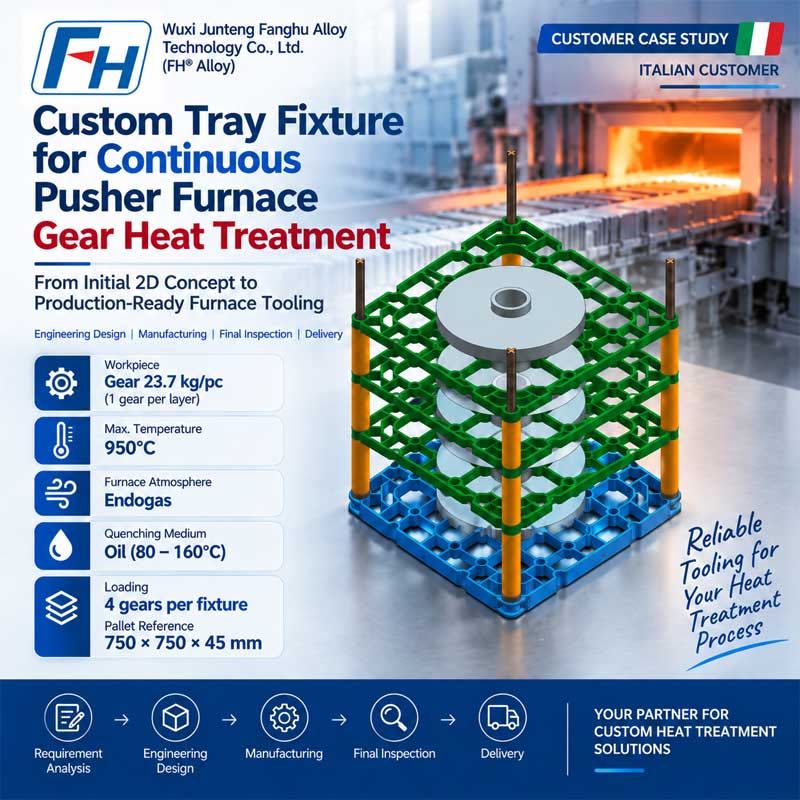
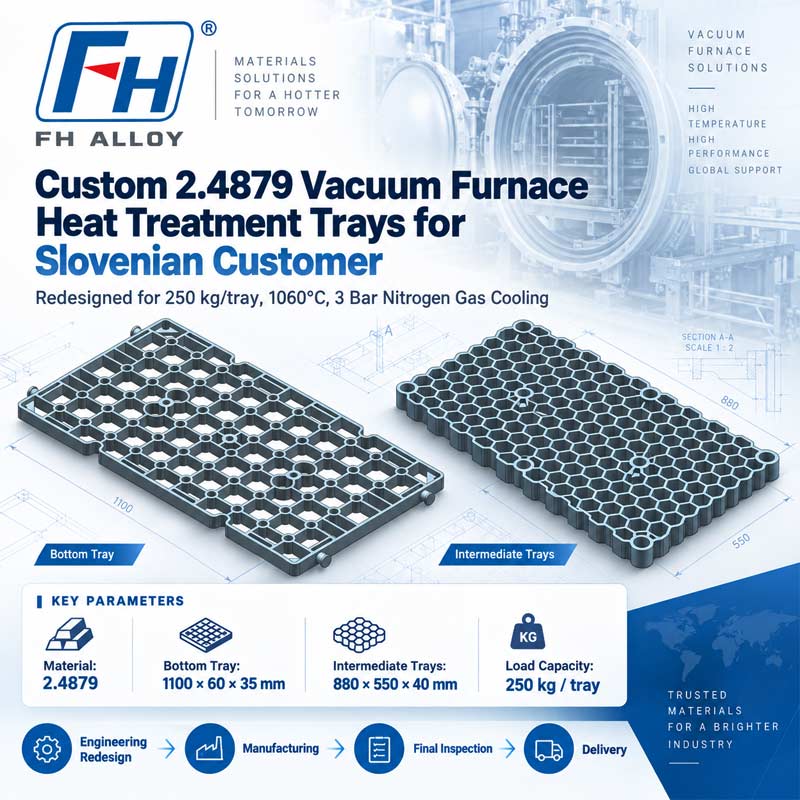
Most standard baskets are compatible with batch furnaces, continuous furnaces, and vacuum furnaces. Specific high-temperature applications may require custom materials or coatings.
Heat Treatment Baskets are indispensable tools in modern metal processing, combining efficiency, safety, and quality. By ensuring uniform heating, enabling faster loading and unloading, optimizing furnace capacity, and enhancing operator safety, they significantly improve the overall heat treatment process. With proper selection, maintenance, and application, heat treatment baskets contribute to cost savings, energy efficiency, and superior metallurgical outcomes, making them a critical component for any industrial heat treatment operation.
 CategoryRecent Post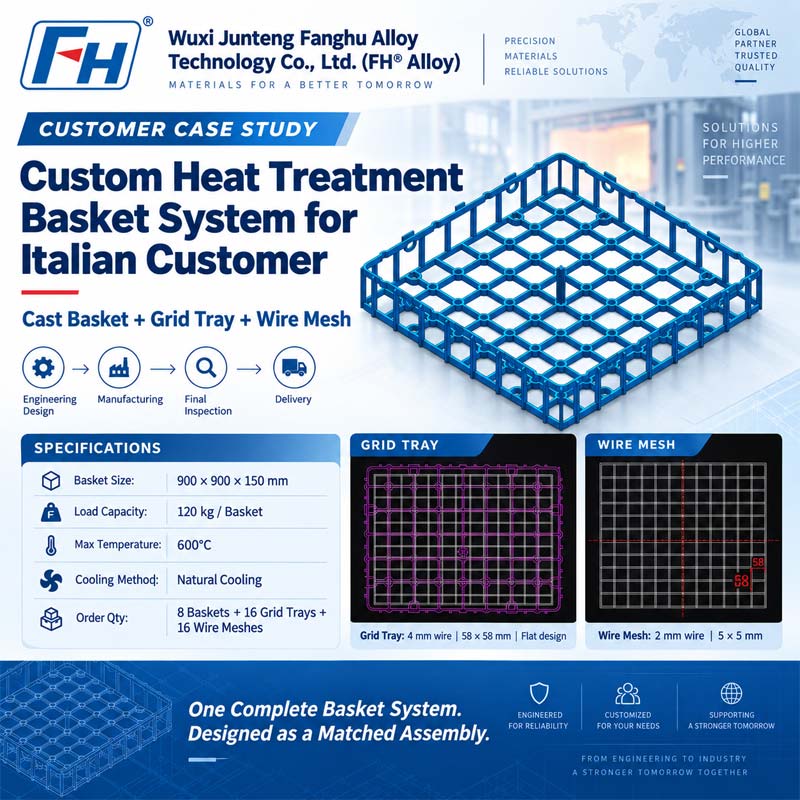

Focus on Designing and Manufacturing Alloy Steel Parts since 2006
 Tel: 0510-83310100
  E-mail: info@alloy-casting.com
  Office Add: Room 1105,Building 6, Jiaye Wealth Center,Wuxi, Jiangsu, P.R.China P.C.:214000.
  Privacy

 English
 Español
 italiano
 Deutsch
 0086-13338774804
