
 English
 Español
 italiano
 Deutsch
 0086-13338774804

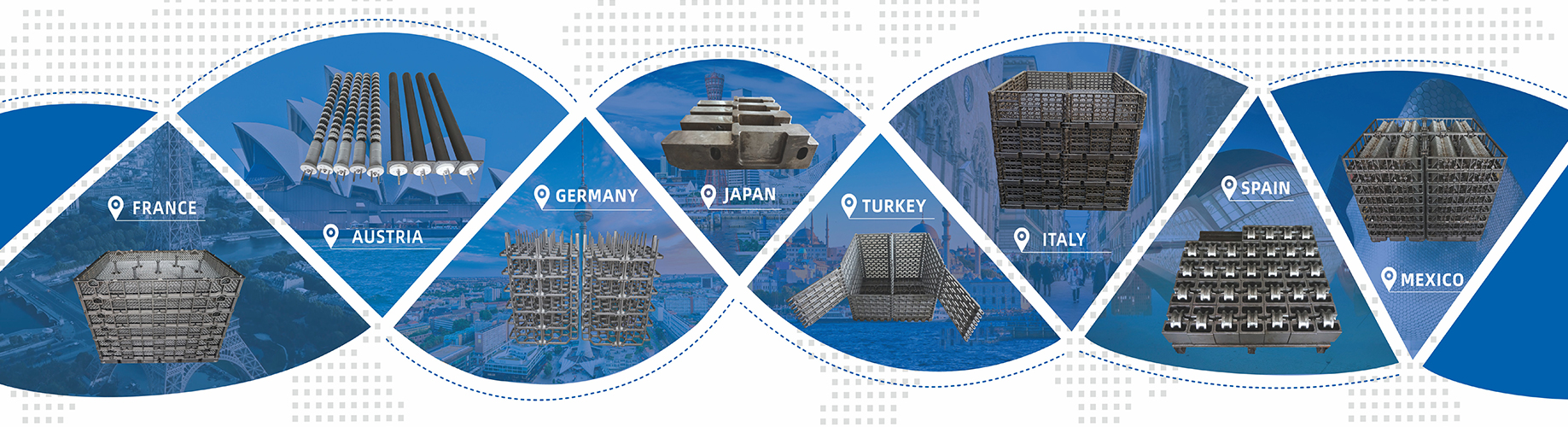
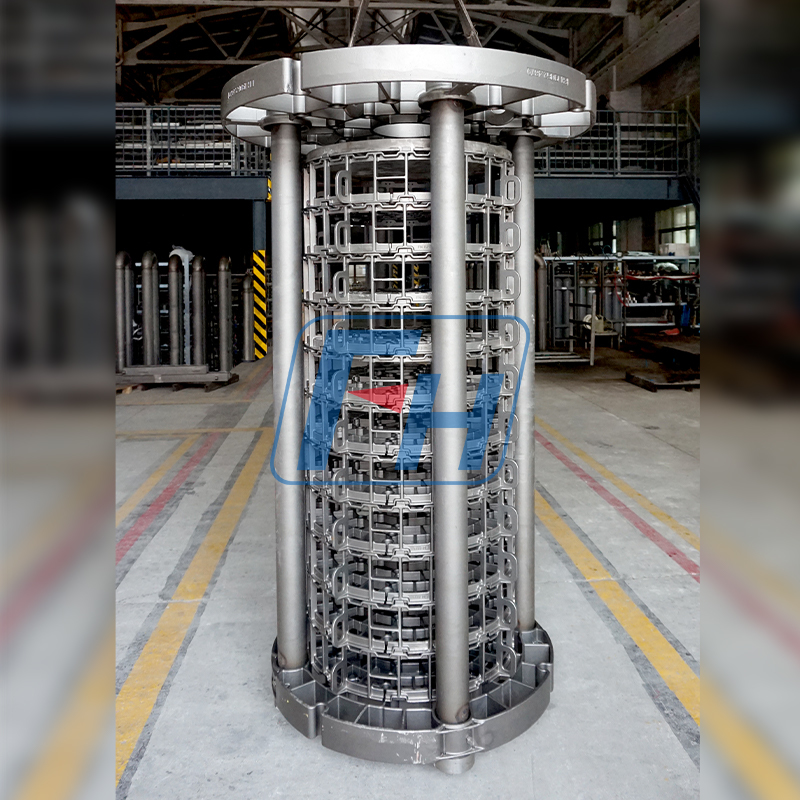
Powering precision and durability in the most demanding industrial environments, FH Heat Treatment Fixtures are engineered to excel across a wide range of furnaces—including Chamber, Pusher, Vacuum, Pit, and Bell Furnaces, such as Ipsen, Aichelin, ECM, KGO, NITRIX, AFC, IVA-SCHEMTZ, CODERE, MATTASA and ect.
FH casting fixtures are meticulously produced using advanced lost-wax casting technology, guaranteeing exceptional surface quality and flatness. Our proprietary heat-resistant alloys are custom-formulated to withstand extreme temperatures, rapid thermal cycling, and corrosive environments,
At FH, our mission is to revolutionize heat treatment efficiency. We combine cutting-edge metallurgical expertise with decades of industry experience to deliver full set of charging fixtures that:
Why Choose FH Heat Treatment Fixtures?
Industry-Leading Standard Baskets
Leverage 20+ years of R&D with our globally trusted fixtures. Pre-engineered for compatibility with all major furnace models, they eliminate tooling costs and accelerate deployment—ideal for rapid replacements or scalable operations.
Tailored Solutions, Engineered to Your Specs
Our engineers collaborate with you to design fully customized fixtures, optimizing:
Upgrade Your Thermal Processing Today
Whether you’re replacing worn fixtures or designing a new one, FH delivers faster lead times, superior metallurgy, and cost-per-cycle savings that outperform competitors.
Contact our engineering team for a free consultation—let’s craft your ideal heat treatment solution.

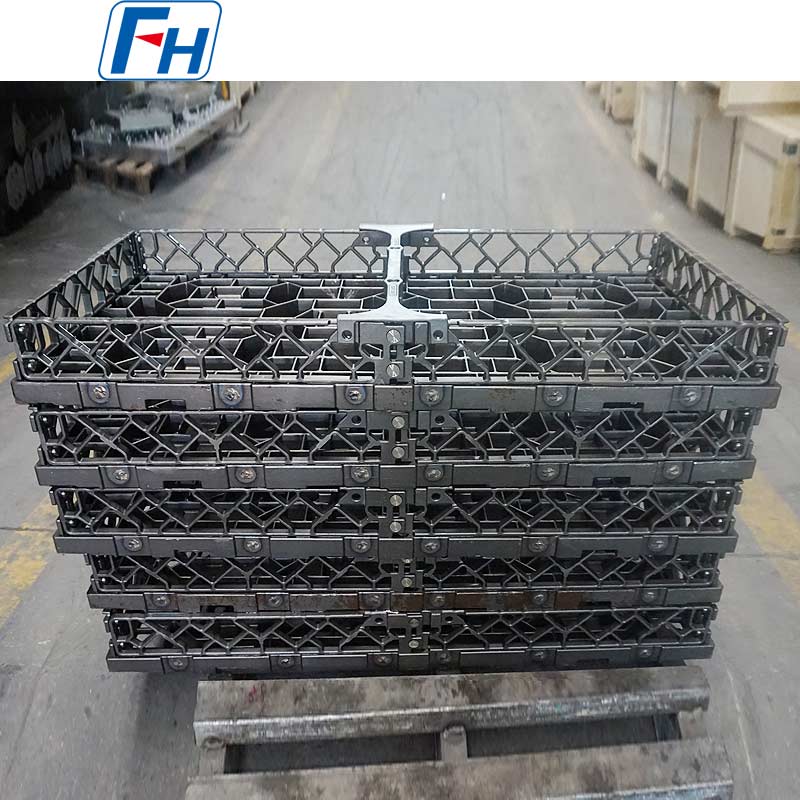
Brand: FH® Certification: ISO9001, ISO14001 Material: Heat-resistant Steel Material Grade: 2.4879 Si...
See Details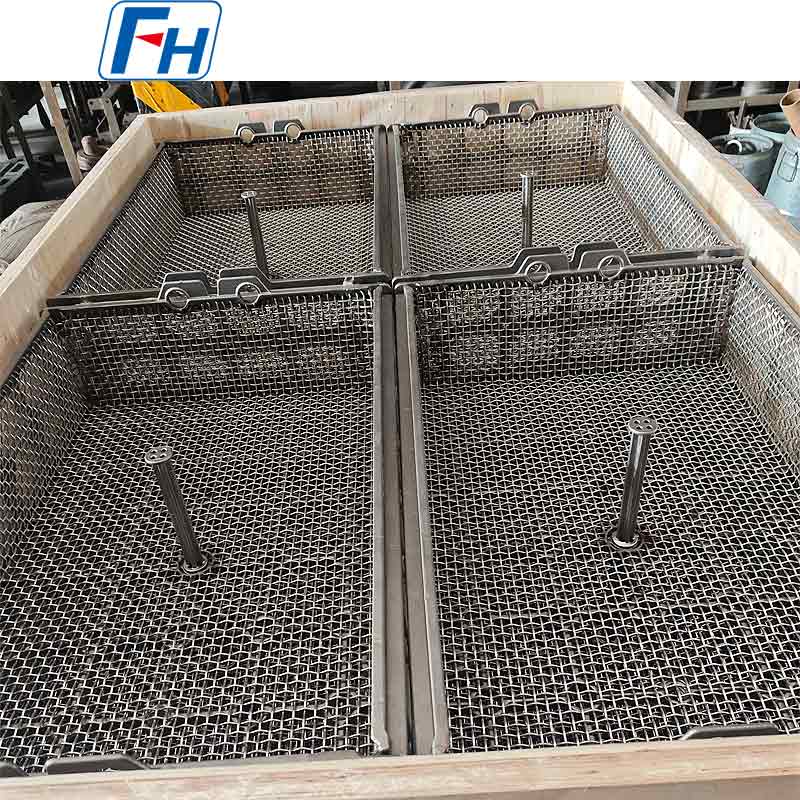
Brand: FH® Certification: ISO9001, ISO14001 Material: Heat-resistant Steel Material Grade: 2.4879 Si...
See Details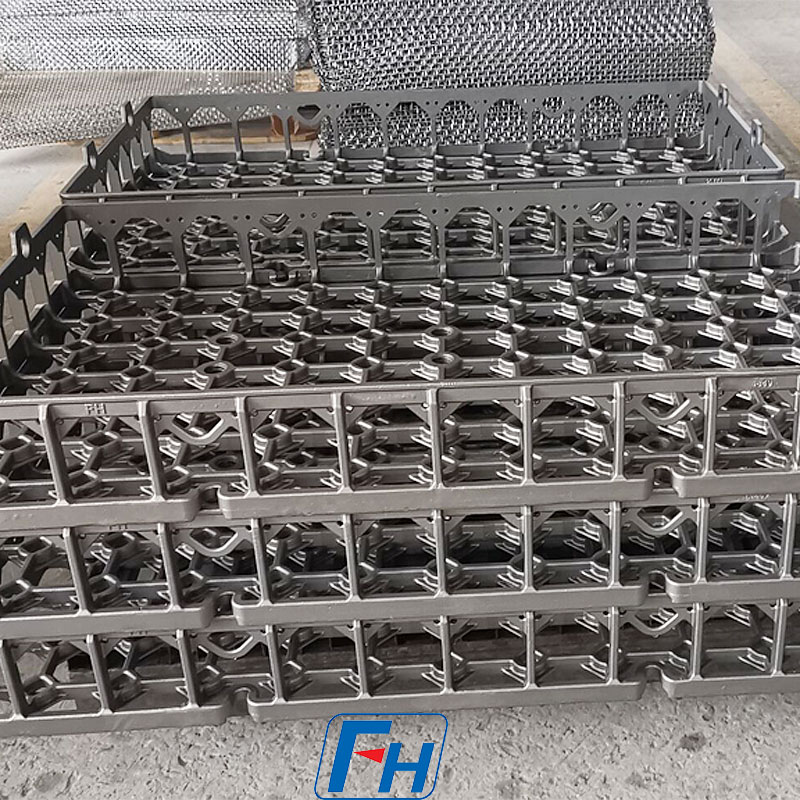
Brand: FH® Certification: ISO9001, ISO14001 Material: Heat-resistant Steel Material Grade: 2.4879/ S...
See Details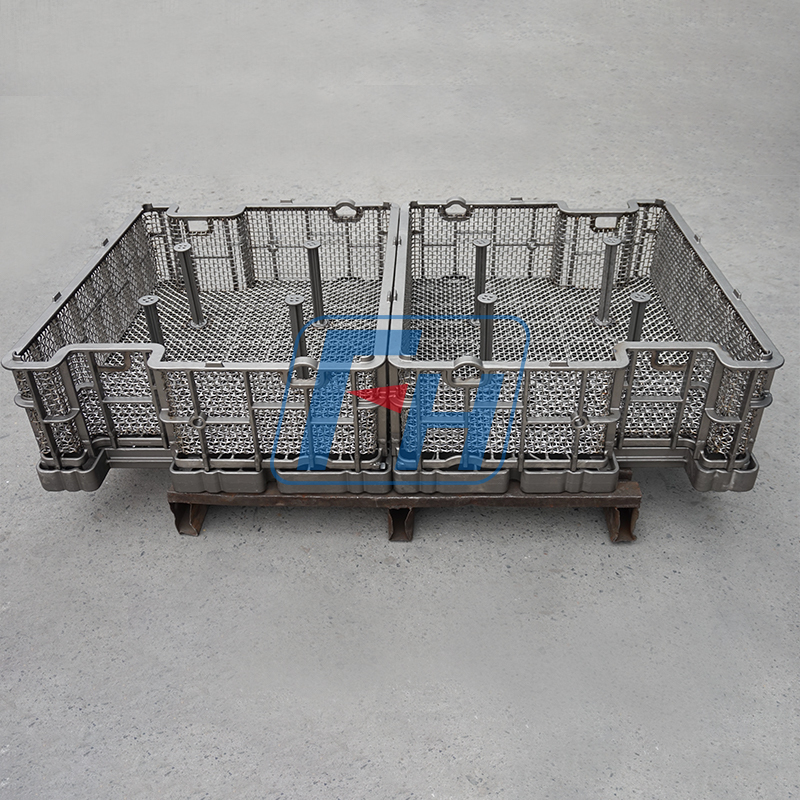
Powering precision and durability in the most demanding industrial environments, FH Heat Treatment T...
See Details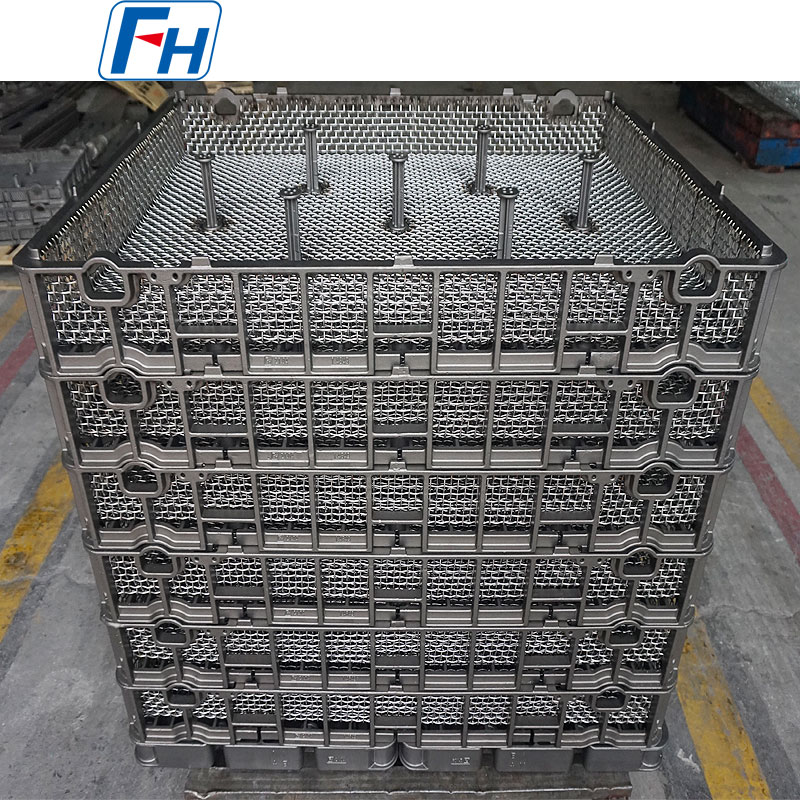
Brand: FH® Certification: ISO9001, ISO14001 Material: Heat-resistant Steel Material Grade: 1.4849 Si...
See Details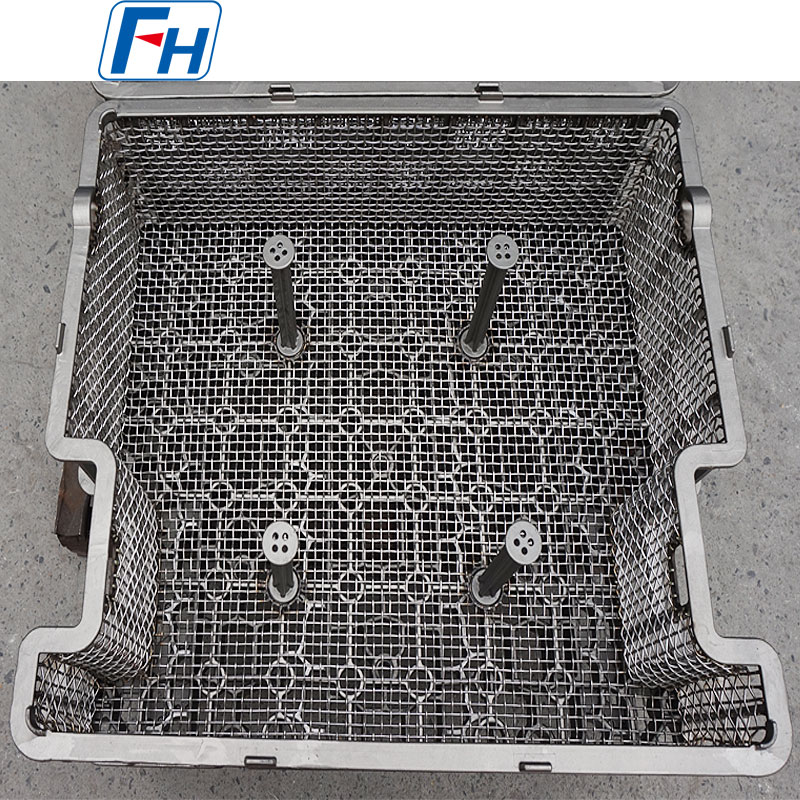
Brand: FH®Certification: ISO9001, ISO14001Material: Heat-resistant SteelMaterial Grade: 1.4849Size: ...
See Details
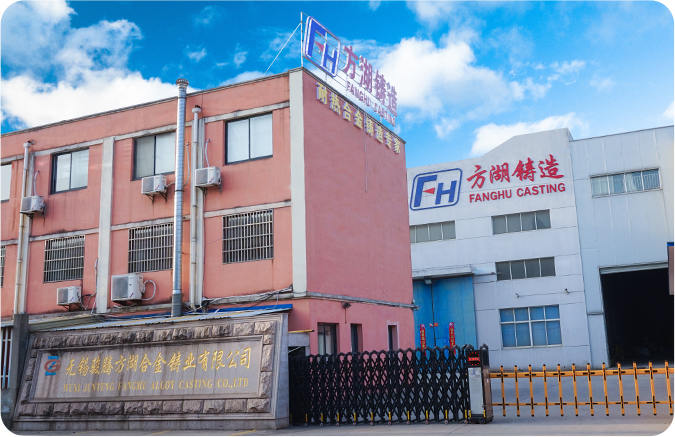
Established in
Export Countries
Monthly Production Capacity
Employees

Custom Cast Heat Treatment Baskets with Grid Trays and Wire Mesh for an Italian CustomerCustomer Case Study | Wuxi Junteng Fanghu Alloy Technology Co., Ltd. (FH® Alloy)Project Over...
READ MORECustom Tray Fixture System for Continuous Pusher Furnace Gear Heat TreatmentCustomer Case Study | Engineering Design, Drawing Approval, Manufacturing & DeliveryProduct: Custom ...
READ MORECustom 2.4879 Vacuum Furnace Heat Treatment Trays for a Slovenian CustomerCustomer Case Study | Structural Redesign, Manufacturing & DeliveryCustomer Location: SloveniaProduct:...
READ MORECustomer Case Study | Engineering Design, Manufacturing, Inspection & DeliveryCustomer Location: FranceProduct: Custom Heat Treatment BasketMaterial: 1.4849 Heat-Resistant Stai...
READ MOREHow to determine if an Other Heat-resistant Steel Part possesses high-temperature resistance?
1. High-Temperature Hardness and Strength Testing: Measure hardness using a Vickers or Shore hardness tester at operating temperatures such as 600°C and 800°C. Hardness remaining within the design range indicates sufficient strength at high temperatures.
Simultaneously perform high-temperature tensile or yield strength tests and record the stress-strain curve to ensure good elongation at the target temperature.
2. Magnetic Particle Examination: Magnetic particle examination of martensitic or ferritic alloys can quickly detect internal cracks, incomplete penetration, or heat treatment defects, which are often precursors to high-temperature failure.
3. Liquid Penetrant Examination: Coating the surface with a penetrant and developing it allows for the detection of minute surface cracks or pores, particularly suitable for complex geometries such as heat-treated fixtures and radiant tubes.
4. Ultrasonic or Phased Array Inspection: Ultrasonic testing assesses internal defects, interlayer debonding, or weld quality using time-of-flight or echo attenuation. Suitable for large components such as thick furnace rollers and furnace rails.
How to prevent cracking or deformation in Other Heat-resistant Steel Parts during high-temperature processing?
1. Reasonable Preheating and Uniform Heating: Use segmented preheating to reduce the temperature gradient and prevent surface cracking due to thermal shock.
2. Controlled Cooling Rate and Stress Relief: Use slow cooling or segmented air cooling to keep residual stress below 0.2%; if necessary, perform low-temperature tempering to relieve stress.
3. Welding Process Optimization: Use low-heat-input TIG/EB welding, followed by post-weld heat treatment to reduce hardening in the weld zone and prevent brittle cracking caused by hardening.
4. Surface Protection and Oxide Layer Management: Pre-oxidize the workpiece before high-temperature treatment or apply a high-temperature resistant ceramic coating to maintain a dense oxide film and prevent liquid metal penetration that could cause cracks.
5. Geometric Design and Stress Concentration Control: Avoid sharp corners and abrupt cross-sectional changes. Use rounded corners or transition sections to reduce local stress concentration and significantly decrease the probability of crack initiation.

Focus on Designing and Manufacturing Alloy Steel Parts since 2006
 Tel: 0510-83310100
  E-mail: info@alloy-casting.com
  Add: Room 1105,Building 6, Jiaye Wealth Center,Wuxi, Jiangsu, P.R.China P.C.:214000.
  Privacy