
 Jun 15, 2026
 Content
Thermal fatigue is not the result of a single hot cycle, but of repeated heating and cooling that creates a temperature gradient between the surface and the core of a part. In a continuous heat treatment furnace, a Furnace Roller surface can swing from around 200°C to over 900°C within a few minutes as work passes through, while the roller core heats up more slowly. This mismatch generates internal thermal stress that alternates between tension and compression with every cycle.
Once this stress exceeds the local fatigue limit, fine cracks start to form on the surface. With each additional cycle the cracks grow and link up, eventually leading to spalling or fracture. Components such as Radiant Heat Tubes, the Chain Plate for Chain Casting Furnace, and the AFC Pusher Head all face this same cycle of repeated heating and cooling, which is why thermal fatigue resistance is a key factor when evaluating any heat-resistant casting.
Heat-resistant steel castings typically contain 10% to 30% chromium, with nickel and molybdenum added depending on service conditions to form a stable austenitic or austenitic-ferritic structure. The atoms in austenite are packed more tightly than in ferrite, the bonding forces are stronger, and atomic diffusion is slower, so the material retains its strength at high temperature without softening or grain coarsening. Chromium also forms a dense Cr2O3 oxide film on the surface, and alloys with higher aluminum content develop an Al2O3 film as well; this layer blocks further oxygen diffusion, reduces high-temperature oxidation damage, and slows the onset of thermal fatigue cracking.
Most heat-resistant castings are designed for service between 650°C and 1100°C, with certain special alloys reaching up to 1200°C, as summarized below:
| Alloy Family | Typical Composition | Service Temperature | Typical Components |
| Ferritic heat-resistant steel | Cr around 10%-15% | About 650°C-800°C | Furnace Piers and general support structures |
| Austenitic heat-resistant steel | Cr 18%-25%, Ni 8%-12% | About 800°C-1000°C | Furnace Roller, Hearth Roll for Cast Link Belt Furnace |
| High-nickel austenitic alloy | Cr 20%-30%, Ni above 30% | About 1000°C-1100°C | Radiant Heat Tube, Ipsen Fan Balde |
| Nickel- or cobalt-based alloy | Ni or Co base with Cr and Mo | About 1100°C-1200°C | High-temperature furnace rollers, special chain plates |
For cylindrical components such as the Radiant Heat Tube and Furnace Roller, centrifugal casting offers a clear advantage. Molten metal is poured into a rapidly rotating mold; the denser metal is pushed outward by centrifugal force, while lighter elements such as gas bubbles and non-metallic inclusions move toward the center and can be removed. The result is a casting with a denser structure, fewer porosity and shrinkage defects, and a finer grain size near the outer surface.
These internal defects are often the starting points for thermal fatigue cracks, since stress concentrates around them and they tend to crack first under repeated thermal cycling. As a result, Radiant Heat Tubes and Furnace Rollers produced by centrifugal casting generally show better thermal fatigue performance and longer service life than sand-cast parts of the same wall thickness.
Many thermal fatigue failures are not caused by the material itself, but by a design that does not account for expansion and temperature gradients. The following points are worth keeping in mind:
Post-casting heat treatment is another important step in preventing thermal fatigue. If the residual stress from casting is not relieved through normalizing and tempering, it adds to the operating thermal stress and the part cracks sooner. The cooling method also affects the quality of the protective oxide film: whether a part is water-quenched or slow-cooled after solution annealing produces films of different density, so the cooling cycle should be tested and selected based on the specific alloy and service conditions.
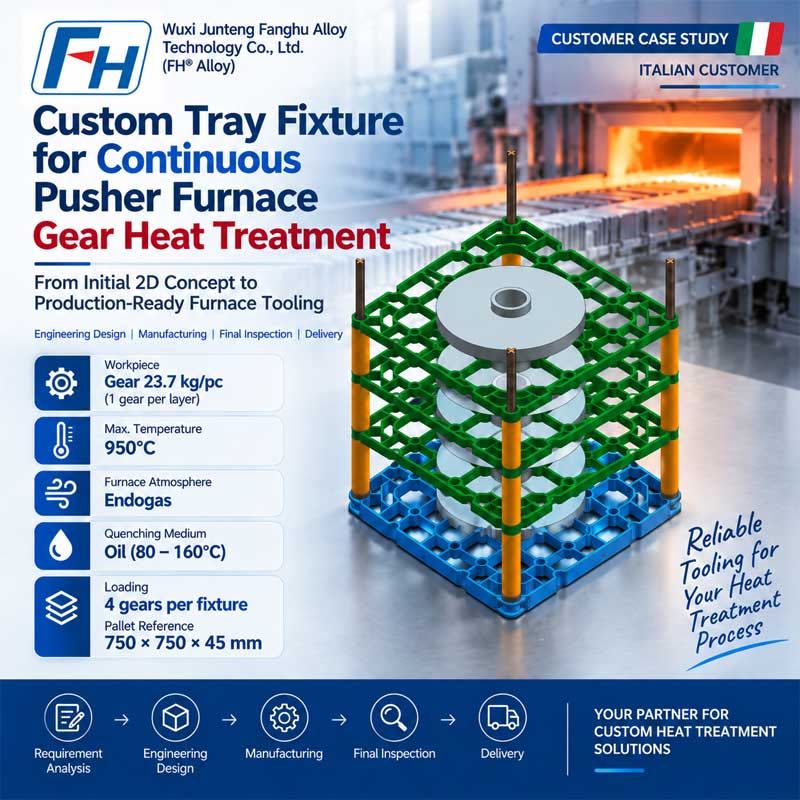
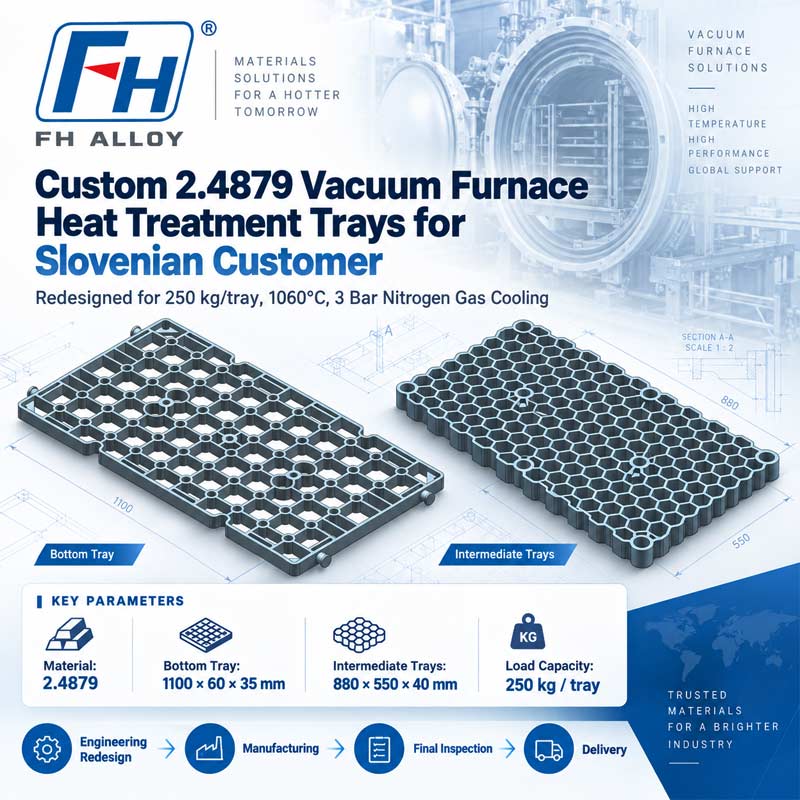
In real production, items such as the Heat-treatment Fixture, Weding Heat Treatment Fixtuers, Heat Treatment Base Trays and Precision Casting Basket go through even more heating and cooling cycles per day than a typical furnace roller, since they are loaded and unloaded repeatedly. For this reason they need to be cast from heat-resistant alloys and follow the same material and design principles described above. Using the right fixtures also helps workpieces heat more evenly inside the furnace, avoiding the localized overheating that can itself trigger thermal fatigue in the parts being processed.
The table below summarizes typical thermal fatigue symptoms and the main preventive measures for common heat-resistant components, useful as a quick reference during design and maintenance:
| Component | Typical Thermal Fatigue Symptom | Main Preventive Measure |
| Furnace Rollers for Continuous Furnace | Surface cracking and roller bending | Austenitic alloy, cored design, centrifugal casting, regular concentricity checks |
| Radiant Heat Tube | Scale spalling and localized perforation | Centrifugal casting for higher density, uniform wall thickness, suitable oxide film |
| Ipsen Fan Balde | Edge cracking and increased vibration | High-temperature strength alloy with generous fillet at the blade root |
| AFC Pusher Head | Combined wear and cracking on the pushing face | Base material balanced for wear and heat resistance, with Wear Resistant Liners where needed |
| Hearth Roll for Cast Link Belt Furnace | Network-pattern surface cracks | Hollow cored design to balance internal and external temperature, periodic build-up welding |
| Chain Plate for Chain Casting Furnace | Link fracture and chain jamming | Segmented design with expansion clearance, timely replacement of worn links |
| Furnace Piers | Base cracking and localized settling | Expansion gaps with heat-resistant casting supports matched to the foundation |
| AFC Furnace Roller Rails and Rollers | Rail distortion causing roller misalignment | Sliding support design with regular alignment and lubrication checks |
Even with the right material and design, skipping routine inspection lets early cracks grow into major failures. Common methods include visual checks for network or radial cracking on the surface, dye penetrant testing to find fine cracks, measuring the concentricity and deflection of a Furnace Roller to detect distortion, and placing thermocouples at key points to monitor for abnormal temperature gradients.
It is worth keeping a running record for each critical part, such as the cumulative number of heating and cooling cycles and total operating hours, so that preventive maintenance or replacement can be scheduled once a part reaches a certain percentage of its design life. In one real-world case, a Furnace Roller rated for three to five years of service had its life cut to under six months after repeated rapid cooling during emergency shutdowns. This shows that operating practices matter just as much as design: heating and cooling rates should always be kept within a reasonable range to avoid unnecessary thermal shock.
Preventing thermal fatigue is never the result of a single fix. It comes from the combined effect of material selection, casting process, structural design, heat treatment and routine maintenance. From choosing the right balance of chromium, nickel and molybdenum, to the denser structure that centrifugal casting provides, to the room for thermal expansion built into the Furnace Roller, Chain Plate and AFC Pusher Head, and the supporting role of Heat Treatment Base Trays and the Precision Casting Basket, every one of these steps delays crack initiation and growth to some degree. Combined with disciplined inspection and preventive maintenance, this approach keeps equipment running safely while extending the service life of heat-resistant castings and reducing unplanned downtime caused by thermal fatigue.
 CategoryRecent Post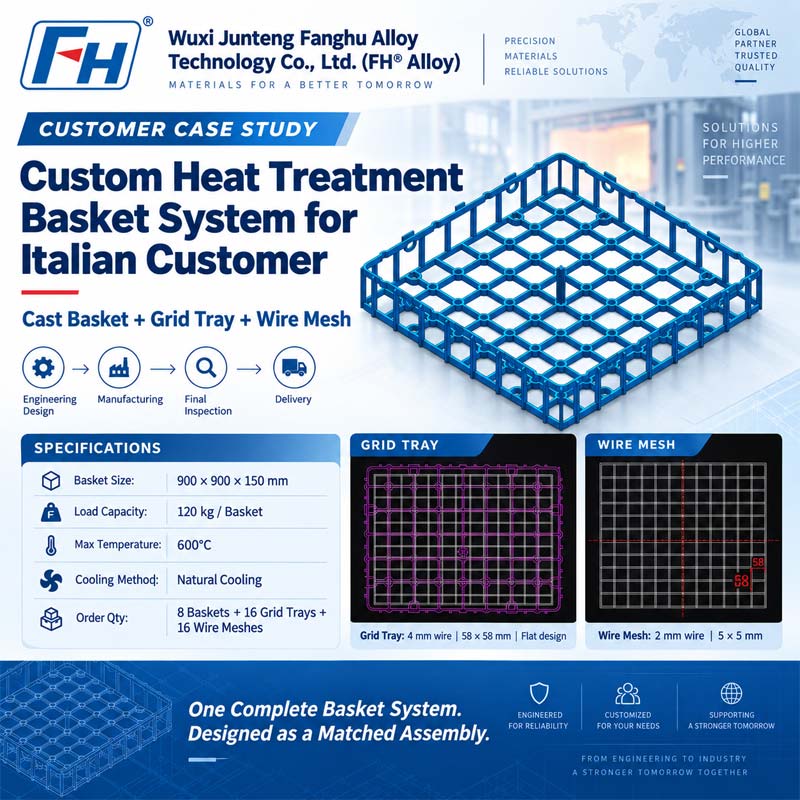

Focus on Designing and Manufacturing Alloy Steel Parts since 2006
 Tel: 0510-83310100
  E-mail: info@alloy-casting.com
  Office Add: Room 1105,Building 6, Jiaye Wealth Center,Wuxi, Jiangsu, P.R.China P.C.:214000.
  Privacy

 English
 Español
 italiano
 Deutsch
 0086-13338774804
