
 Nov 21, 2026
Industrial rollers are used in various material handling and manufacturing systems. However, not all rollers are designed for the same operating environment.
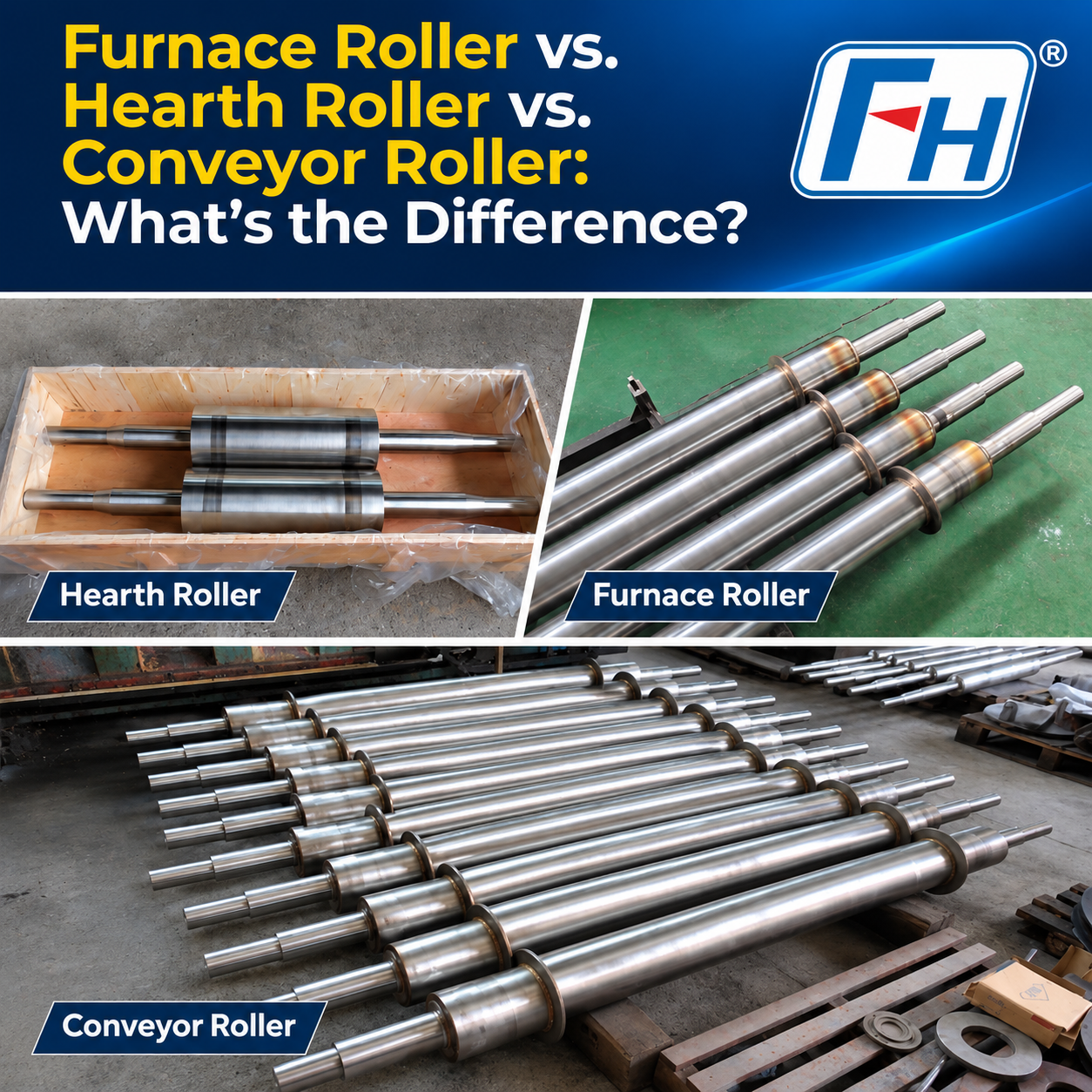
Furnace rollers, hearth rollers, and conveyor rollers may appear similar in structure, but their working conditions, material requirements, and engineering considerations can differ significantly.
Understanding these differences helps equipment manufacturers and industrial buyers select suitable components for their production lines.
1. What Is a Furnace Roller?
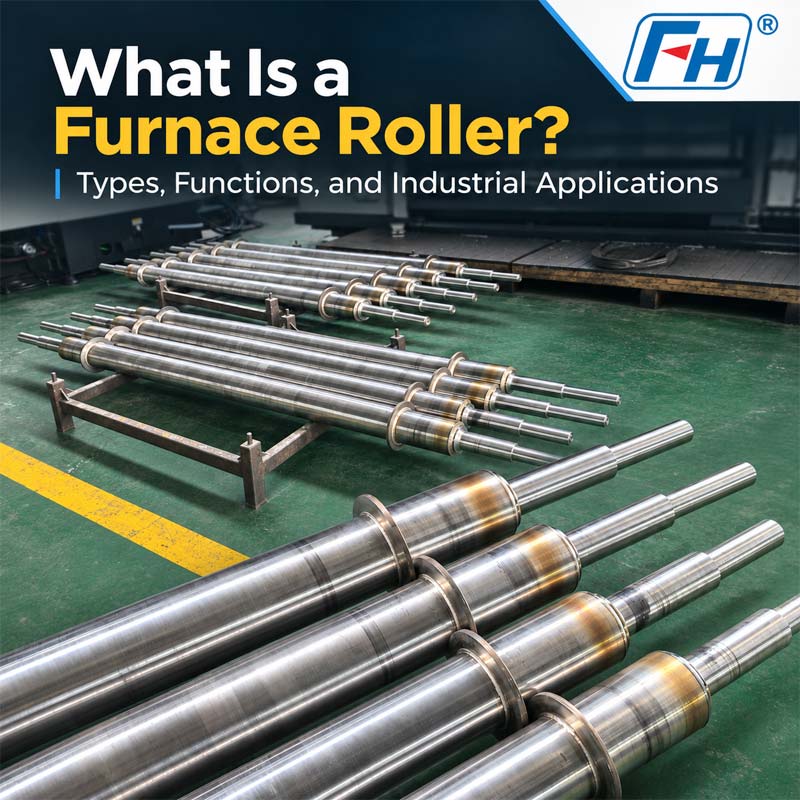
A furnace roller is designed for material transportation or support in high-temperature furnace systems.
It may be exposed to elevated temperatures, thermal cycling, oxidation, and mechanical loading.
Typical applications include:
Furnace rollers are often manufactured from heat-resistant alloy castings to maintain their structural performance under demanding conditions.
2. What Is a Hearth Roller?
The term hearth roller generally refers to rollers that support or convey materials along the hearth or working level of a furnace.
In many industrial applications, hearth rollers and furnace rollers refer to overlapping component categories.
Their exact meaning may vary depending on furnace design and equipment manufacturer terminology.
Important considerations include roller spacing, workpiece support, load distribution, and temperature exposure.
3. What Is a Conveyor Roller?
A conveyor roller is a rotating component used to transport products along a conveyor system.
Conveyor rollers are widely used in:
Many conventional conveyor rollers operate at relatively moderate temperatures.
Their material requirements are therefore different from those of rollers designed for high-temperature furnace environments.
4. Key Differences
| Comparison | Furnace Roller | Hearth Roller | Conveyor Roller |
| Main function | High-temperature conveying and support | Furnace hearth support and conveying | General material transportation |
| Operating environment | High-temperature furnace conditions | Furnace working zone | Usually ambient or controlled environments |
| Material selection | Heat-resistant alloys | Depends on furnace conditions | Carbon steel, stainless steel, and other materials |
| Thermal cycling | Often significant | Application-dependent | Usually limited |
| Design considerations | Creep, oxidation, thermal expansion, loading | Support, heat exposure, dimensional stability | Load, speed, wear, alignment |
These categories are not always mutually exclusive. A hearth roller may also be classified as a furnace roller depending on its application.
5. Why Does Material Selection Matter?
The material requirements of furnace rollers are more demanding than those of many conventional conveyor rollers.
At elevated temperatures, materials may experience:
Oxidation: High-temperature exposure can cause surface oxidation and scale formation.
Creep: Sustained mechanical stress at elevated temperatures may gradually cause permanent deformation.
Thermal Fatigue: Repeated heating and cooling can generate cyclic stresses.
Atmosphere-Related Corrosion: Carburizing, sulfur-containing, or other aggressive furnace atmospheres may accelerate material degradation.
For these reasons, heat-resistant alloy selection should be based on the actual furnace environment rather than temperature alone.
6. How to Choose the Right Roller?
Before selecting a roller, consider:
These details help establish the appropriate design and material requirements.
7. FH® Custom Furnace Roller Solutions
FH® supplies heat-resistant alloy castings and custom industrial furnace components for overseas customers.
Our manufacturing solutions can be developed according to drawings, samples, material specifications, and equipment requirements.
For customers operating continuous heating and heat treatment production lines, selecting the correct furnace roller is an important part of maintaining stable production.
Explore FH® Furnace Rollers for more information.
Frequently Asked Questions
Are furnace rollers and hearth rollers the same?
The terms can overlap. Their exact meanings depend on the furnace design and the terminology used by the equipment manufacturer.
Can a standard conveyor roller be used inside a furnace?
Not necessarily. Conventional conveyor rollers may not withstand high temperatures, thermal cycling, or furnace atmospheres.
What materials are used for industrial furnace rollers?
Heat-resistant cast alloys are commonly selected, including different chromium-nickel alloy grades.
Are furnace rollers available in custom dimensions?
Yes. Industrial furnace rollers are frequently manufactured according to customer drawings and equipment specifications.
Need Custom Industrial Furnace Rollers?
Contact FH® with your equipment details, drawings, and material requirements to discuss a suitable furnace roller solution.
 CategoryRecent Post

Focus on Designing and Manufacturing Alloy Steel Parts since 2006
 Tel: 0510-83310100
 E-mail: info@alloy-casting.com
 Office Add: Room 1105,Building 6, Jiaye Wealth Center,Wuxi, Jiangsu, P.R.China P.C.:214000.
 Privacy

 English
 Español
 italiano
 Deutsch
 0086-13338774804
