What are the key differences between Aluminum Ingot Mold and Sow Mold?
Key Differences between Aluminum Ingot Mold and Sow Mold
1. Different Functional Positioning: Aluminum Ingot Mold is a general-purpose mold used to solidify molten aluminum into standard aluminum ingots, commonly used in aluminum alloy continuous casting and pouring processes; Sow Mold, on the other hand, is a mold specifically designed for "seeding" the molten metal, focusing on rapid injection and forming a continuous billet, suitable for mass production.
2. Materials and Wear Resistance: Aluminum Ingot Mold often uses high-melting-point cast iron or ordinary alloy steel, offering excellent temperature resistance; Sow Mold commonly uses thermally resistant and wear-resistant alloy steel (such as HK series, G-X 260), resulting in a longer service life under high-temperature cycling and wear environments. 3. Dimensional Tolerances and Surface Treatment: Aluminum Ingot Mold typically has a dimensional tolerance of CT13 and a surface roughness of Ra100, meeting general aluminum ingot size requirements. Sow Mold has stricter tolerance requirements (CT10 or even CT5), and its surface is often finely polished or coated with a hard coating to ensure uniform aluminum flow and minimize defects.
4. Differences in Applicable Equipment: Aluminum Ingot Mold is mainly used with box-type or pit-type resistance furnaces; Sow Mold is often matched with high-capacity heat treatment equipment such as high-speed continuous casting machines and radiant tube furnaces.
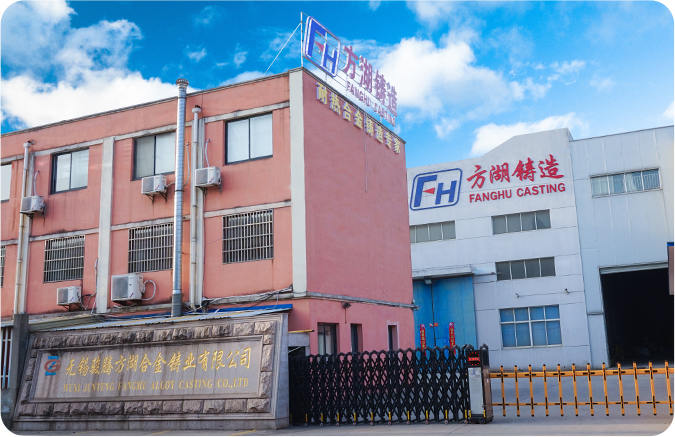
Which heat treatment furnace models are suitable for Sow Mold and Wuxi Junteng Fanghu Alloy Casting Co., Ltd.'s heat-resistant wear-resistant alloy steel molds?
1. Box Furnace: Compact structure, uniform temperature, suitable for the company's wear-resistant alloy steel molds, used for medium and low temperature heat treatment and annealing processes.
2. Shaft Furnace: Provides high-power, forced convection heating, fully utilizing the high-temperature durability of thermally resistant and wear-resistant molds. Commonly used for high-temperature tempering and carburizing.
3. Carriage Furnace: A mobile heating platform suitable for localized heat treatment of movable parts such as furnace rails and wheels. Used in conjunction with the company's customized radiant tubes and furnace rail molds.
4. Vacuum Induction Furnace: Performs high-temperature melting under vacuum or inert atmosphere. Thermally resistant and wear-resistant alloy steel molds resist high-temperature corrosion in vacuum, suitable for melting and casting high-purity alloys.
5. Radiant Tube Furnace: The company's specialized radiant tubes and heat dissipation tubes can be directly installed in this type of furnace for uniform heating, suitable for heat treatment of components such as heat treatment fixtures and fan blades.


 English
 Español
 italiano
 Deutsch
 0086-13338774804







 Tel: 0086-510-88331288
  E-mail:
  Add: Room 1105,Building 6, Jiaye Wealth Center,Wuxi, Jiangsu, P.R.China P.C.:214000.