What are Corrosion-Resistant Parts?
1. Definition: Corrosion-resistant parts refer to components made of corrosion-resistant metals or through special surface treatments, which enable the material to remain stable, delay, or prevent corrosion in corrosive media such as moisture, acids, alkalis, and salt spray.
2. Common Materials: Stainless steel (austenitic, duplex), nickel-based/cobalt-based superalloys, aluminum alloys, copper alloys, and titanium alloys all possess excellent corrosion resistance.
3. Surface Strengthening: Post-treatments such as anodizing, spraying, anti-corrosion coatings, electroplating, and polishing can further enhance corrosion resistance, meeting the requirements of high-temperature, high-pressure, or chemical media environments.
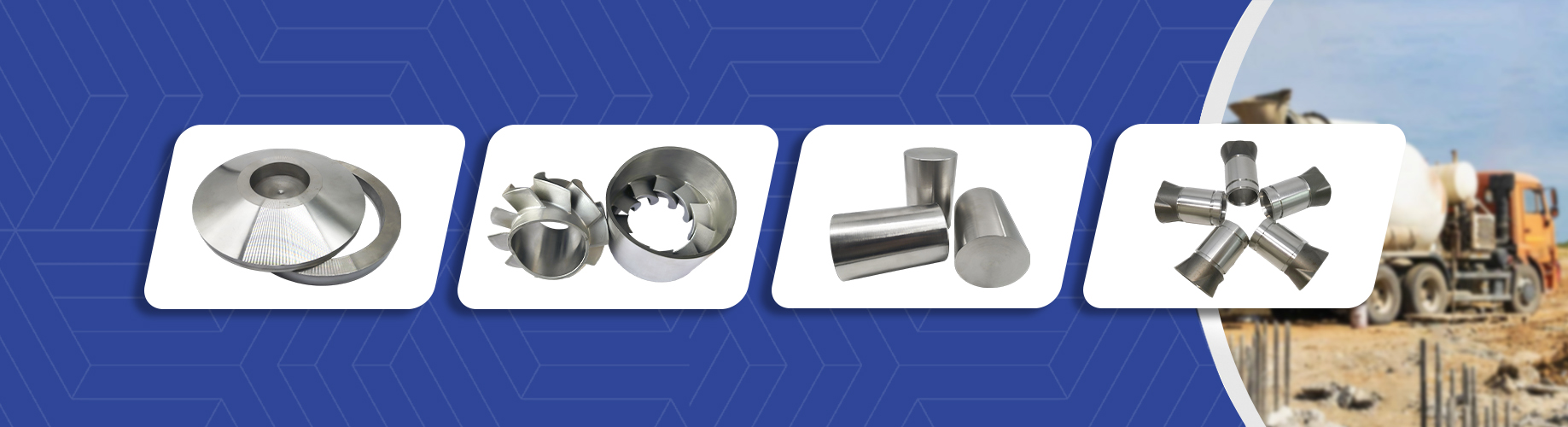
4. Application Scenarios: High-temperature metal components such as heating clamps, radiant tubes, furnace rollers, fan blades, furnace rails, and wear-resistant wheels in heat treatment furnaces all require corrosion resistance to ensure long-term operational reliability.
How to determine if Corrosion-Resistant Parts have shown early corrosion?
1. Visual Inspection (VT)
Observe surface color, spots, peeling, or cracks with the naked eye or a magnifying glass. Visual inspection is the most direct and cost-effective initial screening method.
2. Ultrasonic Testing (UT)
Utilize the propagation characteristics of high-frequency sound waves within metals to detect internal cracks, voids, or wall thinning caused by corrosion. Suitable for early defect location in thick-walled structures.
3. Magnetic Particle Testing (MT)
Magnetic powder is sprinkled onto ferromagnetic materials after magnetization. Magnetic field leakage at defects causes the powder to accumulate, forming visible traces, enabling rapid detection of surface and near-surface corrosion cracks.
4. Penetrating Testing (PT)
A penetrant is infiltrated into surface open defects, which are then revealed with a developer. Suitable for detecting surface cracks or pores in non-magnetic materials.
5. Eddy Current Testing (ET)
Eddy currents are generated on the surface of conductive materials through electromagnetic induction. Defects alter the eddy current distribution and manifest as abnormal signals in the probe voltage/phase. This method is particularly suitable for detecting surface corrosion and wall thinning in thin-walled pipes, aluminum alloys, etc.
6. Corrosion Monitoring Instrument (Electrochemical)
Corrosion potential or current sensors are installed on-site to record the electrochemical behavior of the metal in real time. Abnormal potential drift can provide early warning of corrosion progression.


 English
 Español
 italiano
 Deutsch
 0086-13338774804







 Tel: 0086-510-88331288
  E-mail:
  Add: Room 1105,Building 6, Jiaye Wealth Center,Wuxi, Jiangsu, P.R.China P.C.:214000.