 Mar 20, 2026
 Content
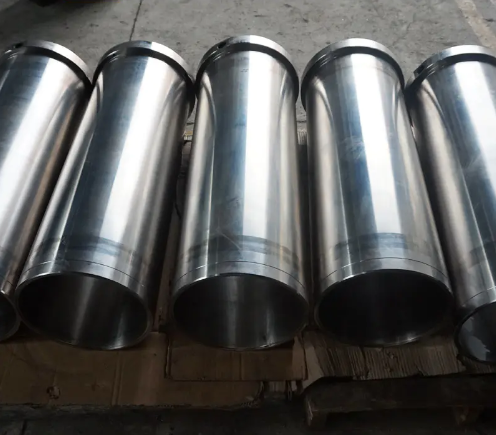
Wear resistant castings are primarily made from high chromium white iron, nickel-hard iron, and manganese steel (Hadfield steel). These materials are selected for their unique ability to withstand severe abrasion, impact, and high-stress environments. For example, high chromium white iron (with 12-28% Cr) offers exceptional hardness (up to 60 HRC) and is the industry standard for slurry handling and mining operations.
If your operation demands longevity in high-wear zones, such as furnace rails or fan blades, these alloy compositions are not just a choice—they are a necessity to reduce downtime and maintenance costs.
Understanding the specific metallurgy of wear parts is critical for optimizing performance. Since 2006, we have specialized in designing and manufacturing these alloy steel components, helping clients discover cost-effective solutions. Below are the dominant material categories used in the industry.
This is the go-to material for severe abrasion with moderate impact. The microstructure consists of hard M7C3 carbides suspended in a martensitic matrix. Typical data shows a wear resistance 2.5 to 3 times higher than conventional carbon steel in slurry pump applications. Common applications include:
Containing 11-14% Manganese, this material is unique because it work-hardens under impact. While its initial hardness is roughly 200-250 HB, under heavy impact it can achieve surface hardness up to 550 HB (approx. 55 HRC), making it ideal for high-impact zones like crushers and hammers.
A classic white iron grade (Ni-Hard 1, 2, and 4) with a martensitic matrix. It provides excellent erosion resistance in wet environments. Typically, Ni-Hard offers 400-600 Brinell hardness and is often used in grinding mills and augers where corrosion accompanies abrasion.
To bridge the gap between material science and practical application, here are the most frequent technical questions we encounter as a Wholesale Wear Resistant Castings Supplier.
The decision hinges on the abrasion vs. impact ratio. If you are dealing with high-stress abrasion with little impact (e.g., conveyor screws, furnace rollers), High Chrome is superior. If you face high impact (e.g., rock crushers, large hammer heads), Manganese steel is mandatory because it work-hardens without cracking.
Yes, but the material must be tailored. For heat treatment fixtures, radiant tubes, and furnace rollers, we utilize specialized alloy steels that resist oxidation and maintain strength up to 2000°F (1093°C). These components often combine wear resistance with thermal stability to enhance the efficiency of heat treatment operations.
The following table provides specific data points to illustrate why certain alloys are selected over others for specific industrial roles, such as fan blades, furnace rails, and mineral processing.
| Material Grade | Hardness (HRC) | Impact Resistance | Typical Application |
|---|---|---|---|
| High Chrome (25% Cr) | 58 - 64 | Low / Moderate | Slurry Pumps, Furnace Rails |
| Hadfield Manganese | 18 - 55 (Work-hardened) | Very High | Crusher Liners, Hammer Heads |
| Ni-Hard 4 | 55 - 62 | Moderate | Wet Grinding Mills, Augers |
In thermal processing environments, wear is often coupled with extreme heat and oxidation. Our primary products—including heat treatment fixtures, radiant tubes, furnace rollers, and fan blades—require a specific balance of high-temperature creep resistance and surface hardness.
For instance, a furnace roller operating at 950°C (1742°F) must resist sagging while maintaining wear resistance against the conveyed parts. Using a centrifugally cast high-chromium-nickel alloy can extend roller life by 30-50% compared to standard heat-resistant steel. As an OEM Wear Resistant Castings Company, we offer technical assistance to customize these alloys, optimizing your heat treatment operations to reduce the total cost of ownership.
By leveraging these material science principles, we help customers discover cost-effective solutions that significantly enhance the efficiency and longevity of their industrial equipment.
 CategoryRecent Post

Focus on Designing and Manufacturing Alloy Steel Parts since 2006
 Tel: 0510-83310100
  E-mail: info@alloy-casting.com
  Office Add: Room 1105,Building 6, Jiaye Wealth Center,Wuxi, Jiangsu, P.R.China P.C.:214000.
  Privacy

 English
 Español
 italiano
 Deutsch
 0086-13338774804
