
 Jul 06, 2026
 Content
Under normal industrial duty, a cast heat-resistant alloy heat treatment fixture typically lasts 300 to 600 thermal cycles, or roughly 2 to 5 years depending on cycle frequency, furnace atmosphere, and loading pattern. The true life cycle cost is not the purchase price alone — it is the sum of the initial cost, replacement frequency multiplied by unit price, extra energy consumed by an oversized or degraded fixture, maintenance labor, and scrap caused by fixture failure. A fixture with a higher upfront price but a longer cycle life and better load stability almost always produces a lower cost per treated part over a two to three year window.
Service life is measured in thermal cycles rather than calendar time, because a fixture used in a three-shift continuous furnace accumulates wear far faster than one used in a single daily batch. The table below reflects common field ranges reported for cast heat-resistant alloy fixtures operating within their rated temperature window and normal maintenance conditions.
| Furnace Type | Typical Cycle Life | Typical Calendar Life |
| Well-Type / Pit Furnace | 300 - 600 cycles | 2 - 4 years |
| Vacuum Furnace | 400 - 700 cycles | 3 - 5 years |
| Continuous Mesh Belt / Roller Hearth Furnace | 250 - 450 cycles | 1.5 - 3 years |
| Bell-Type / Bogie Hearth Furnace | 350 - 600 cycles | 2.5 - 4.5 years |
These figures assume the fixture is not overloaded beyond its rated design capacity and that furnace atmosphere control is maintained within specification. Continuous furnaces tend to show a shorter calendar life because the fixture accumulates cycles far more quickly, even though the per-cycle wear rate may be comparable to batch furnace equipment.
Four mechanisms drive fixture degradation, and each responds differently to design and material choices.
Total Cost of Ownership for a fixture set is best expressed as: Initial Cost, plus Replacement Frequency multiplied by Unit Cost, plus Increased Energy Cost from excess fixture mass or poor stacking efficiency, plus Maintenance Cost, plus Scrap Cost caused by fixture-related part failure. Each element is quantifiable and should be tracked separately rather than judged only on the purchase invoice.
| Cost Element | What It Includes | Typical Share of TCO |
| Initial Purchase | Casting, machining, alloy premium, freight | 25 - 35 percent |
| Replacement Cost | Unit price times number of replacements over the evaluation period | 30 - 45 percent |
| Energy Loss | Extra fuel or power to heat oversized or warped fixtures | 10 - 15 percent |
| Maintenance and Downtime | Inspection, repair welding, coating, changeover labor | 10 - 15 percent |
| Scrap and Rework | Parts lost or reworked due to fixture deformation or collapse | 5 - 15 percent |
A fixture priced 20 to 30 percent higher but built from a nickel-enriched alloy such as 1.4852 or 2.4879 can extend cycle life by 40 to 60 percent, which usually offsets the higher purchase price within the first replacement cycle and lowers the blended cost per treated batch afterward.
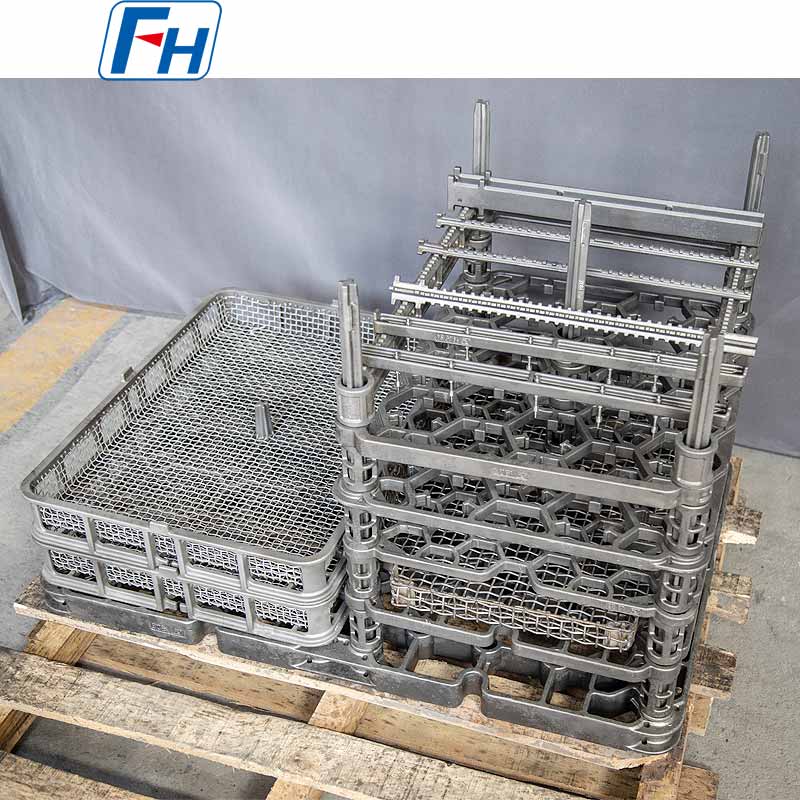
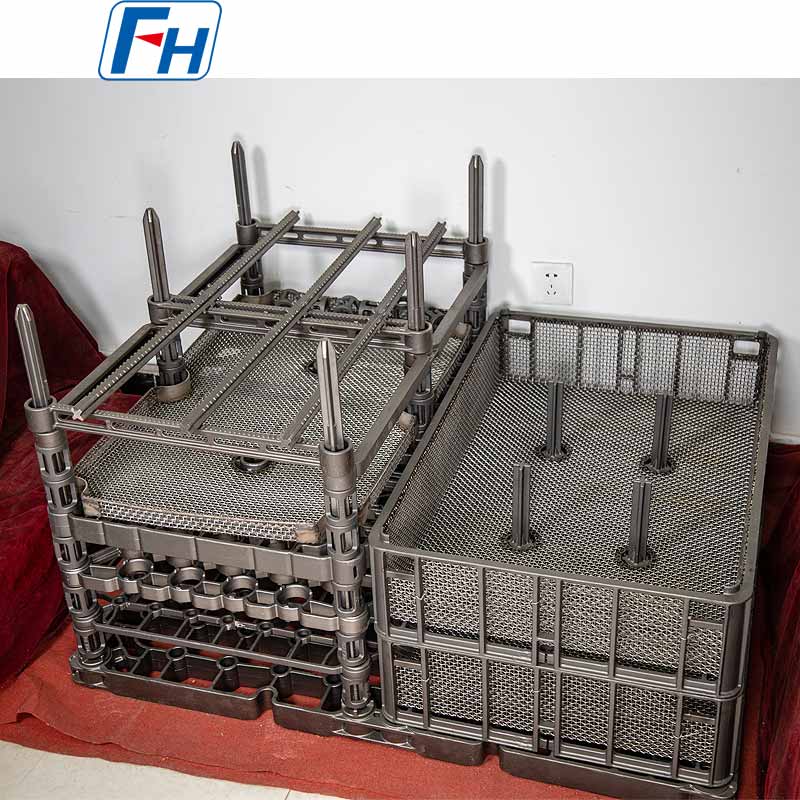
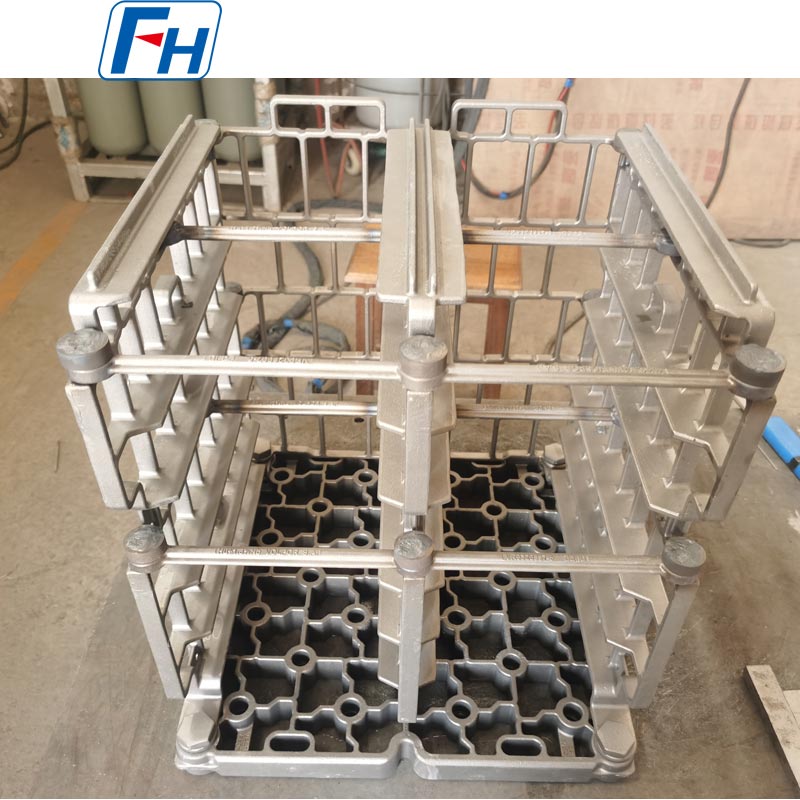
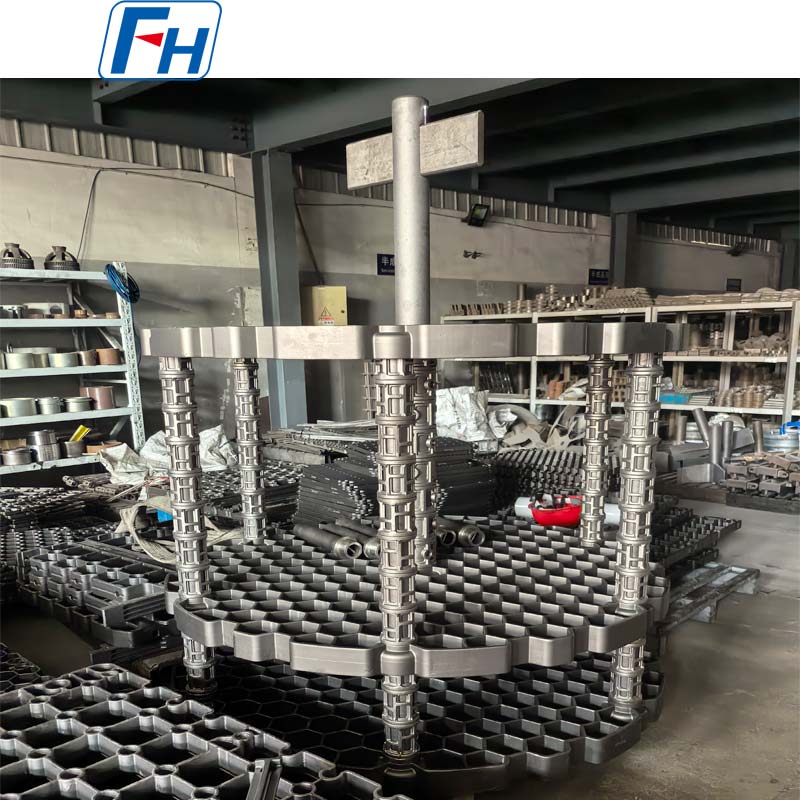
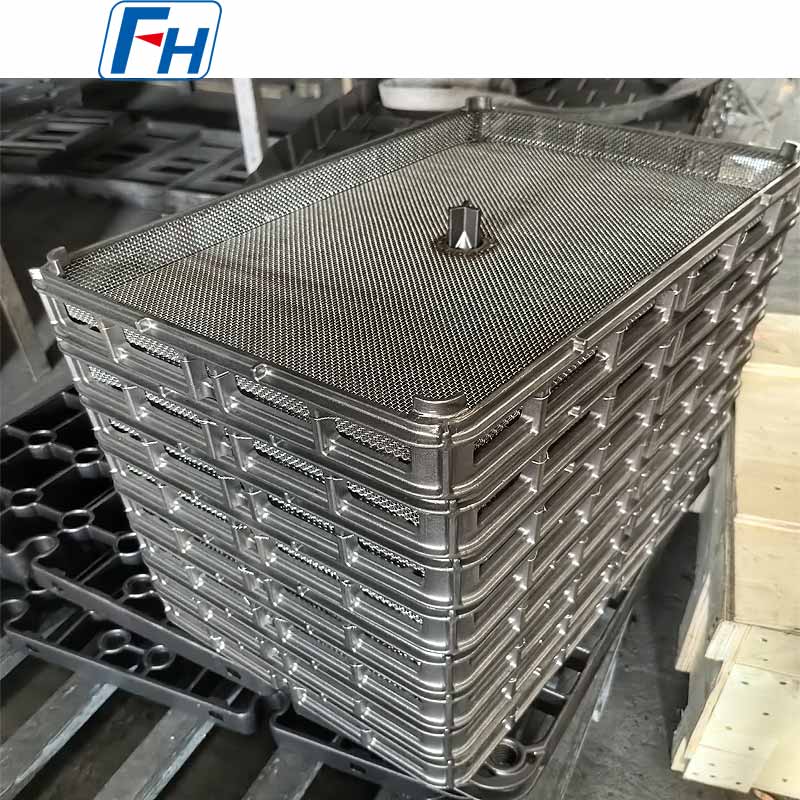
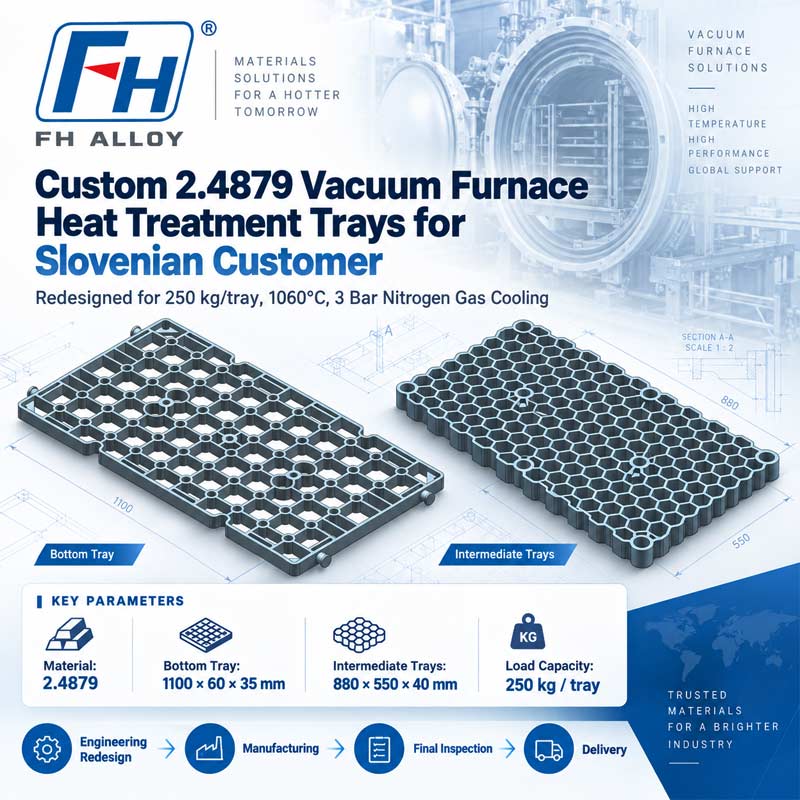
A representative selection of cast heat-resistant alloy fixtures engineered for different furnace types, load profiles, and operating temperature ranges.
Not every fixture needs the most expensive alloy available. Matching the grade to the actual atmosphere and temperature avoids paying for performance that will never be used, while under-specifying leads to premature failure and hidden scrap costs.
| Alloy Grade | Peak Working Temperature | Best Suited Application |
| 1.4848 / 1.4849 | Up to 1100°C | General carburizing, tempering, annealing baskets and base trays |
| 1.4852 | Up to 1180°C | Well-type and IPSEN style furnaces with heavier loads |
| 2.4879 / Nickel-Based | Up to 1250°C | Gas-cooled cycles, aerospace parts, high thermal shock service |
| Cr25Ni20 / HK-HP Series | Up to 1150°C | Radiant tubes, furnace rollers, and structural furnace internals |
Fixtures rarely operate in isolation, so a realistic life cycle cost model should also account for the components that share the same furnace environment. Furnace rollers and hearth roll assemblies for cast link belt furnaces experience similar creep and oxidation mechanisms, and their replacement schedule often overlaps with fixture changeovers. Radiant heat tubes produced by centrifugal casting are typically evaluated on the same alloy performance curve, since both parts rely on creep-resistant heat-resistant steel castings. Precision casting baskets, heat treatment base trays, and welded heat treatment fixtures share the lost-wax or investment casting route that gives smooth surfaces and reduced stress risers.
For continuous and chain-driven lines, furnace piers, AFC furnace roller rails and rollers, the AFC pusher head, and chain plates for chain casting furnaces should be reviewed alongside fixture life, since a worn rail or pusher component can introduce uneven loading that accelerates fixture fatigue. Rotating equipment such as the Ipsen fan blade and wear resistant liners around the hot zone also affect atmosphere uniformity, which in turn changes how evenly a fixture heats and cools across a batch.
A fixture showing early-stage surface oxidation or minor warping under 2 percent of its original dimension is usually a good candidate for coating or spot repair. Once cracking reaches a primary load-bearing member, or deformation exceeds the tolerance needed for even part loading, replacement is more economical than continued repair, since repeated welding repairs on a heavily cycled casting introduce new stress concentration points and raise the risk of in-furnace failure.
Service life for cast heat-resistant fixtures generally falls between 300 and 600 cycles, and the life cycle cost should always be modeled using the full formula rather than the purchase price alone. Selecting the alloy grade that matches actual furnace temperature and atmosphere, tracking cycles rather than calendar days, and coordinating maintenance across fixtures, rollers, rails, and related furnace internals together produce the lowest sustainable cost per treated batch.
 CategoryRecent Post

Focus on Designing and Manufacturing Alloy Steel Parts since 2006
 Tel: 0510-83310100
  E-mail: info@alloy-casting.com
  Office Add: Room 1105,Building 6, Jiaye Wealth Center,Wuxi, Jiangsu, P.R.China P.C.:214000.
  Privacy

 English
 Español
 italiano
 Deutsch
 0086-13338774804
