
 Jan 31, 2026
 Content
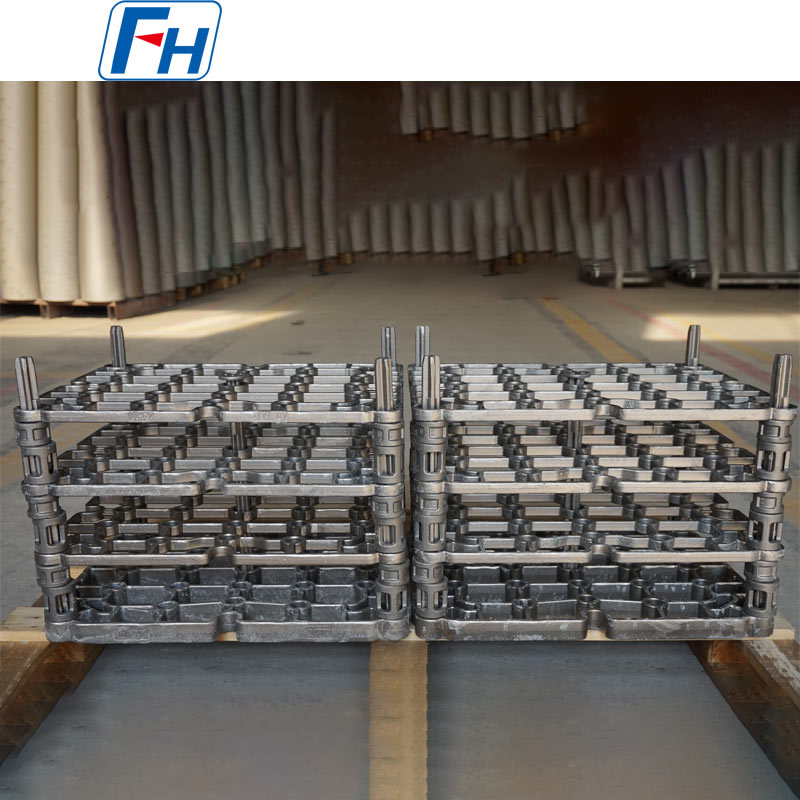
Heat Treatment Baskets play a crucial role in industrial processes that involve high-temperature operations such as annealing, carburizing, and tempering. These baskets are designed to hold metal components securely during heat treatment cycles, ensuring uniform heating while preventing damage or deformation. Understanding the materials, design features, and engineering principles behind these baskets is essential for industries that demand precision and reliability.
The ability of Heat Treatment Baskets to withstand extreme temperatures largely depends on the materials used in their construction. Common materials include:
| Material | Maximum Temperature Resistance | Advantages | Disadvantages |
| Stainless Steel | ~850°C | Corrosion resistant, long-lasting, easy to clean | Can be expensive; moderate strength at extreme heat |
| Nickel-Chromium Alloy | >1000°C | Excellent thermal stability, minimal deformation | High cost; difficult to machine |
| Coated Baskets | ~900°C | Extra oxidation resistance, longer lifespan | Coating can wear off over time |
Beyond material selection, Heat Treatment Baskets are engineered to endure high temperatures without deforming. Key design features include:
Standard metal baskets or racks not intended for high-temperature use typically deform when exposed to heat over 400°C. In contrast, Heat Treatment Baskets maintain dimensional stability even at temperatures exceeding 1000°C, demonstrating the importance of industrial-grade materials and specialized design.
The thermal cycles used in processes such as quenching, annealing, and carburizing can subject Heat Treatment Baskets to extreme conditions:
Even the most well-designed Heat Treatment Baskets require proper maintenance to prolong lifespan:
Heat Treatment Baskets are widely used across industries requiring precise heat treatment:
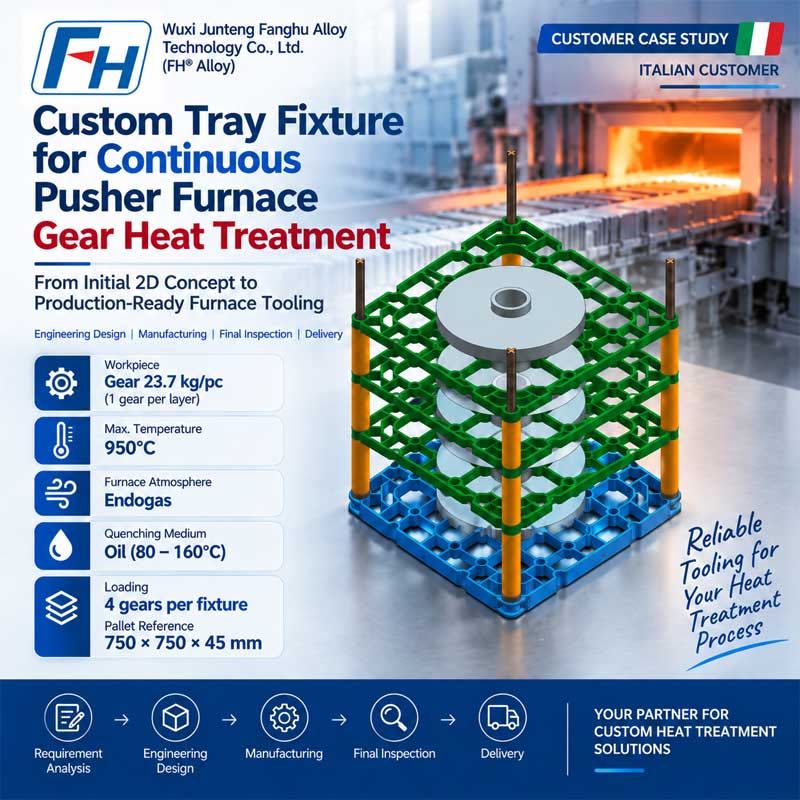
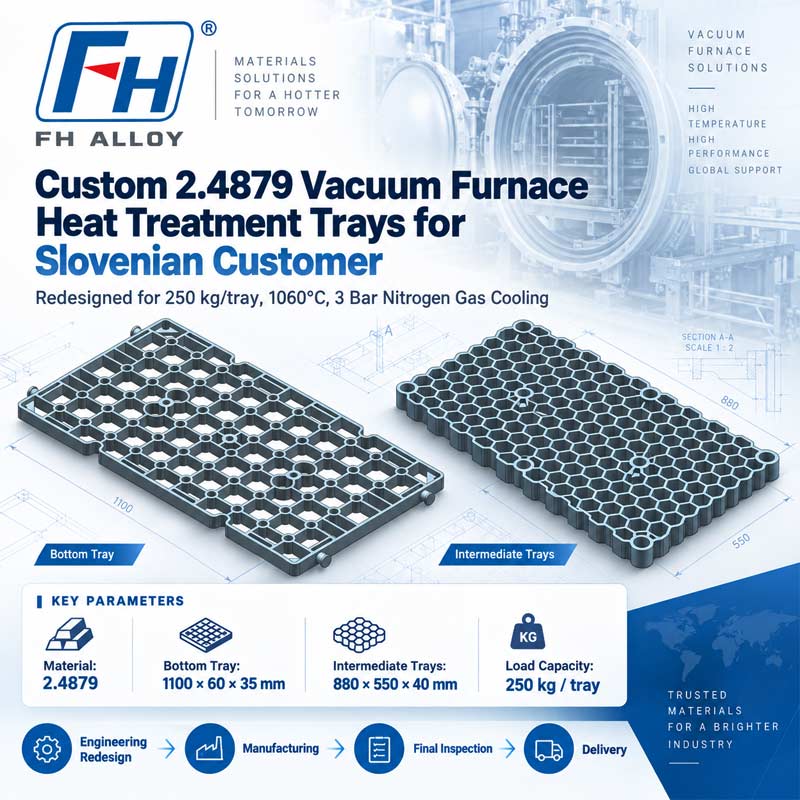
While automotive applications require moderate heat resistance and high durability, aerospace and tool manufacturing often demand extreme temperature tolerance combined with dimensional precision. Heat Treatment Baskets can be customized for each industry, balancing material choice, basket size, and mesh density.
Yes, baskets made from nickel-chromium alloys or specially coated stainless steel can tolerate temperatures exceeding 1000°C without deformation.
With proper maintenance, high-quality baskets can last for thousands of heat cycles, depending on material, temperature range, and usage frequency.
Coatings enhance oxidation resistance and prolong lifespan but can wear off over time. Solid metal baskets may offer better mechanical strength but may require more frequent inspection and cleaning.
Gradually introducing baskets to heating or cooling cycles, or using expansion gaps in design, can minimize stress from thermal shock.
Absolutely. Manufacturers can adjust wire thickness, mesh density, frame reinforcement, and basket dimensions to suit specific industrial processes.
Heat Treatment Baskets are indispensable tools in industries requiring precise, high-temperature processing. Their ability to withstand extreme heat without deformation results from a combination of advanced materials, smart engineering design, and careful maintenance. From automotive to aerospace applications, these baskets ensure safe, efficient, and reliable heat treatment, supporting the production of high-quality components across multiple sectors.
 CategoryRecent Post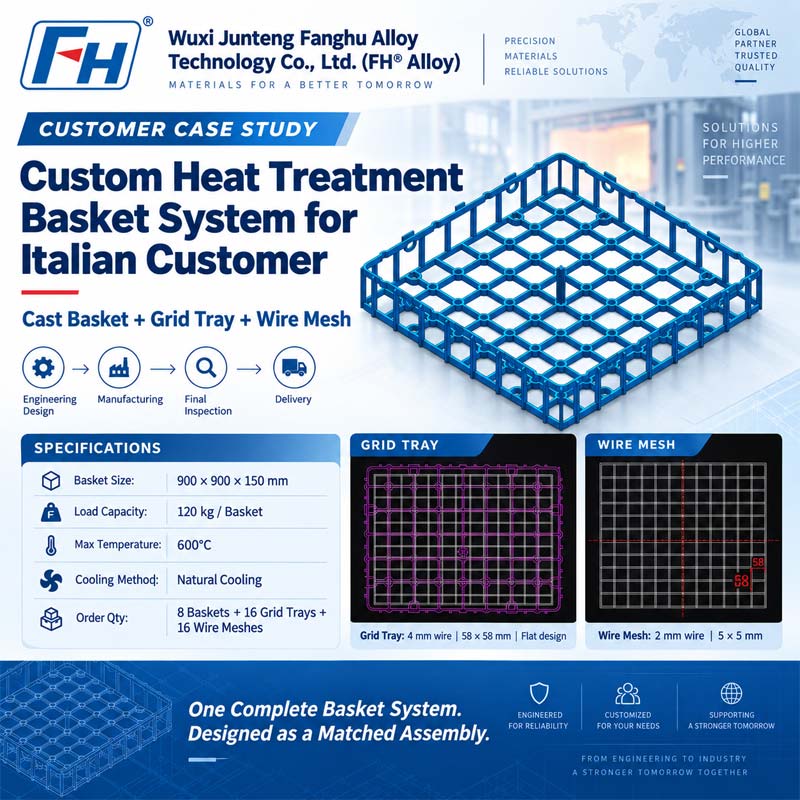

Focus on Designing and Manufacturing Alloy Steel Parts since 2006
 Tel: 0510-83310100
  E-mail: info@alloy-casting.com
  Office Add: Room 1105,Building 6, Jiaye Wealth Center,Wuxi, Jiangsu, P.R.China P.C.:214000.
  Privacy

 English
 Español
 italiano
 Deutsch
 0086-13338774804
